Section 05: COOLING SYSTEM
4 X3-45 Commuter PA1593 DOB 2400-2489 Section 05 Updated Sept.2016
2. MAINTENANCE
2.1 GENERAL RECOMMENDATIONS
A systematic routine inspection of cooling
system components is essential to ensure
maximum engine and heating system efficiency.
Check coolant level in the surge tank daily,
and correct if required. Test antifreeze
strength.
Check belts for proper tension; adjust as
necessary and replace any frayed or badly
worn belts.
Check radiator cores for leaks and make
sure the cores are not clogged with dirt or
insects. To avoid damaging the fins, clean
cores with a low-pressure air hose. Steam
clean if required.
Inspect the water pump operation. A leaky
pump sucks in air, increasing corrosion.
Repair all leaks promptly. Unrepaired leaks
can lead to trouble. Inspect and tighten
radiator mounts periodically. Test and
replace thermostat regularly.
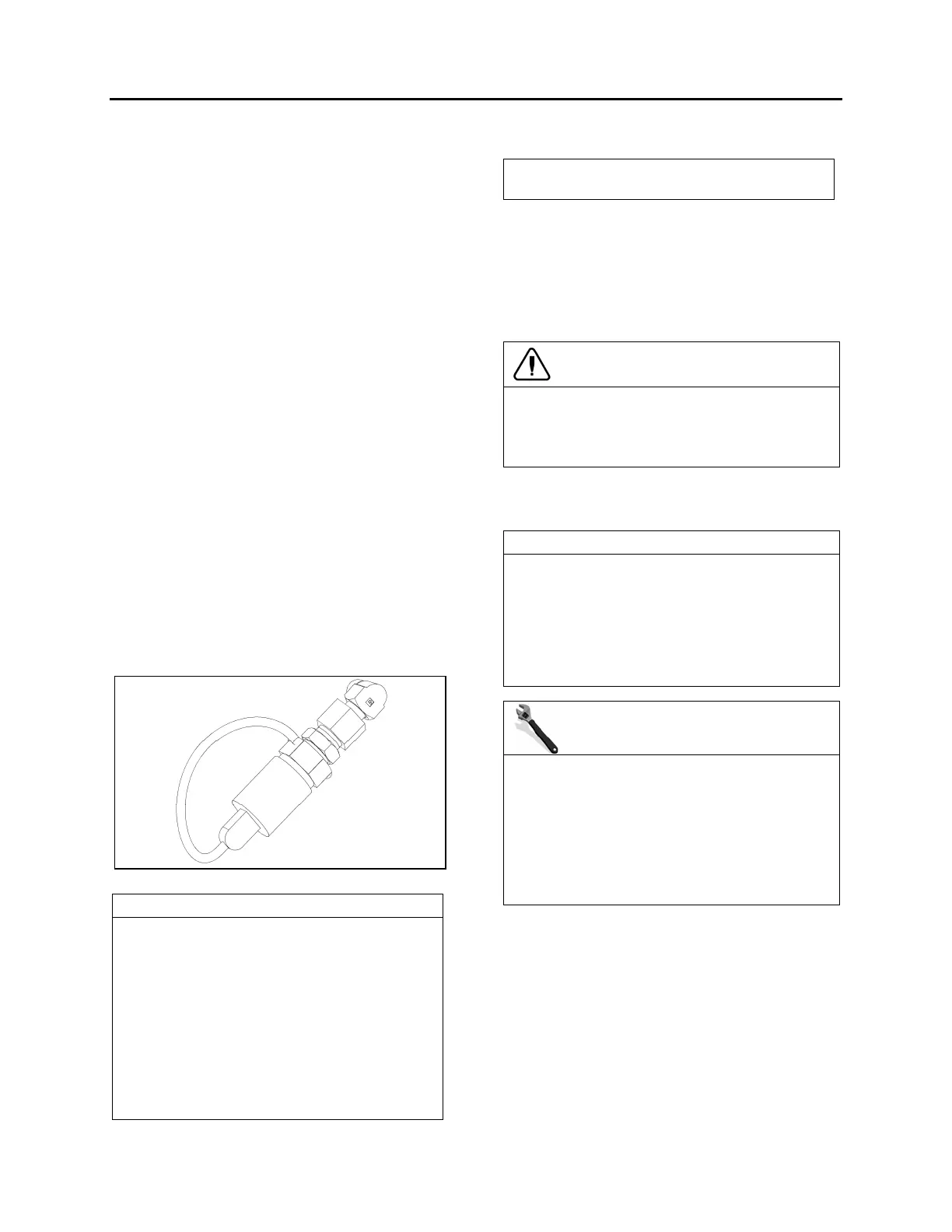
Pressurize system periodically using
Hansen Quick Coupling (Fig. 1 & 2).
FIGURE 2: HANSEN QUICK COUPLING
NOTE
In order to ensure the integrity of the system,
it is recommended that a periodic cooling
system pressure check be made. Pressurize
the cooling system to 103-138 kPa (15-20
psi) using Hansen Quick Coupling. Do not
exceed 138 kPa (20 psi).
Any measurable drop in pressure may
indicate a leak. Whenever the oil pan is
removed, the cooling system should be
pressure checked as a means of identifying
an
incipient coolant leaks. Make sure the
cause of the internal leak has been corrected
before flushing the contaminated system.
Leaks at the thermostat housing hose
connections may be caused by deformation of
connections or by rough surfaces on the castings
of the hose mounting surfaces. It is
recommended that "Dow Corning RTV-102
Compound" or any equivalent product be applied
on cast surfaces prior to hose installation.
CAUTION
Castings should be clean and free of oil and
grease before applying compound. No other
sealer should be used with RTV-102
compound.
2.2 MTA VEHICLES EQUIPPED WITH VOLVO
D13 ENGINE
NOTE
For additional information concerning Volvo
D13 engine components or engine-related
components, consult Volvo Trucks Canada or
Volvo Trucks North America Web Site under:
Parts & Service. On Volvo web site, you will
find detailed service procedures for parts
replacement, repair and maintenance.
MAINTENANCE
Drain, flush, thoroughly clean and refill the
system with Fleet Charge 50/50 Fully
Formulated Coolant every two years or every
250,000 miles (400 000 km), whichever
comes first. Change the coolant filter every
50,000 miles (80 000 km. When using Fleet
Charge 50/50, use a filter that contains
Supplemental Coolant Additives (SCA).
3. HOSES
Rotten, swollen, and worn out hoses or loose
connections are frequent causes of cooling
system problems.
Serious overheating is often caused by an old
hose collapsing or from rotten rubber shedding
from hoses and clogging the coolant passages.
Connections should be inspected periodically
and hose clamps tightened. Replace any hose
found to be cracked or swollen.



 To Next Page