-:,:,,-~~ccc'
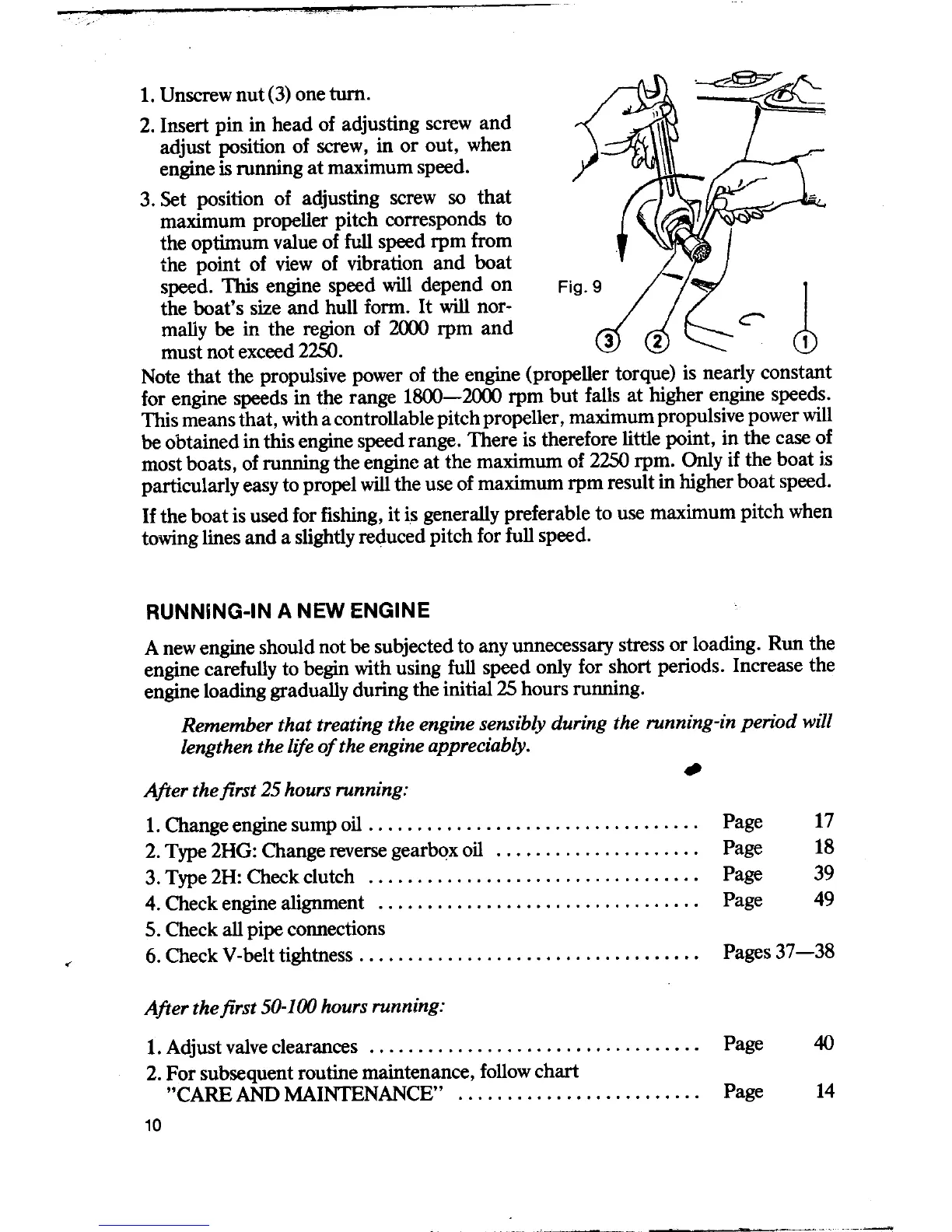
1. Unscrew nut (3) one turn.
2. Insert pin in head of adjusting screw and
adjust position of screw, in or out, when
engine is running at maximum speed.
3. Set position of adjusting screw so that
maximum propeller pitch corresponds to
the optimum value of fu11 speed rpm from
the point of view of vibration and boat
speed. This engine speed will depend on Fig.9
the boat's size and huIl form. It win nor-
mally he in the region of 200) rpm and
must not exceed 2250.
Note that the propulsive power of the engine (propeller torque) is nearly constant
for engine speeds in the range 1800-2(XX) rpm but falls at higher engine speeds.
This means that, with a controllable pitch propeller, maximum propulsive power will
he obtained in tros engine speed range. There is therefore little point, in the case of
most boats, of running the engine at the maximum of 2250 rpm. Only if the boat is
particularly easy to propel will the use of maximum rpm result in higher boat speed.
If the boat is used for fishing, it is generally preferable to use maximum pitch when
towing lines and a slightly reduced pitch for ful1 speed.
RUNNiNG-IN A NEW ENGINE
A new engine should not he subjected to any unnecessary stress or loading. Run the
engine carefully to begin with using full speed only for short periods. Increase the
engine loading gradually during the initial2S hours running.
Remember thaI treating the engine sensibly during the running-in period will
lengthen the life of the engine appreciably.
~
After thefirst 25 hours running:
I.Changeenginesumpoil Page 17
2. Type 2HG: Change reverse gearbü:x oil Page 18
3.Type2H:Checkclutch Page 39
4.Checkenginealignment Page 49
S. Check all pipe connections
. 6.CheckV-belttightness Pages 37-38
After the first 50-] ()(} hours running:
1.Adjustvalveclearances Page 40
2. For subsequent routine maintenance, follow chart
"CAREANDMAINTENANCE" Page 14
10
"~~ - -~~~--


 To Next Page