10 TEGAM WAY • GENEVA, OHIO 44041 • 440-466-6100 • FAX 440-466-6110 • sales@tegam.com
1-1
SECTION 1
INSTRUMENT DESCRIPTION
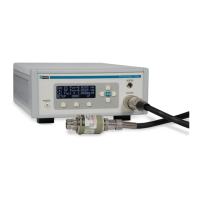
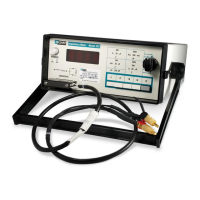
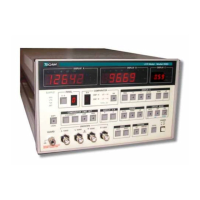
The Model 1750 is a highly versatile, precision digital Microohmmeter designed to provide unmatched
measurement speed and accuracy for production test and quality control applications up to 23 MΩ.
The 1750 microohmmeter automatically rejects thermal and electromagnetic line noise to provide error
free measurements for micro Ohm measurements down to 100 nΩ resolution. The 1750 also
incorporates a single command set to make integration easy for IEEE-488, RS-422 and RS-232
applications.
FEATURE OVERVIEW
The 1750 microohmmeter is designed as a complete bundled solution for a wide variety of resistance
measurement applications. Listed below are some of the features.
0.02% Basic Accuracy with 4½ digit resolution
The 1750 microohmmeter is designed to perform resistance measurements with a 0.02% basic
accuracy. The 4½ digit display produces readings from 100 nΩ resolution to 23 MΩ maximum
resistance values.
Bipolar Test Signal Eliminates Thermal EMF errors
The unit is designed to eliminate junction EMFs by introducing a bipolar test signal, which when
combined with digital signal processing, produce an accurate resistance measurement minus
thermal offset errors.
Closed Box Calibration
Full digital calibration is performed within minutes without having to make any internal
adjustments. A calibration enable/disable jumper is accessible by removing the top panel. All
adjustments are made digitally.
Programmable Delay Mode
Settling times are programmable from 1-250 ms to allow measurements of devices with extended
time constants.
Continuous and One-Shot Triggering
The 1750 microohmmeter provides two user-selectable, trigger modes, One-Shot and Continuous
for greater flexibility and optimization of test processes.


 To Next Page