June 11, 2015, 715004754 Rev. A
Page 109
7.3.2.2 Erratic or incorrect retention times
When you troubleshoot retention time problems, first determine whether the
retention times follow any of these patterns:
• They change from run to run or show consistency from run to run, but they
nevertheless fall outside the allowable range for the assay.
• They correlate with pressure fluctuations that are short term (with each pump
cycle) or long term (over the course of several minutes).
• They correlate with absolute pressure changes; that is, pressure is constant but
higher or lower than the normal operating pressure.
• They change suddenly at the end of a series of runs (which can indicate that air
is dissolving in the mobile phase, that the mobile phase is degrading, or that the
column is contaminated).
• They change early in a series of runs and tend to become constant or within
range within 4 minutes (which can indicate that the column was not
equilibrated, or that the solvent is not properly degassed).
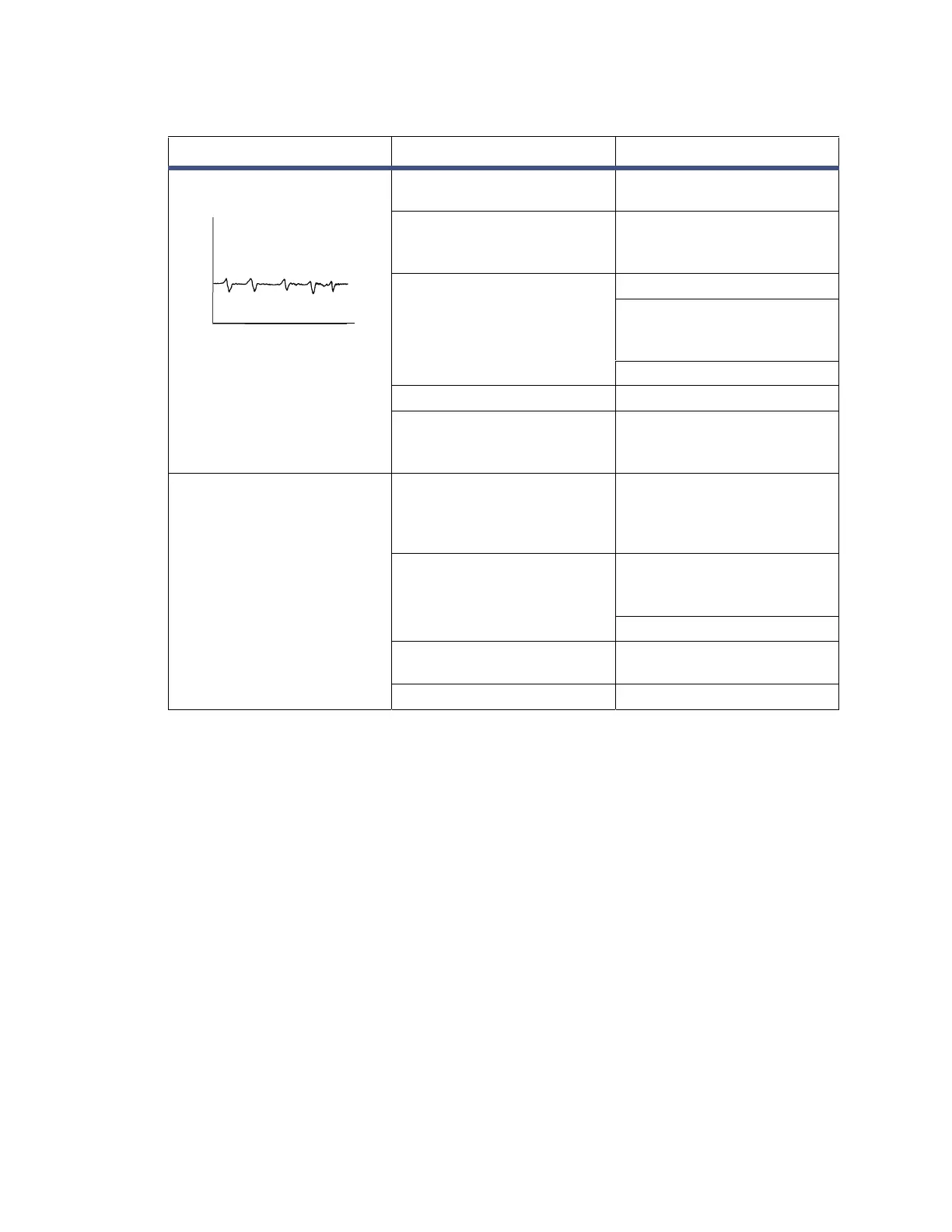
Baseline noise, random Flow cell can contain an air
bubble
Properly purge the
system.
Solvents not properly
degassed
Degas solvents (see
“Solvent degassing” on
page 59).
Flow erratic; pump not
primed
Prime the pump.
Inspect for air in the
pump; replace failing
seals.
Solvents contaminated Use fresh solvent.
Column contaminated Clean or replace column.
Dirty flow cell Clean fluid path (see
“Decontaminating the fluid
path” on page 93).
Baseline noise, random
(Continued)
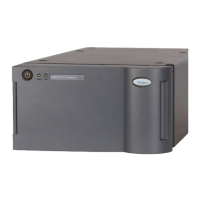
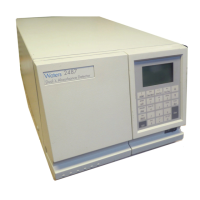
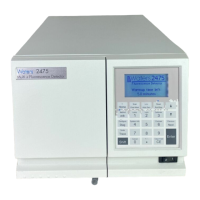
Analog output cable not
properly connected
between 2414 and data
system or recorder
Properly connect cable.
System improperly
grounded
Plug into different outlet
on different electrical
circuit.
Use power conditioner.
Recorder voltage incorrect Set recorder to correct
voltage.
Radio frequency noise Eliminate interference.
Table 7–3: Abnormal baseline troubleshooting (continued)
Symptom Possible cause Corrective action


 To Next Page