
 Need help?
Do you have a question about the Access RAD ASMi-54 and is the answer not in the manual?
Instructions for environmentally responsible disposal of equipment.
Explains symbols indicating potential safety hazards during operation or maintenance.
General safety guidelines for working with energized equipment.
Procedures and safety considerations for connecting AC power.
Procedures and safety considerations for connecting DC power.
Classifies interfaces by safety status and voltage limits.
Guidelines for proper grounding and cable use for EMC compliance.
Compliance statement for FCC Part 15 Class A digital device.
Compliance statement for Canadian Interference-Causing Equipment Regulation.
Warning for Class A product interference in domestic environments.
Initial steps for installing the ASMi-54 unit.
Instructions for connecting network and control interfaces.
Instructions for connecting the power supply to the unit.
Initial configuration steps for the ASMi-54 unit.
Steps to establish a terminal session for configuration.
Configuration of SHDSL ports for CO/CPE operation.
Setting up management parameters like IP address and gateway.
General introduction to the ASMi-54 modem and its capabilities.
Details on available versions, line interfaces, and unit enclosure types.
Illustrates a typical application scenario for the ASMi-54.
Overview of key hardware and network features of the ASMi-54.
Specific features and capabilities of the SHDSL interface.
Details on WAN protocols, PCS/PME naming, and bridging functions.
Explanation of QoS features and fault propagation mechanisms.
How the ASMi-54 can be managed via different interfaces.
Supported management functions like Telnet, SNMP, and Web access.
Information on clock sources, diagnostics, and event logging.
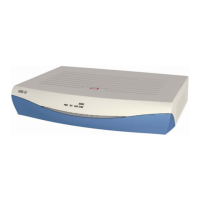
Description of the physical unit, enclosure types, and power options.
Overview of the main functional features of the ASMi-54.
Specifics of Ethernet, WAN (SHDSL), and Control interfaces.
Explanation of ASMi-54's multi-port bridging with VLAN-Aware and Unaware modes.
Specific features of the VLAN-Aware bridge mode.
Details on how frames enter the bridge and are admitted.
How PVID is assigned and ingress filtering works.
How the bridge learns MAC addresses and updates its table.
How the MAC table ages and frames are forwarded.
How frames are transmitted after forwarding.
Configuration of VLAN Stacking and Stripping.
How the bridge operates in VLAN-Unaware mode.
Frame handling in VLAN-Unaware mode.
QoS mapping to priority queues on DSL egress.
Explanation of IP header structure and management access methods.
Inband and out-of-band management options.
Using VLANs for management traffic separation.
Security features and statistics collection capabilities.
Event logging and troubleshooting procedures.
Technical details about the line interface type.
Specifications for internal bridge, control port, Ethernet, and SHDSL ports.
Details on timing sources and front/rear panel indicators.
Information on power source and consumption.
Physical dimensions for plastic and metal enclosures.
Environmental operating conditions (temperature and humidity).
Overview of the installation chapter and safety precautions.
Conditions and space needed for installing the ASMi-54 unit.
List of items included in the ASMi-54 package.
Tools, power cables, and connectors required for installation.
Instructions for mounting the ASMi-54 in a rack.
Connecting Ethernet, SHDSL, and Control interfaces.
Specifics for connecting to Ethernet devices.
Procedures for connecting SHDSL lines and ASCII terminals.
Detailed steps for connecting AC and DC power supplies.
Procedure for powering on the ASMi-54 unit.
Description of front panel LEDs and their functions.
Detailed functions of the front panel LEDs.
Detailed functions of the rear panel LEDs.
Default system configuration parameters for the ASMi-54.
Default configuration parameters for Ethernet ports.
Default configuration for SHDSL and Bridge settings.
Default configuration for individual bridge ports.
Default Quality of Service (QoS) settings.
Methods for configuring and managing the ASMi-54.
Instructions for using an ASCII terminal for configuration.
Steps to initiate a terminal session and log in.
Procedures for logging in and navigating menus.
Example layout of a typical terminal screen interface.
Keys and methods for navigating tables in the terminal interface.
Using the help screen and introduction to ConfiguRAD.
Supported web browsers for accessing ConfiguRAD.
Steps to log into the ASMi-54 using a web browser.
Tools and methods for navigating menus within ConfiguRAD.
Visual representation of the ConfiguRAD menu structure.
Detailed map of configuration options within ConfiguRAD.
Detailed map of monitoring options within ConfiguRAD.
Procedure for powering off the ASMi-54 unit.
Procedures for configuring management functions of the ASMi-54.
Setting unit name, location, and contact information.
Illustrates navigation through configuration screens.
Setting IP address, subnet mask, and community strings for host management.
Configuring host IP details and VLAN encapsulation options.
Setting the baud rate for terminal communication.
Controlling Telnet, SNMP, and Web access permissions.
Defining network management stations for SNMP trap reception.
Adding, modifying, or masking network managers.
Setting operational parameters for the ASMi-54 unit.
Setting up fault propagation behavior for LAN ports.
Setting date, time, and NTP client parameters.
Detailed parameters for setting date, time, and NTP.
Accessing configuration menus for physical Ethernet and SHDSL ports.
Setting administrative status, autonegotiation, and flow control for Ethernet ports.
Detailed parameters for Fast Ethernet port configuration.
Procedures for configuring SHDSL PCS and PME ports.
Parameters for configuring SHDSL PCS ports.
Settings for transmission mode and PME configuration.
Setting clock source and configuring SHDSL PME ports.
Detailed parameters for SHDSL PME port configuration.
Setting current and worst margin for SHDSL PME.
Interface for configuring SHDSL PME current margin.
Steps to configure the internal bridge for data flow priority.
Configuring applications, QoS, and bridge parameters.
Detailed parameters for bridge configuration.
Adding and managing static MAC addresses in the bridge table.
Procedures for adding, removing, and clearing static MAC entries.
How to reconfigure factory-set bridge ports.
Interface for configuring individual bridge port settings.
Detailed parameters for bridge port configuration.
Steps to bind bridge ports to specific Ethernet or PCS ports.
Defining VLANs and assigning ports for tagged/untagged traffic.
Interface for managing VLAN membership for bridge ports.
Setting up traffic classification methods for QoS.
Configuring QoS parameters and selecting traffic classification methods.
Mapping 802.1p priorities to traffic queues.
Setting traffic queue assignments for 802.1p priorities.
Mapping DSCP tag values to traffic queues.
Setting traffic queue assignments for DSCP tag values.
Mapping traffic queues to specific bridge ports.
Procedures for miscellaneous tasks like inventory display.
Viewing the unit's hardware revision and power supply type.
Procedures for changing user credentials.
Procedures for uploading/downloading software and configuration files.
Using Utilities menu for TFTP file transfer operations.
TFTP screen and procedures for resetting the unit to defaults.
Performing overall unit reset and PCS reset.
Setting up the ASMi-54 for a typical customer premises application.
Stages involved in configuring management parameters.
Setting IP address, subnet mask, and communities for the host.
Configuring default gateway and defining SNMP managers.
Defining characteristics of the physical SHDSL ports.
Stages for configuring the internal bridge entity.
Defining the bridge entity and required VLANs with ports.
Overview of preconfigured bridge port settings.
How to monitor system performance and access status information.
Viewing interface connection status and event log.
Interface status and operation status of Ethernet and SHDSL ports.
Viewing the status of the unit's physical ports.
Procedures to view the status of Fast Ethernet ports.
Detailed parameters describing Ethernet port operational status.
Procedures to view the status of SHDSL PCS ports.
Parameters describing the status of SHDSL PCS ports.
Procedures to view the status of SHDSL PME ports.
Parameters describing the status of SHDSL PME ports.
Viewing MAC addresses and VLAN ID assignments.
Displaying the MAC table for VLAN-aware mode.
Displaying the MAC table for VLAN-unaware mode.
How to display statistical data for Ethernet and SHDSL ports.
Procedures to display statistical data for Ethernet ports.
Detailed parameters for Fast Ethernet port statistics.
Procedures for clearing Ethernet and SHDSL statistics.
How to display statistical data for SHDSL ports.
Procedures to display statistical data for SHDSL PCS ports.
Detailed parameters for SHDSL PCS port statistics.
How to display statistics for SHDSL PME ports.
Parameters for displaying SHDSL PME statistics at various intervals.
How to view current 15-minute interval statistics for SHDSL PME.
Detailed parameters for current 15-minute interval statistics.
How to view 15-minute interval statistics for SHDSL PME.
Detailed parameters for 15-minute interval statistics.
How to view current day interval statistics for SHDSL PME.
Detailed parameters for current day interval statistics.
How to view day intervals statistics for SHDSL PME.
Detailed parameters for day intervals statistics.
How to view accumulated data statistics for SHDSL PME.
Detailed parameters for accumulated data statistics.
Procedures for clearing SHDSL PCS and PME statistics.
How the ASMi-54 handles and logs system alarms and traps.
Procedures for accessing and viewing the event log file.
Lists of Ethernet events and SNMP traps recorded in the log.
Procedure for clearing the event log file.
Steps to debug errors when in Debug mode.
A chart to identify and remedy common unit operation problems.
How to test network integrity using ping and trace route.
Procedures for performing a ping test to check IP connectivity.
Utility to trace the network route from ASMi-54 to a destination host.
Information on how to obtain technical support for the product.
Pin assignments for the 10/100BaseT Ethernet RJ-45 connector.
Pin assignments for the SHDSL RJ-45 connector.
Pin assignments for the V.24/RS-232 control connector.
Description of the ASMi-54 automatic boot procedure.
How to access the Boot Manager menu for file operations.
Overview of functions available in the Boot Manager menu.
Methods for transferring software and configuration files.
Procedure for downloading application files using the XMODEM protocol.
Procedure for downloading application files using the TFTP protocol.

 To Next Page
 General