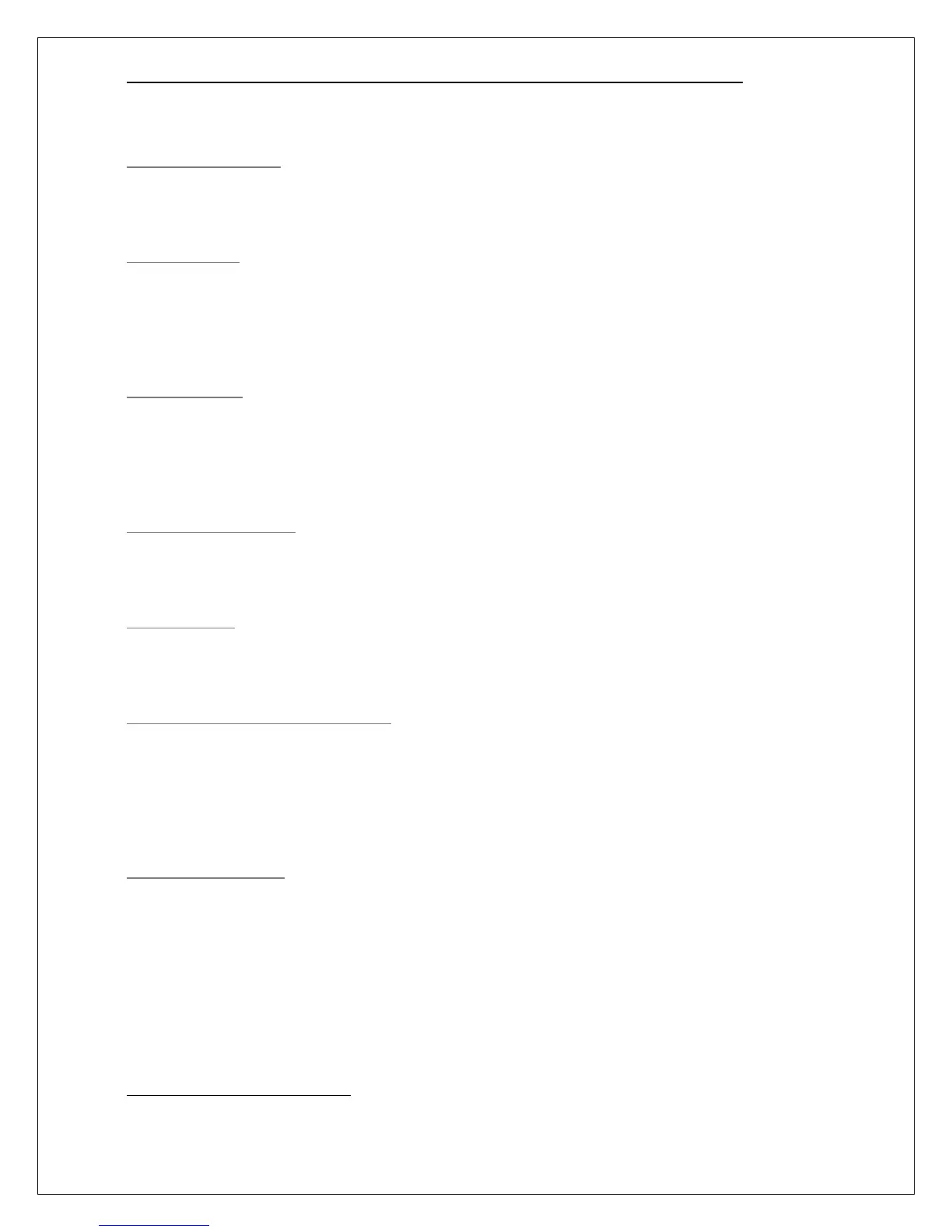
ATI Series D12 Toxic Gas Transmitter with H10 Smart Sensor
Revision N (7/15) 38
Calibration
Calibration Frequency
While the transmitter itself requires no periodic calibration, H10 sensors should be “zero” and “span”
calibrated every 3-6 months, based upon environmental factors. Sensors frequently exposed to dirt, oil
mist, vapors, or very dry air, may require more frequent calibration.
Zero Calibration
As the name implies, zero calibration corrects the transmitter reading to zero in the absence of any
reactive gas. During zero calibration, the transmitter offset error is stored, and subsequently subtracted
from future readings. ATI recommends bottled zero gas as a source, which should be selected based on
the type of sensor. For example, bottled “Zero” Air may be used to zero Chlorine sensors, but Oxygen
sensors require bottled Nitrogen gas.
Span Calibration
The role of span calibration is to correct the transmitter reading to a known concentration of target gas
(the gas for which the sensor was designed to monitor). During span calibration, the transmitter
effectively stores the slope of the error, and divides it out of subsequent readings. Sensors for most
gases, such as Ammonia, require a bottled “span gas” source. This applies even to Oxygen sensors,
where the span gas source is bottled zero air.
Calibration Terminology
The zero calibration is referred to as, “zero”, “zeroing”, and “zeroed”. Likewise for the span
calibration, which appears as, “span”, “spanning”, and “spanned”. As with most instruments, zero
calibration should be performed before span.
Calibration Kits
Calibration kits, containing zero and span bottle gas sources, are available from ATI for many toxic
gases. Contact ATI, or your local ATI representative, if you have questions about calibration gas kits
or gas sources.
Indications During Sensor Calibration
The “un-blanked” gas concentration value is displayed during zero and span calibration, primarily to
observe any slight amount of positive or negative drift. In addition, alarms are cleared and inhibited,
and the 4-20mA output of the D12 transmitter is locked at 4.0mA (transmitters equipped with Oxygen
sensors are locked at 17.4mA, representing normal, 20.9% atmospheric Oxygen). The 4-20mA output
will not change when gas is applied and removed, and for 15 minutes thereafter (the default value).
While viewing the calibration pages, the LCD display will indicate the changing gas concentration.
Calibration Exceptions
Zero and span calibration are not allowed during the following conditions:
v Sensor removed, or in 5-minute
8
warm-up period
v Transmitter fault is active
v Auto-test is active (“A” status indicator appears on Main Display page)
To help prevent errors, zero and span are not allowed if the sensor output, or span value entered, is too
high or too low. Memory errors are reported if detected while updating the sensor or transmitter
memory.
8
Typical value, may vary by sensor gas type.


 To Next Page