1. Introduction - Overview
1-5
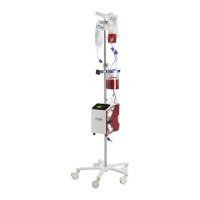
Air in the system is vented through a hydrophobic filter at the top of the Reservoir
Chamber in the Disposable. During infusion, after every 500 ml infused, the system will
automatically recirculate any air in main fluid circuit back into the Reservoir Chamber to
be vented. In addition, there are two (2) air detectors to monitor for air.
Fluid Out (Out of Fluid) Air Detector: This air detector is located closest to the fluid
bag just above the fluid pump. If air is detected, pumping and heating stop. The alarm
sounds and the "Fluid Out" warning message is displayed on the screen. A graphic
message appears showing the location of the air detector involved, and gives
instructions on how to clear the alarm and proceed safely.
In-line Air Detector: This air detector is located above the valve wand (diversion valve).
If air is detected, the valve is closed immediately to prevent air from reaching the patient
line. Pumping and heating stop. An alarm sounds and the "Air detection" warning
message is displayed on the screen. A graphic message appears showing the location
of the air detector, which signaled the warning and gives instructions on how to clear the
alarm and proceed safely.
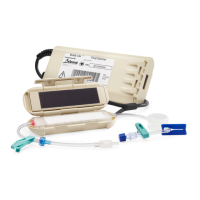
The diversion valve motor is capable of running in two (2) directions. The diversion
valve shuts off the recirculation line when the system is in the infusion mode. When the
RECIRC key is set to the recirculation mode, the diversion valve shuts off the infusion
line to the patient and recirculates fluid through the system, at a preset flow rate of 200
ml/min. If unsafe conditions occur, the system stops pumping, heating, and reverts the
diversion valve to the recirculation mode.
An alarm message is displayed on the screen whenever an error condition occurs which
may require user intervention. At each alarm condition, the pump is stopped, the heater
turned off, and the diversion valve closes, blocking fluid infusion to the patient, and
rerouting fluid back to the reservoir.
See Chapter 8: Alarm Messages and Troubleshooting Procedures for complete
list of alarms.


 To Next Page