SECTION 3 OPERATING THE BIS VISTA MONITORING SYSTEM
______________________________________________________________________
3-36
3.10 How the BIS VISTA Monitoring System
Works
A sensor placed on the patient’s head transmits EEG signals to the BISx. The BISx filters
the data, analyzes it for artifact and processes it using digital signal processing techniques,
then sends the data to the monitor for display. The purpose of processing the EEG
waveform data is to extract characteristic features from the complex signal in order to
provide easier pattern recognition of changes over time during the recording.
A list of the processed variables and a description of each is provided in Appendix I. These
data are displayed on the screen according to the preferences set by the user in the menu
system.
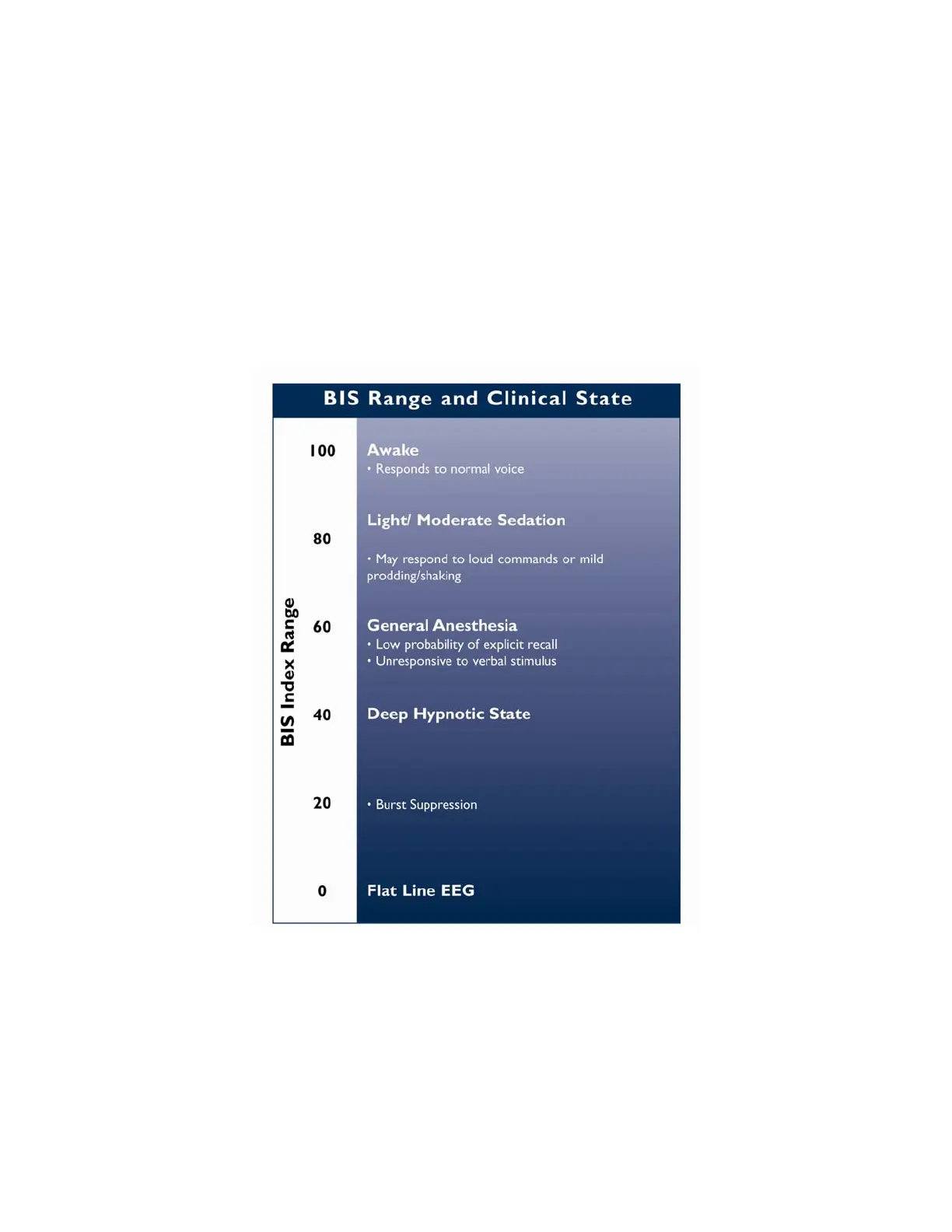
Figure 35 - BIS Range Guidelines
This chart reflects a general association between clinical state and BIS values.
Ranges are based on results from a multi-center study of the BIS involving the
administration of specific anesthetic agents. BIS values and ranges assume that the
EEG is free of artifacts that can affect its performance. Titration of anesthetics to
BIS range should be dependent upon the individual goals established for each
patient. These goals and associated BIS ranges may vary over time and in the
context of patient status and treatment plan.


 To Next Page