BRAILLO
l
B 650 SF
17
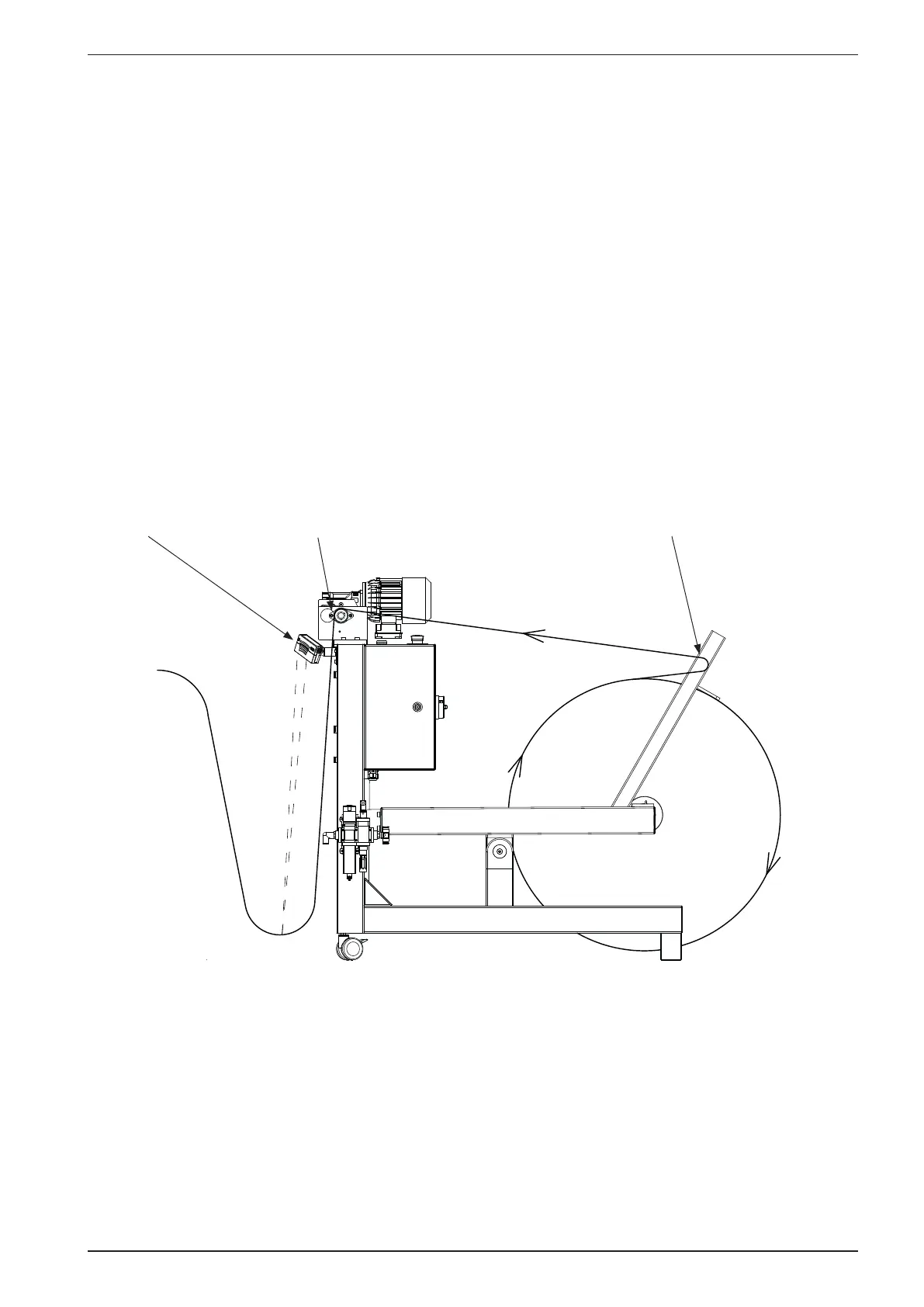
The paper sensor is a laser distance sensor, and is using a laser beam to check the distance to the paper.
If the distance is long (the paper is close to the oor) feeding speed is slow (or it will stop completely)
and if the distance is short, feeding speed is high. This will ensure that there is a constant slack of
paper between the Paper Roll Feeder and the Printer.
The paper is clamped between the feeder rolls with a compressed air cylinder. After a short period of
stand still, the pressure on the feeder rolls will be released. This is done to prevent deformation of the
paper.
Put the shaft in the centre of the roll, and ensure that the shaft is approximately in the centre sideways.
Fasten the shaft. The roll must be placed so that the paper is rolled off at the top. (See gure).
Place the paper roll with the shaft already fastened just behind the Paper Roll Feeder. Lift off the cor-
rection roll with the friction bar and set aside. Use the crank to lower the roll lift until the lift is below
the shaft in the roll. Move the roll forward, make sure that the shaft is situated just above the notches,
while turning the crank to raise the roll lift. Turn the crank until the roll is lifted above the oor. Put the
correction roll with the friction bar on top of the paper roll like on the gure below.
Remove and throw away the rst rounds of paper on the paper roll (to get rid of e.g. sand, dust and dirt
after rolling the paper roll on the oor).
The paper line must go in between the friction bar and the correction roll. Ensure that the friction bar is
resting on top of the roll.
Now the paper must go through the feeder rolls. When turned on, the motor will start feeding paper so
that it can be inserted into the Printer.
Paper sensor Feeder rolls Correction roll



 To Next Page