47
A spreading test should always be done in the eld to ensure satisfactory spreading patterns. Consider the following factors when conducting a
fertilizer spreading test:
• Perform the test should be done in dry conditions (eld/implement)
• Perform the test should be done in a eld covered with a healthy crop: approx. 10 cm of thick plant growth, to avoid ricochetting granules.
• Conduct the test on a at section of the eld and, when setting out trays, make sure that all of them are level wherever possible.
• Conduct the test at the forward speed normally used for spreading (ideal: 14–15 km/h, if the eld allows).
• Let 100–200 kg of fertilizer run through the spreader before conducting the test. There may be deposits of old fertilizer, verdigris or rust on
the spreader discs and booms that need to be worn o before the spreader can produce a constant spreading pattern.
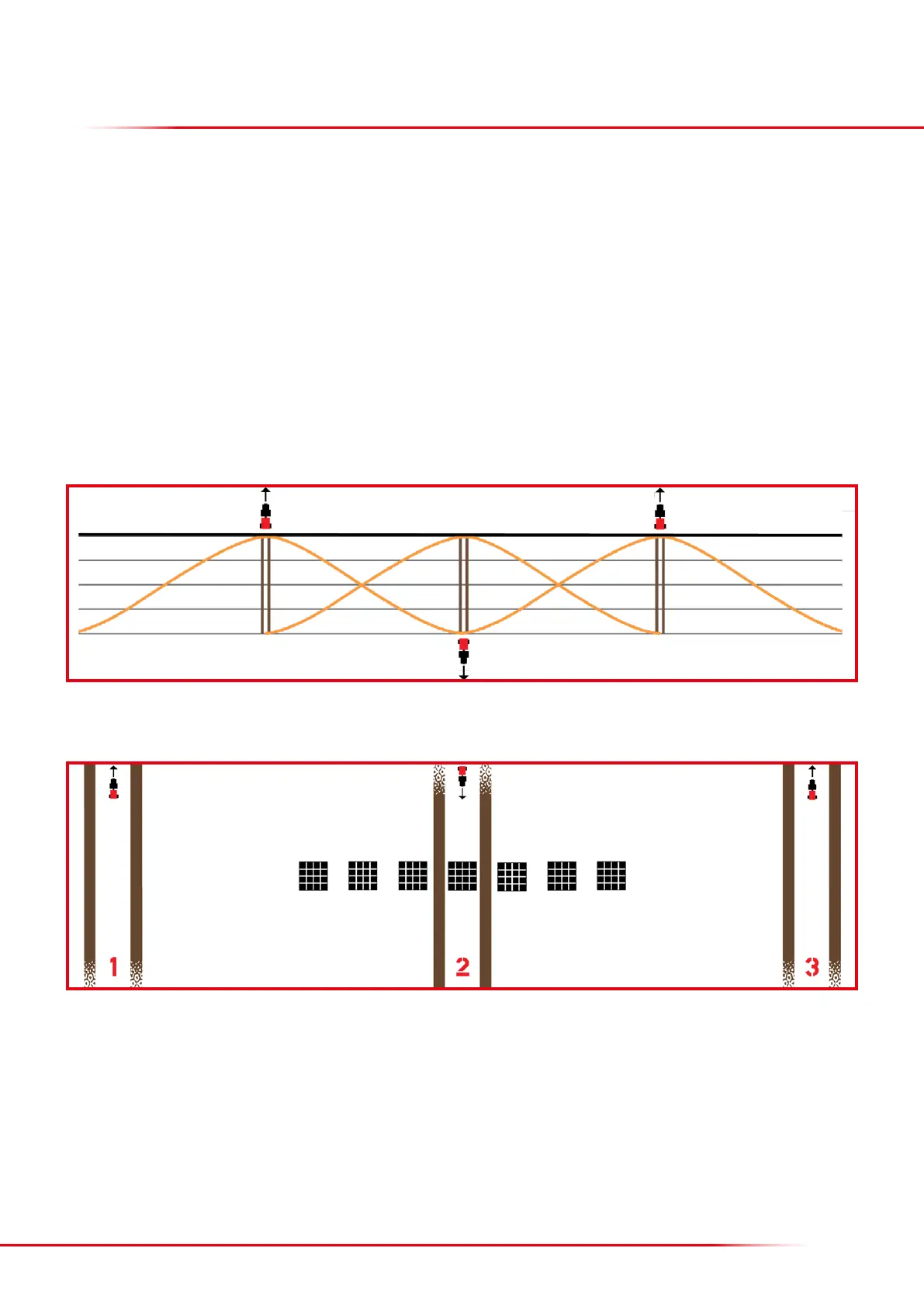
• Set up the trays at one-half of the working width on both sides of the centremost of the three wheel tracks. Drive forward in the rst, back in the
second and forward again in the third track. To get sucient volumes in the trays so that they can be used for an assessment, it is necessary
to spread at least 200 kg/ha.
• Make sure to drive far ahead of the trays before disengaging the application, as the spreader ings the fertilizer far to the rear.
Ideal distribution of fertilizer using overlapping
Setting up testing trays in the eld.
Aer pouring the fertilizer into the measuring cups, assess the spreading results. A correction of the spreading picture is shown on the next page.
FERTILISER SPREADING TEST
AND ADJUSTMENT OF THE APPLICATION RATE



 To Next Page