16
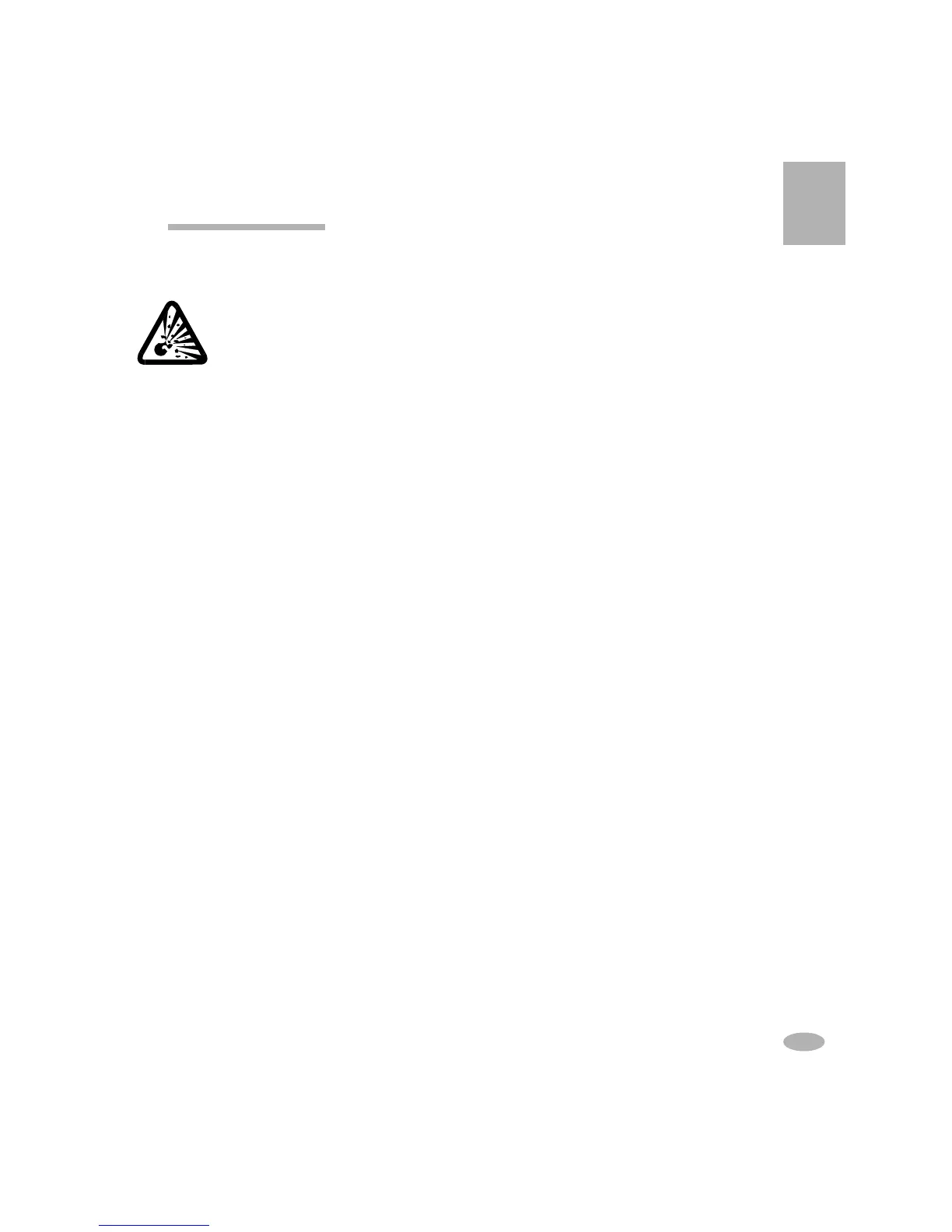
Explosion Hazard
Batteries can burst if treated improperly. Follow these precautions at all times.
" Clean battery contacts before servicing. Press the battery firmly into the
adapter to ensure a good connection.
" Ensure that the selected C-Code is correct for the chemistry, voltage, and
current rating of the battery being serviced.
" Observe battery temperature. Stop service if battery becomes very hot.
Service batteries between 0
o
C (32
o
F) and 60
o
C (140
o
F). Fast-charging
outside this temperature range may cause damage to the battery. Allow cold
batteries to warm up and hot batteries to cool before charging.
" Use only a grounded AC outlet to power the analyzer.
# Do not attempt to charge non-rechargeable batteries such as alkaline, carbon-
zinc, or non-rechargeable lithium.
# Do not short the positive and negative battery terminals together at any time.
# Do not connect leads from one station to another or to the case. An electrical
short to any point outside the station bypasses the current regulation loop and
may cause a fuse to blow.
# Do not exceed the manufacturer’s recommended charge current and voltage
limits for batteries.
# Do not restrict the airflow of the analyzer. Leave the fan opening clear. Fan
operation is automatic.
81


 To Next Page