EasyManua.ls Logo

CellaVision DM1200 - User Manual

CellaVision DM1200
172 pages
Print Icon
To Next Page IconTo Next Page
Loading...
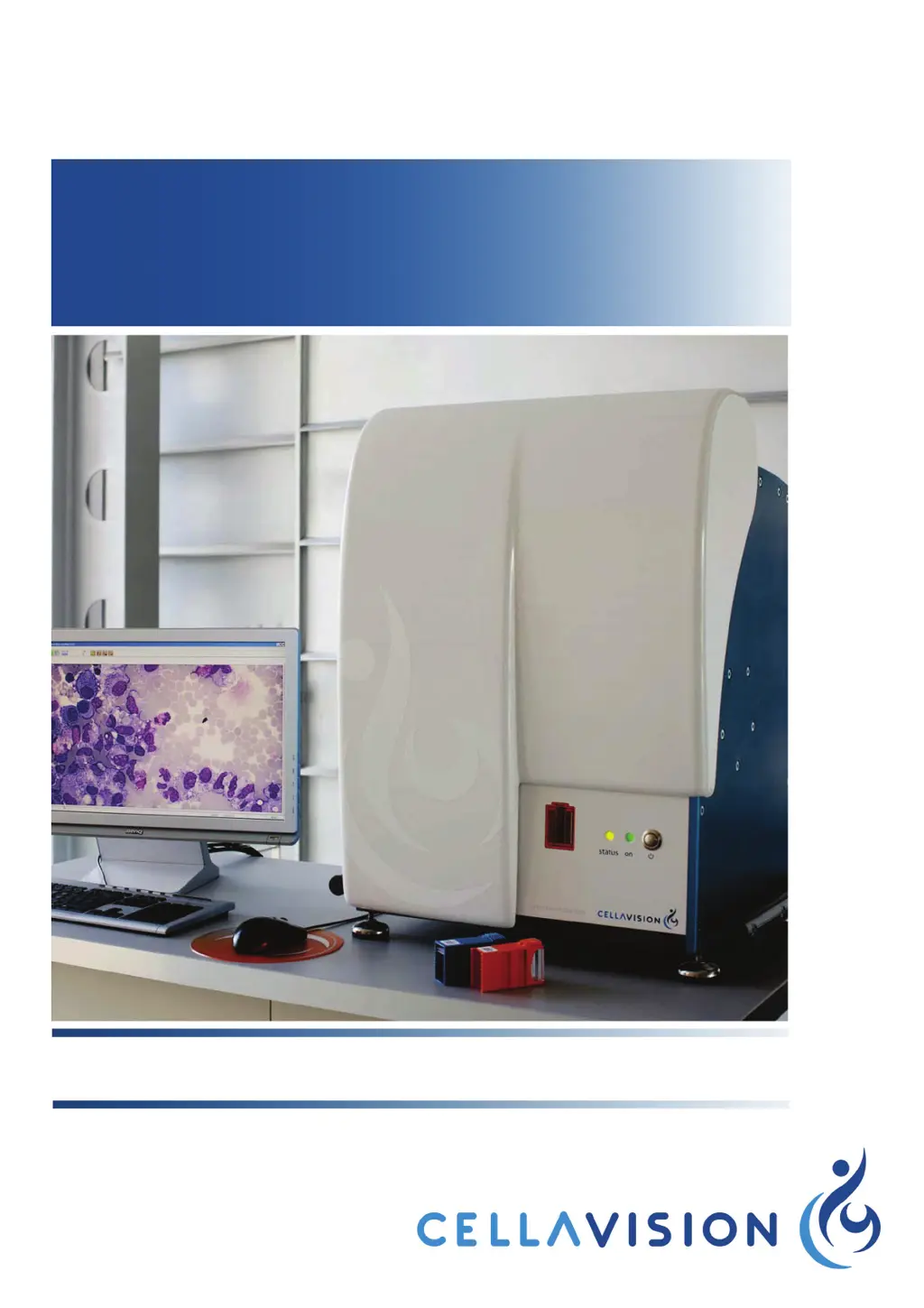
CellaVision
®
DM1200
USER’S MANUAL 3.1 - 3.2

Table of Contents

Questions and Answers

  • D
    David EvansAug 17, 2025
    Why is database access slow on my CellaVision Laboratory Equipment?
    • L
      lisa17Aug 17, 2025
      If the database access is slow in your CellaVision Laboratory Equipment, it might be due to several reasons. The database service may need a restart, which you can do by restarting the system computer if you are using a local database service. The database might be too large; ensure it stays below the maximum allowed size. Fragmentation of database files can also cause slowness, so compress the database. Also, large network delays can be a factor, so verify that your network connections are stable and that network communication delays are minimal.
  • K
    Kayla SparksAug 20, 2025
    What to do if the barcode could not be read by CellaVision DM1200?
    • S
      Sharon SchultzAug 20, 2025
      If the barcode cannot be read by the CellaVision Laboratory Equipment, ensure there is a quiet zone according to specifications around the barcode. If the contrast between the bars and the background is too low, adjust the printer. If the barcode reader is not connected, ensure that the barcode reader cable is connected to both the barcode reader and the control unit and restart the CellaVision DM Software. Also, clean the printer head in the barcode printer if the barcode could not be read due to bad print quality. If the barcode is damaged (barcode cells are missing), adjust the printer.
  • M
    mclarkAug 23, 2025
    Why is the temperature too high on my CellaVision DM1200 Laboratory Equipment?
    • C
      Caroline SmithAug 23, 2025
      If your CellaVision Laboratory Equipment shows a temperature that is too high, check that the air filter on the back of the slide scanning unit is not dirty. If the air filter is clean, the fan in the control unit may be defective.
  • T
    Taylor HowardAug 26, 2025
    What to do if analysis area doesn't cover body fluid sample spot on CellaVision DM1200 Laboratory Equipment?
    • J
      Justin PalmerAug 26, 2025
      If the analysis area does not cover the entire body fluid sample spot on your CellaVision Laboratory Equipment, the configuration of the BF analysis area may be incorrect. Configure the BF analysis area settings.
  • K
    Karen DawsonAug 27, 2025
    How to center body fluid sample spot on CellaVision DM1200?
    • T
      Timothy ThomasAug 27, 2025
      If the body fluid sample spot is not centered in CellaVision Laboratory Equipment, it might be due to incorrect configuration of the BF analysis area. Configure the BF analysis area settings. Alternatively, the sample spot location may vary too much between samples; in this case, ensure your sample preparation process produces slides where the sample spot is always in the same location.
  • S
    sarah73Aug 30, 2025
    How to fix images that are not in focus on CellaVision Laboratory Equipment?
    • M
      Michael RoyAug 30, 2025
      If your CellaVision Laboratory Equipment shows images that are not in focus, the objective may have dust on it. Clean the objectives.
  • R
    Ryan FernandezSep 2, 2025
    What causes light error at high magnification on CellaVision Laboratory Equipment?
    • O
      owensashleySep 2, 2025
      If the CellaVision Laboratory Equipment shows a light error when using 10x/50x/100x magnification, the smear might be too dark or too thick. Ensure that the slides are prepared according to the recommendations.
  • B
    Brian KimSep 4, 2025
    What causes analysis failure in CellaVision Laboratory Equipment?
    • L
      Lee RileySep 4, 2025
      If the analysis fails on the CellaVision Laboratory Equipment, it may be because no monolayer was found. Ensure that the slides are prepared according to the recommendations. Another reason may be oil or dust on the objective, so clean the objectives.
  • L
    Luke HerreraSep 6, 2025
    Why doesn't CellaVision DM1200 save RBC/PLT images?
    • D
      Devin WrightSep 7, 2025
      If the CellaVision Laboratory Equipment does not save RBC/PLT images, it could be due to an excessive amount of small artefacts in the smear. Ensure that the slides are prepared according to the recommendations.
  • B
    Brett LittleSep 9, 2025
    What to do if CellaVision DM1200 cannot find RBC monolayer?
    • R
      Robin DouglasSep 9, 2025
      If the CellaVision Laboratory Equipment could not find RBC monolayer, ensure that the slides are prepared according to the recommendations, so there is a monolayer on slide.

Summary

1 Introduction

1.1 About this Users Manual

Overview of the manual's purpose, scope, and typographical conventions used throughout.

1.1.1 Warnings and Precautions

Safety alerts and instructions for safe system operation, including definitions of Warning, Caution, and Important.

1.2 Intended Use of CellaVision DM1200

Specifies the device's intended applications for cell-locating and analysis in laboratories.

1.3 General Description of CellaVision DM1200

Provides an overview of the system's hardware and software components and general functionality.

1.4 Components and Mechanical Operation

Details the major hardware units comprising the CellaVision DM1200 system.

2 Operating Procedures

2.1 Starting the System

Step-by-step guide on powering on and logging into the CellaVision DM system.

2.2 System Control View

Overview of the system's operational status, indicators, and processing logs.

2.3 Slides and Magazines

Information on slides, magazines, and barcode requirements for system processing.

2.4 Loading Slides into a Magazine

Instructions for correctly loading slides into a magazine for analysis.

2.5 Processing Slides

Procedures related to adding, starting, and monitoring slide processing.

2.6 Ejecting Magazine

Procedure for safely removing a magazine from the system.

2.7 Shutting Down the System

Steps for properly powering off the CellaVision DM system.

3 Quality Control

3.1 Cell Location Performance

Verifying the system's ability to locate cells on prepared slides.

3.2 Self Tests

Information on automatic system checks performed during operation for quality assurance.

4 Verifying Processed Slides

4.1 Peripheral Blood

Procedures for verifying and analyzing peripheral blood slides.

4.2 Body Fluids

Procedures for verifying and analyzing body fluid samples.

5 Reporting Results

5.1 Merging Slides

Compiling analysis results from multiple slides for a complete order report.

5.2 Report Preview

Previewing the format and content of generated analysis reports.

5.3 Signing an Order (result)

The process of confirming and approving an order's analysis results.

5.4 Sending an Order to the LIS

Transmitting signed order data to the Laboratory Information System.

5.5 Canceling an Order

Procedure for canceling an order that has not been processed.

6 Database and Archiving Data

6.1 Database: Processed Orders

Managing and accessing previously processed orders and slides in the database.

6.2 Database: Pending Orders

Managing and accessing orders that are awaiting processing.

6.3 Archiving Data

Procedures for archiving system data for long-term storage and safety.

6.4 Usage Log

Accessing system usage statistics and event logs for monitoring.

6.5 Export Log Files

Exporting system logs for troubleshooting and diagnostic purposes.

6.6 Backup and Recovery of the Database

Importance and methods for backing up and restoring the system database.

7 Digital Slides

7.1 Scanning a Slide

Procedures and requirements for scanning slides to create digital images.

7.2 Scan Overview Image

Navigating and examining scanned slide overview images.

7.3 Database View

Accessing and managing processed and pending orders within the database.

7.4 Customizing the System

Adjusting various system settings for optimal operation and user experience.

8 System Information

9 Customizing the System

9.1 Adjusting Database Settings

Creating, managing, and configuring databases and connections.

9.2 Adjusting Users Settings

Managing user accounts, access levels, and permissions.

9.3 Adjusting Analysis Settings

Configuring default analysis parameters and options.

9.4 Adjusting Reclassification Settings

Setting rules for automatic reclassification of cells.

9.5 Adjusting RBC Precharacterization Settings

Customizing RBC morphology precharacterization limits and options.

9.6 Adjusting PLT Settings

Configuring platelet estimation parameters, factors, and levels.

9.7 Adjusting Report;Sign Settings

Setting report templates and default options for signing dialogs.

9.8 Adjusting Standard Comments Settings

Managing and configuring predefined comments for analysis results.

9.9 Adjusting Reference Cells Settings

Configuring and managing reference cell images for comparison.

9.10 Adjusting E-mail Settings

Configuring email notification settings for system events.

9.11 Adjusting Archiving Settings

Setting up parameters for archiving cell images and data.

9.12 Adjusting Language Settings

Changing the user interface and manual language settings.

9.13 Adjusting BF Analysis Area

Defining and adjusting the analysis area for body fluid samples.

10 Maintenance

10.1 Weekly Maintenance

Routine maintenance tasks to be performed weekly.

10.2 Preventive Maintenance

Maintenance tasks performed by authorized CellaVision personnel.

10.3 Remedial Maintenance

Procedures for addressing system issues and performing repairs.

10.4 Database Performance

Methods to maintain and improve database performance.

11 Troubleshooting

11.1 Troubleshooting Steps

General steps to follow when encountering and diagnosing system problems.

11.2 Troubleshooting Chart

A comprehensive chart listing problems, their causes, and recommended actions.

12 CellaVision Software

12.1 CellaVision Remote Review Software

Overview of the software for remote access to analyzed slides.

12.2 CellaVision Competency Software

Description of the software for education and competency testing.

Appendix A - System Specification

Climate Specification

Environmental operating conditions for the CellaVision DM1200 system.

Physical Specification

Physical dimensions, weight, and power requirements of the system.

Performance Specification Peripheral blood

Performance metrics and throughput for peripheral blood analysis.

Performance Specification Body Fluid

Performance metrics and throughput for body fluid analysis.

Performance Specification Scan

Throughput and disk space requirements for scanned slides.

Materials Specification

Details on materials used in system operation, like immersion oil and stains.

Slide requirements

Specifications for slides and magazines used with the system.

Barcode

Information on barcode requirements, formats, and positioning for slides.

Appendix B - Storage and Handling

Storage

Recommended environmental conditions for storing the CellaVision DM1200 system.

Transporting the System

Guidelines for packaging, transporting, and unpacking the system.

Disposal Information

Information on the proper disposal of system components and magazines.

Appendix C - Buttons and Indicators

Buttons

Identification and function of various buttons in the software interface.

Indicators

Explanation of system status indicators and their meanings.

Keyboard shortcuts

List of useful keyboard shortcuts for system navigation and operation.

Appendix D - Recommended Workflow

Recommended Settings

Recommended system settings for common laboratory workflows.

Workflow Single Slides; Confirm Cell Counter Results

Flowchart detailing the recommended workflow for single slide analysis.

Workflow Duplicate Slides

Flowchart detailing the recommended workflow for processing duplicate slides.

Appendix E - User Authorization Levels

Observer

Defines the permissions and capabilities of an Observer user role.

User

Defines the permissions and capabilities of a standard User role.

Restricted

Defines the permissions and capabilities of a Restricted user role.

Authorized

Defines the permissions and capabilities of an Authorized user role.

Administrator

Defines the permissions and capabilities of an Administrator user role.

Appendix F - Determining the Platelet Estimate Factor

APPENDIX G - Slide Preparation Guidelines

Slide Preparation for Peripheral Blood

Guidelines for collecting samples and preparing blood smears.

Slide preparation for Body Fluids

Guidelines for preparing slides from body fluid samples.

Appendix H- Glossary

CellaVision DM1200 Specifications

General IconGeneral
BrandCellaVision
ModelDM1200
CategoryLaboratory Equipment
LanguageEnglish