Performance Considerations
64 Operator’s Manual
6.3 Performance Considerations
6.3.1 Overview
This section contains information for optimizing the performance of the moni-
toring system.
Verify the performance of the monitoring system by following the procedures
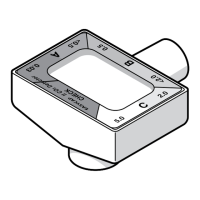
outlined in the SRC-MAX Pulse Oximetry Functional Tester Technical Manual.
Have a qualified service technician perform these procedures prior to initial
installation in a clinical setting and every 24 months as part of preventive main-
tenance. Reference Service, p. 7-72.
6.3.2 Patient Conditions
Application issues and certain patient conditions can affect the measurements
of the monitoring system and cause the loss of the pulse signal.
• Anemia — Anemia causes decreased arterial oxygen content. Although SpO2
readings may appear normal, an anemic patient may be hypoxic. Correcting
anemia can improve arterial oxygen content. The monitoring system may fail to
provide an SpO
2 reading if hemoglobin levels fall below 5 gm/dl.
• Dysfunctional hemoglobins — Dysfunctional hemoglobins such as carboxyhemo-
globin, methemoglobin, and sulphemoglobin are unable to carry oxygen. SpO2
readings may appear normal; however, a patient may be hypoxic because less
hemoglobin is available to carry oxygen. Further assessment beyond pulse oxime-
try is recommended.
• Additional possible patient conditions may also influence measurements.
1. Poor peripheral perfusion
2. Excessive patient activity
3. Venous pulsations
4. Dark skin pigment
5. Intravascular dyes, such as indocyanine green or methylene blue
6. Externally applied coloring agents (nail polish, dye, pigmented cream)
7. Defibrillation





 To Next Page