TELECOMMUNICATION SAFETY
Telecommunication network interfaces are classified according to their circuit characteristics. The following
table lists the status of safety circuit characteristics of several standard interfaces. If the safety
characteristic of a given interface type differs from the standard one, a notice will be given in the
equipment manual.
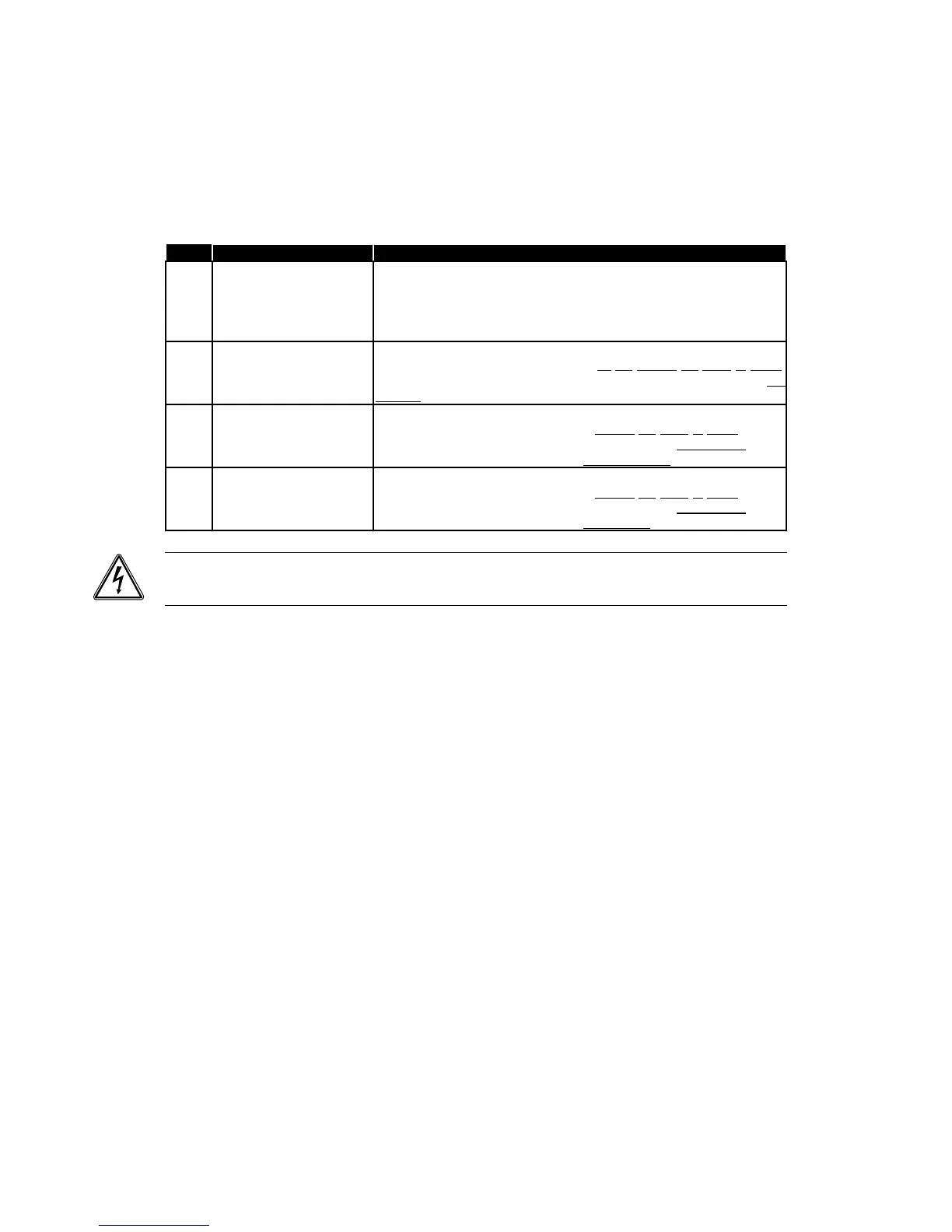
Safety
Interface Types Description
SELV V.35, V.36/V.11, V.24/V.28
10Base-T, 100Base-T,
1000Base-T, 1000Base-TX,
1000Base-SX, G64, E1, E3,
STM-1, Voice E&M
Safety Extra Low Voltage
Ports which do not present hazardous voltages.
Voltages up to 42,4V peak or 60Vd.c.
TNV-1 none
Telecommunication Network Voltage -1:
Ports whose normal operation voltages do not exceed the limits of SELV
possible.
TNV-2 FXO
Telecommunication Network Voltage - 2:
Ports whose normal operation voltages exceed the limits of SELV
up to 71V peak or 120Vd.c.), on which overvoltages from
telecommunications networks system are not possible.
TNV-3 FXS, xDSL
Telecommunication Network Voltage - 3:
Ports whose normal operation voltages exceed the limits of SELV
up to 71V peak or 120Vd.c.), on which overvoltages from
telecommunications networks system are possible.
Some SELV and TNV circuits use the same



 To Next Page