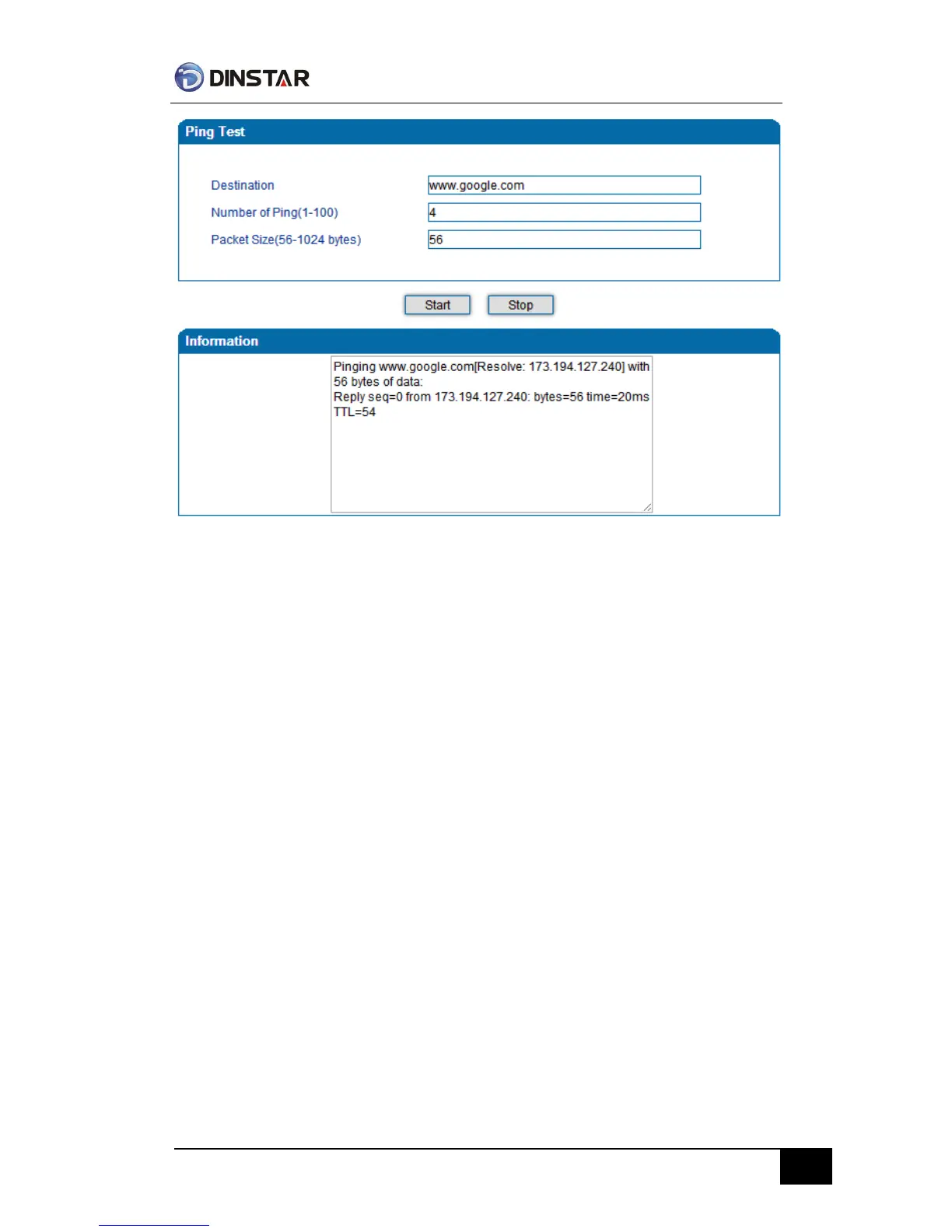
Figure 4.14.4 Ping Test
Tracert Test
Tracert is trace router and used to tracking routing.
Tracert sends a sequence of Internet Control Message Protocol (ICMP) echo request packets
addressed to a destination host. Determining the intermediate routers traversed involves
adjusting the time-to-live (TTL), aka hop limit, Internet Protocol parameter. Frequently
starting with a value like 128 (Windows) or 64 (Linux), routers decrement this and discard a
packet when the TTL value has reached zero, returning the ICMP error message ICMP Time
Exceeded.
Tracert works by increasing the TTL value of each successive set of packets sent. The first set
of packets sent have a hop limit value of 1, expecting that they are not forwarded by the first
router. The next set have a hop limit value of 2, so that the second router will send the error
reply. This continues until the destination host receives the packets and returns an ICMP
Echo Reply message.
Trace route uses the returned ICMP messages to produce a list of hops (which usually
consists of routers and layer 3 switches) that the packets have traversed. The timestamp
values returned for each router along the path are the delay (aka latency) values, typically
measured in milliseconds for each packet.


 To Next Page