ICS-900 Operator’s Manual
22 Doc. 065215-02 9/09
In ion analysis, the effect of temperature variation is minimized by
suppressing eluent conductivity. Built-in preset temperature
compensation also ensures that there is no major change in the baseline or
in peak heights. Temperature compensation
further improves baseline
stability.
Direct conductive heating is used in the ICS-900 conductivity cell to
provide temperature control and compensation. A heat exchanger inside
the ICS-900 cell regulates the temperature. All data is collected at 40 °C
(104 °F).
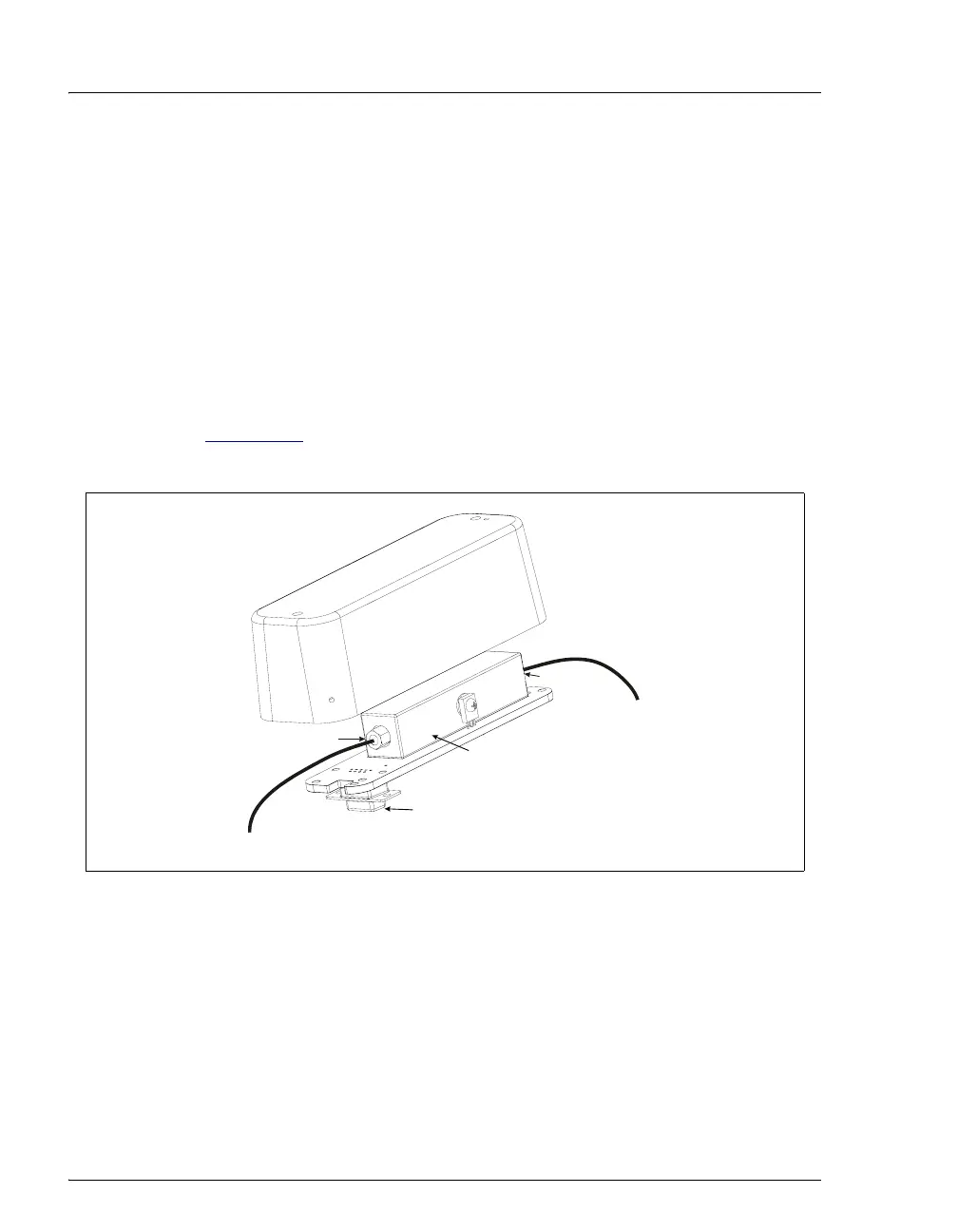
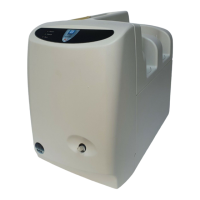
The cell is housed inside a DS5 Detection Stabilizer (P/N 067761) (see
Figure 2-10
), which helps to insulate the cell from fluctuations in ambient
temperature.
The conductivity cell has two detection limit ranges: 0 to 500
μS or 0 to
10,000
μS. Select the range depending on the expected detector readings
for the application. The default range of 0 to 500
μS is appropriate for
most applications. The detection limit range is set in the Properties dialog
box of the Chromeleon Server Configuration program. For details, refer
to the ICS-900 Ion Chromatography System Installation Instructions
(Document No. 065214), provided on the Dionex Reference Library CD-
ROM (P/N 053891) and in the ICS-900 Ship Kit (P/N 067768).
Figure 2-10. Conductivity Cell and DS5 Detection Stabilizer
From suppressor
ELUENT OUT por
To re
enerant reservoir
Connector to component
mounting panel
D
S
5
D
e
t
e
c
t
i
o
n
S
t
a
b
i
l
i
z
e
r
Conductivity Cell
Cell Inlet
Cell Outlet


 To Next Page