Buttonhole
sewing to match the size of the button is
possible.
For stretch fabric or thin fabric, it is
recommended
to use a
stabilizer
for a better
buttonhole
finish.
0
A-14
A-16
A-18
D
A-15
A-17
A-19
2. -7.0 0.3- .0
3.0-7.0 0.3- .0
2.
-
. 0.3- .0
. -7.0 0.3- .0
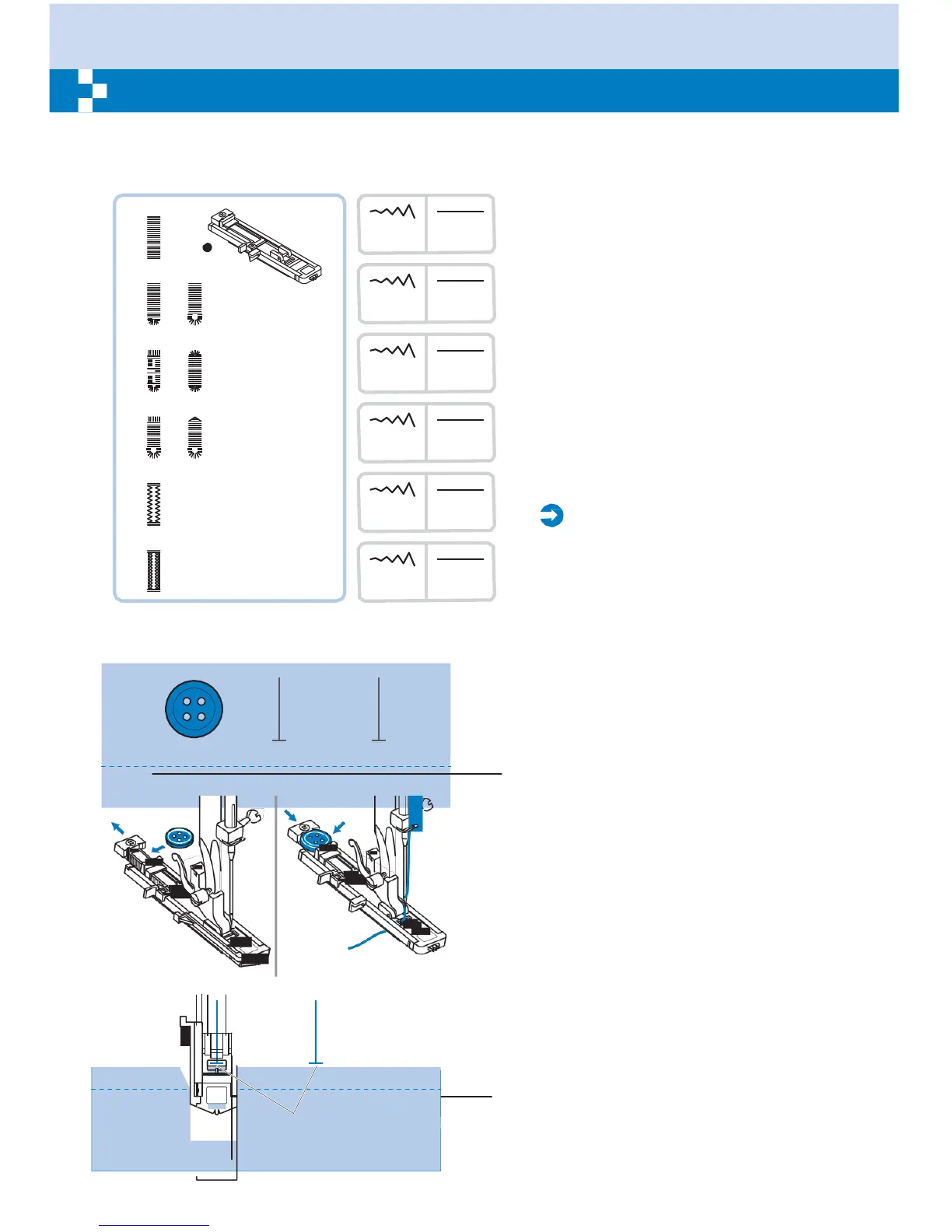
0: For light to medium weight fabrics
A-14: For light or medium weight fabrics
A-15: For light or medium weight fabrics
A-16: For heavier weight fabrics
A-17: For light or medium weight fabrics
A-18: For heavy weight fabrics
A-19: For jeans or trousers
A-20: For jeans or stretch fabric with a
coarse weave
A-21: For stretch fabric
A-20
A-21
3.0-7.0
.0-2.0
3.0-7.0
.0-3.0
Please
Note:
Before sewing a buttonhole on your
project, practice on a scrap piece of the
same type of fabrics.
Mark the positions of the buttonhole on the
fabric. The maximum buttonhole length is 3cm
(1 3/16 inch). (Total of diameter + thickness of
button.)
Attach the buttonhole foot, then pull out the
button holder plate and insert the button.
The size of the buttonhole is determined by the
button inserted in the button plate.
The thread should be passed through the hole
in the presser foot, then be placed under the
foot.
Starting
point
Select the buttonhole stitch.
Adjust the stitch width and the stitch length to
the desired width and density.
Position the fabric under the presser foot with
the front end of the buttonhole mark aligned
with the center line on the buttonhole foot.


 To Next Page