3-9
1
2
3
Basic Usage
Setting the Threshold (Teach Function)
3-4-2 Teach Mode
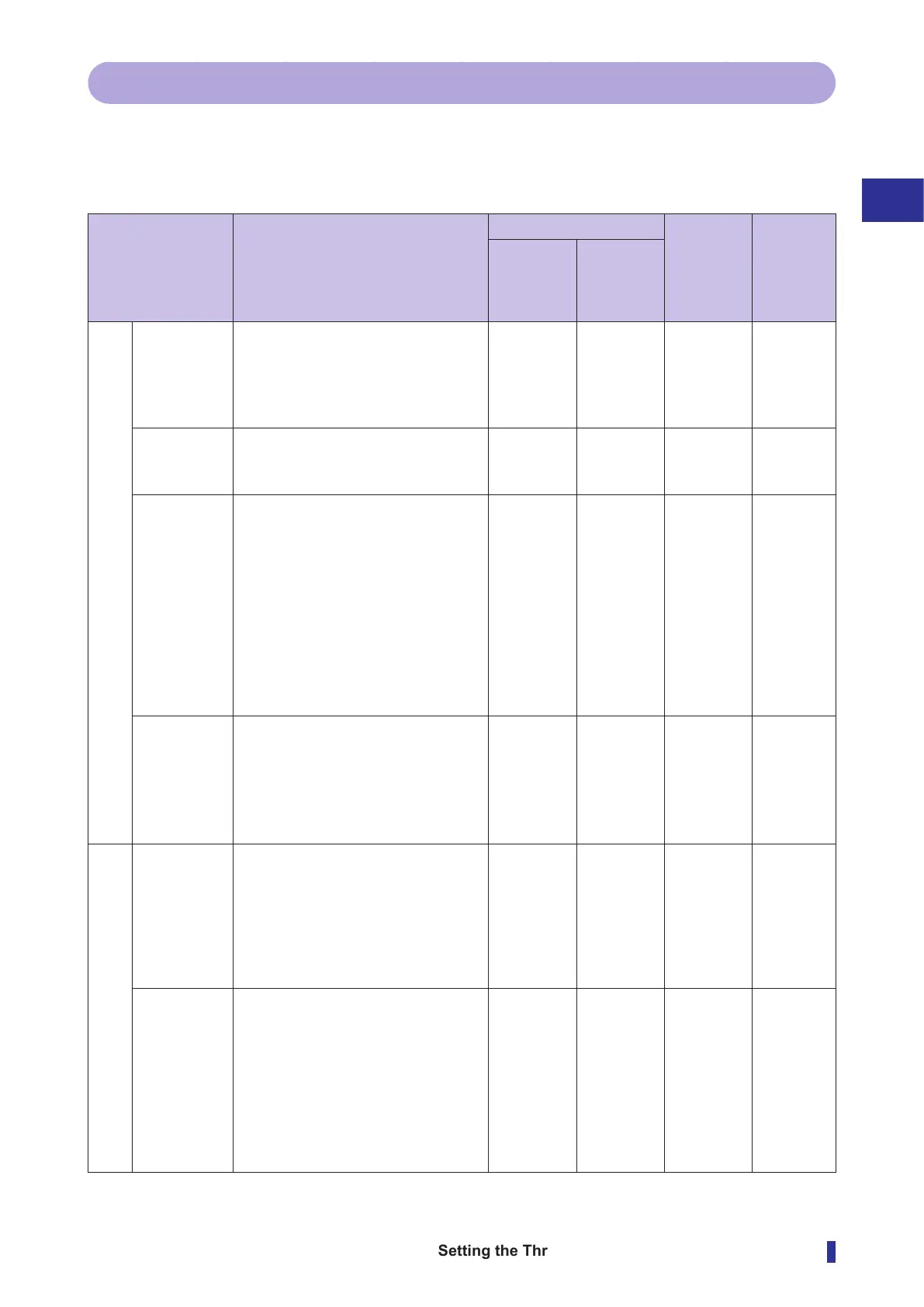
The teach function, which requires the threshold to be set, has the following modes (types).
Select the optimal mode for the fiber unit and the type of object to detect.
○: Effective ×: Not effective
Teach mode Selection criteria
Detection method
Sample
object to
teach
Description
Through-
beam/
retro-
reflective
Diffuse
reflective
Standard
1 point • When a sample object is not
available.
• When it is difficult to execute the
teach function with the actual object
present and not present.
× ○
Not
required
Page 3-10
2 points • When it is possible to execute the
teach function with the actual object
present and not present.
○ ○
Required Page 3-13
Auto • When the threshold must be set
according to moving objects on a
line that cannot be stopped.
• When it is difficult to execute the
teach function with the actual object
present and not present. (Such as
with small objects and objects that
move at high speeds)
• When the threshold must be set
considering the effect of the worksite
environment.
○ ○
Required Page 3-16
Through • When a sample object is not
available.
• When detecting a plastic sheet, film,
and other transparent/semi-
transparent objects.
• When detecting small objects.
○ ×
Not
required
Page 3-19
Expansion
1-point Zone • When the threshold must be set to a
specific range.
• When detecting objects of certain
sizes with a screen/array fiber unit.
The threshold can be set as a
percentage of the received light
amount set by teaching.
○ ○
Required Page 3-21
2-point Zone • When the threshold must be set to a
specific range, the same as for the
1-point Zone mode.
• When detecting objects of certain
sizes with a screen/array fiber unit.
• The upper and lower limits of the
threshold can be set by the teach
function with objects at upper and
lower limits.
○ ○
Required Page 3-24


 To Next Page