Prepare for the balancing procedure
What is balancing
Balancing is a procedure to try to improve the mass distribution of a body so that it rotates in
its bearings without unbalanced centrifuge forces.
Rotating machines cannot be balanced to a zero unbalance state, but modern devices like
VIBXPERT 3 can decrease unbalance to very low levels. To try and get very low unbalance in
standard machines is not economical. VIBXPERT 3 measures and corrects imbalance. The
imbalance can be measured with 1-plane balancing or 2-plane balancing. 1-plane balancing is
used to correct static imbalance. Static imbalance occurs when the plane of imbalance and the
center of gravity of the rotor coincide. Dynamic imbalance (or couple imbalance) occurs when
the center of gravity of the rotor remains on the rotational axis of the rotor. 2-plane balancing
is used to correct dynamic imbalance.
Note:Machines must be disconnected before any work is done on them. The machines
must be protected against being switched on accidentally.
Steps
l
Use visual inspection to find the cause of the imbalance. If possible, try to correct the
imbalance. You can do these: remove any coatings from the impeller; fasten any loose
balancing weights; tighten any loose screws on the foundation.
Note:If the machine cannot be balanced in situ, mount it tightly on a rigid found-
ation. This can be directly on frames or on vibration isolators.
l
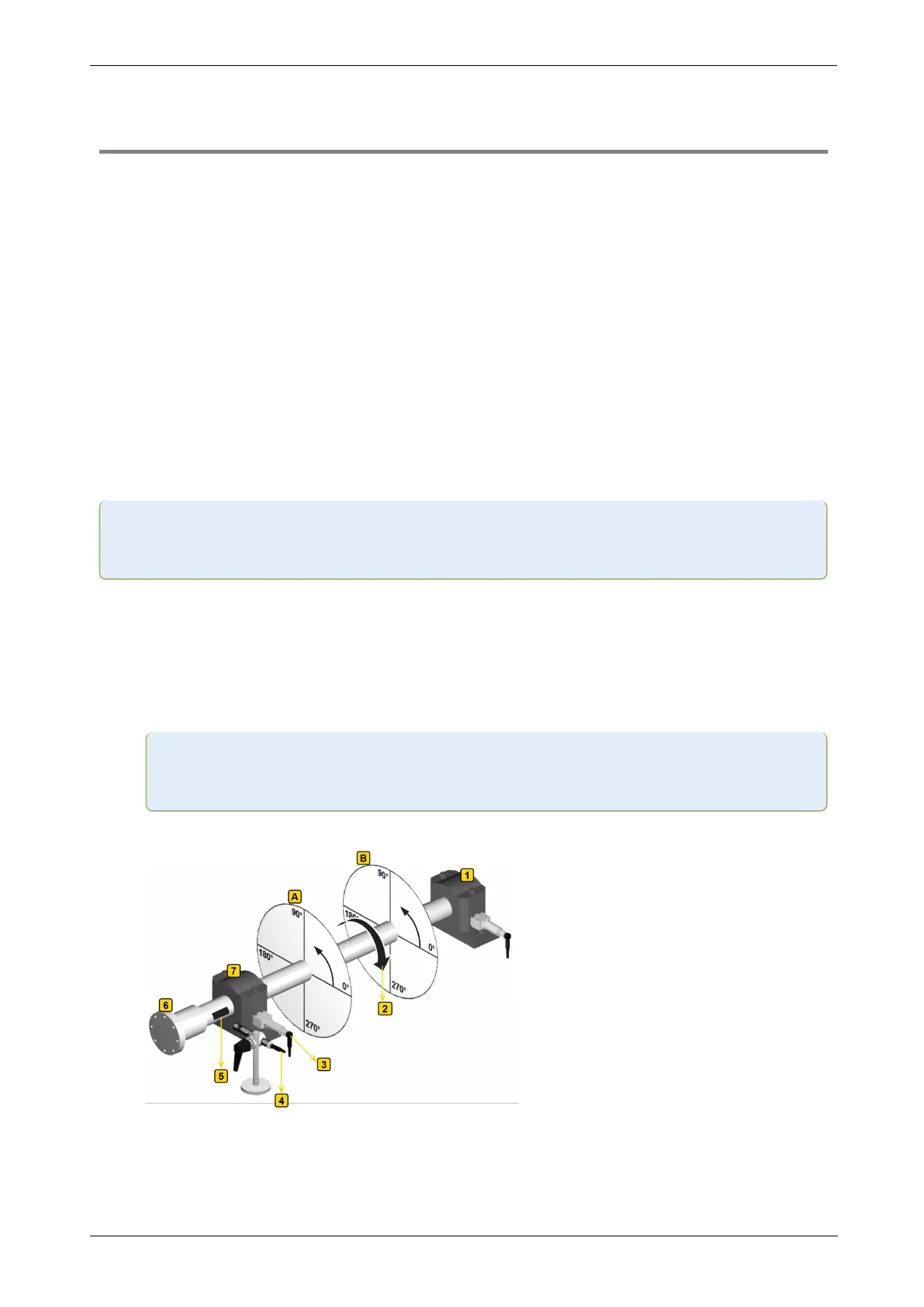
Select the measure and balancing planes (refer to image below).
100 Version:1.0
On-board help



 To Next Page