EasyManua.ls Logo

Grizzly G0824 - User Manual

Grizzly G0824
124 pages
Print Icon
To Next Page IconTo Next Page
Loading...
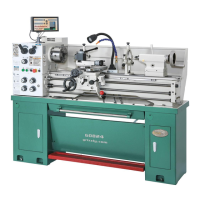
MODEL G0824
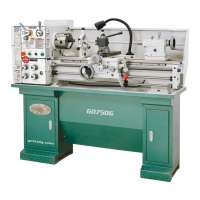
14" X 40" GUNSMITH LATHE
OWNER'S MANUAL
(For models manufactured since 12/16)
COPYRIGHT © MARCH, 2017 BY GRIZZLY INDUSTRIAL, INC. REVISED JUNE, 2018 (HE)
WARNING: NO PORTION OF THIS MANUAL MAY BE REPRODUCED IN ANY SHAPE
OR FORM WITHOUT THE WRITTEN APPROVAL OF GRIZZLY INDUSTRIAL, INC.
#BLJHKB18736 PRINTED IN CHINA
V1.06.18

Table of Contents

Questions and Answers

  • D
    Debra RossAug 17, 2025
    Why does my Grizzly G0824 vibrate so much?
    • J
      Jennifer JohnsonAug 17, 2025
      Excessive vibration in your Grizzly Lathe can stem from several issues. It could be due to an unbalanced workpiece, which requires re-centering with the spindle bore. Alternatively, the workpiece might be hitting a stationary object, which requires immediate correction. Other potential causes include loose or damaged V-belts needing re-tensioning or replacement, misaligned V-belt pulleys, an unbalanced chuck or faceplate needing rebalancing, gears not aligned in the headstock, or worn/broken gears or bearings requiring replacement. It could also be the spindle bearings, which may need preload resetting or replacement.
  • J
    Jeff JohnsonAug 20, 2025
    How to fix a bad surface finish on my Grizzly G0824?
    • E
      Emily DawsonAug 20, 2025
      A poor surface finish on your Grizzly Lathe workpiece can be caused by several factors. Ensure you are using the correct spindle speed and feed rate. Check your tooling; dull or incorrect tools should be sharpened or replaced. If the workpiece is flexing, adjust the setup to provide proper support. Tighten any excessive play in the gibs. Prevent material buildup on the cutting tool by using coolant. Also, check if the bearing preload needs adjustment, or if the belts or spindle bearings are worn and need replacement.
  • R
    Roger HammondAug 22, 2025
    What to do if my Grizzly G0824 carriage will not feed or is hard to move?
    • J
      John HillAug 23, 2025
      If the carriage on your Grizzly Lathe is difficult to move, several factors could be the cause. First, ensure that all gears are engaged using the gear dials and that the half nut lever is disengaged. Check that the carriage lock is fully released and the screw on the feed handle is tightened. Clear away any chips that may have loaded up on the ways and lubricate the bedways. If the gibs are too tight, loosen them slightly. Finally, inspect the gears for breakage and the feed clutch for slipping; replace gears if broken, and increase clutch spring pressure if the clutch is slipping.
  • S
    Steven CantuAug 25, 2025
    Why is my Grizzly G0824 Lathe workpiece tapered?
    • C
      crystal16Aug 26, 2025
      A tapered workpiece on your Grizzly Lathe can be due to the spindle and tailstock centers not being properly aligned. Re-align the tailstock to the headstock spindle centerline. Another possible cause is a twisted lathe bed, which can be corrected by leveling the lathe.
  • J
    Jacqueline JonesAug 27, 2025
    What causes excessive vibration during cutting with my Grizzly G0824 Lathe?
    • D
      David MillerAug 27, 2025
      Excessive vibration during cutting with your Grizzly Lathe can arise from several sources. Ensure the tool holder is sufficiently tight and that the cutting tool does not extend more than 1/3 of its length out of the holder. If the workpiece is deflecting, use a steady or follow rest. An unbalanced workpiece should be balanced. Check and adjust the gibs if they are out of adjustment. Replace or resharpen a dull cutting tool, and verify that the spindle speed and feed rate are correct.
  • D
    Diana PerryAug 30, 2025
    Why is my Grizzly G0824 Lathe spindle lacking turning power?
    • S
      Sarah SchmidtAug 30, 2025
      If your Grizzly Lathe spindle lacks turning power, the belts might be slipping. Try tightening the belts and inspect them for oil or grease; clean or replace as necessary.
  • C
    Cindy LewisSep 1, 2025
    Why are my Grizzly G0824 Lathe cross slide handwheels hard to move?
    • K
      kmendozaSep 2, 2025
      If the cross slide, compound, or carriage handwheels on your Grizzly Lathe are hard to move, first lubricate the bedways/ball oilers if they are dry. Clean the ways if they are loaded with shavings, dust, or grime, then lubricate, re-install, and re-adjust. Also, slightly loosen the gibs if they are too tight and lubricate the bedways. Finally, slightly loosen the backlash setting if it is too tight.
  • M
    Michele NorrisSep 4, 2025
    What causes my Grizzly G0824 workpiece to slip in the chuck?
    • W
      Whitney DiazSep 4, 2025
      If the workpiece slips in the chuck of your Grizzly Lathe, it could be due to several reasons. The chuck jaws may not match the workpiece diameter, requiring repositioning or molding of the workpiece. The cutting pressure or feed rate might be too high, so reduce the cutting force. A high spindle speed can also cause slippage, so reduce the spindle speed. Lastly, worn or improperly installed jaws can be the culprit; remove and reinstall them properly, turn them with a cutting tool to ensure they are concentric, or replace the jaws or chuck.
  • L
    Laura MartinSep 6, 2025
    How to remove a stuck tapered tool from my Grizzly Lathe tailstock quill?
    • S
      Susan BowenSep 6, 2025
      If a tapered tool is difficult to remove from the tailstock quill of your Grizzly Lathe, ensure the quill is fully retracted into the tailstock by rotating the quill handwheel until it forces the tool out. If this doesn't work, debris may be present. Remove the quill from the tailstock and drive the tool out with a punch, then carefully deburr the bore of the quill.
  • A
    Amber ShepherdSep 9, 2025
    Why are the chuck jaws on my Grizzly Lathe stuck?
    • K
      Kathryn ReyesSep 9, 2025
      If the chuck jaws on your Grizzly Lathe will not move easily, chips might be lodged in the jaws or scroll plate. Remove the jaws, clean and lubricate the scroll plate, and then reinstall the jaws. Alternatively, there may be a dent or ridge in the jaw slot of the chuck body, which can be removed by stoning or filing off the high spot.

Summary

Introduction

Contact Information

Provides contact details for Grizzly technical support and documentation.

Manual Accuracy

Explains potential differences between manual and machine, and how to find updates.

Identification

Controls & Components

Headstock Controls

Details the functions of spindle speed, feed direction, and gearbox controls.

Control Panel

Explains the functions of power, coolant, and emergency stop buttons on the control panel.

Carriage and Tailstock Controls

Describes the functions of carriage handwheel, locks, and tailstock mechanisms.

End Gears and Safety Foot Brake

Explains end gears for speed control and the function of the safety foot brake.

Machine Data Sheet

Machine Specifications

Lists key operational, headstock, tailstock, threading, and dimension specifications.

Section 1: Safety

Safety Instructions for Machinery

General safety guidelines, symbol meanings, and operator responsibilities.

General and Specific Safety Precautions

Covers apparel, dust, hearing protection, tools, positions, children, and operational safety.

Section 2: Power Supply

Availability and Requirements

Details electrical circuit requirements, voltage, phase, and current ratings for safe operation.

Grounding and Extension Cords

Explains grounding importance and provides guidance on using extension cords.

Section 3: Setup

Preparation, Needed Items, and Inventory

Outlines preparation, lists needed items, and details machine components.

Cleanup and Site Considerations

Provides cleaning instructions and covers site requirements like space and environment.

Assembly and Lifting

Instructions for assembling components and safely lifting the lathe.

Anchoring, Leveling, Lubricating, and Coolant

Steps for anchoring, leveling, initial lubrication, and adding coolant.

Power Connection and Test Run

Procedures for connecting to power and performing an initial test run.

Spindle Break-In

Essential procedure to lubricate and seat spindle bearings before operational use.

Section 4: Operations

Operation Overview

Provides a basic understanding of how to use the machine and its controls.

Chuck and Faceplate Mounting

Information on mounting chucks and faceplates using the D1-type spindle nose.

Chuck Safety and Installation

Guidance on using proper devices for safe installation and removal of heavy chucks.

Chuck Removal and Clamping

Instructions for removing chucks and proper jaw selection for clamping.

Jaw Reversal and 4-Jaw Chuck

Instructions for reversing jaws and operating the 4-jaw chuck.

Faceplate and Tailstock Operations

Guidance on using the faceplate and positioning the tailstock.

Tailstock Quill and Tooling

Instructions on operating the tailstock quill and installing tooling.

Tailstock Alignment and Centers

Ensuring tailstock alignment and using centers for operations.

Drill Chuck, Steady Rest, and Follow Rest

Instructions for using the drill chuck, steady rest, and follow rest.

Carriage, Compound Rest, and Tool Post

Using carriage/compound locks, adjusting compound rest, and installing tool post.

Spindle Speed and Manual Feed

How to set spindle speed and use manual feed handwheels.

Power Feed and Gear Configurations

Setting up power feed and configuring end gears for various operations.

Threading Operations

Setting up the lathe for threading using charts and controls.

Coolant System Usage

Steps for operating the coolant system, including nozzle positioning and pump control.

Section 5: Accessories

Recommended Accessories

Lists and describes various optional accessories available for the lathe.

Section 6: Maintenance

Maintenance Schedule

Outlines ongoing, daily, semi-annual, and annual maintenance tasks.

Cleaning and Protecting

Procedures for cleaning swarf, protecting surfaces from rust, and using lubricants.

Lubrication Procedures

Details oil types, amounts, and procedures for headstock, gearbox, apron, and other points.

Coolant System Service

Procedures for cleaning the coolant tank, pump, and chip drawer, and handling hazards.

Machine Storage

Steps for preparing and storing the lathe to prevent rust and corrosion.

Section 7: Service

Troubleshooting Guide

A guide to diagnosing and resolving common motor, electrical, and operational issues.

Backlash and Gib Adjustments

Instructions for adjusting backlash and gibs on the slides for reduced play.

Leadscrew and Drive Train Adjustments

Adjusting leadscrew end-play, half nut, V-belts, shear pin, and feed clutch.

Gap Insert and Bearing Preload

Procedures for removing/installing the gap insert and adjusting bearing preload.

Section 8: Wiring

Wiring Safety Instructions

Critical safety precautions for working with the machine's electrical system.

Wiring Overview and Electrical Cabinet

A diagram showing main electrical connections and the internal wiring of the cabinet.

Motor and Control Panel Wiring

Wiring diagrams for the main motor, pump motor, and control panel components.

Section 9: Parts

Headstock Assembly Parts

Exploded views and parts lists for headstock case, drive, spindle, and change gears.

Gearbox and Apron Parts

Exploded views and parts lists for the quick-change gearbox and apron assemblies.

Slide and Rest Assemblies Parts

Exploded views and parts lists for cross slide, compound slide, tool post, tailstock, and rests.

Auxiliary Components Parts

Exploded views and parts lists for pump, motor, cabinet, DRO, and labels.

Section 10: Appendix

Threading & Feed Charts

Reference charts for setting up threading and power feed rates.

Warranty & Returns

Grizzly G0824 Specifications

General IconGeneral
Swing Over Bed10 in.
Distance Between Centers18 in.
Spindle Speed120, 200, 280, 400, 650, 1000, 1400, 2000 RPM
Spindle TaperMT #4
Motor Power1 HP
Weight377 lbs.
Spindle Bore1.57 inches
Number of SpeedsVariable

Related product manuals