4210 Flow Meter
Section 4 Optional Equipment
4-17
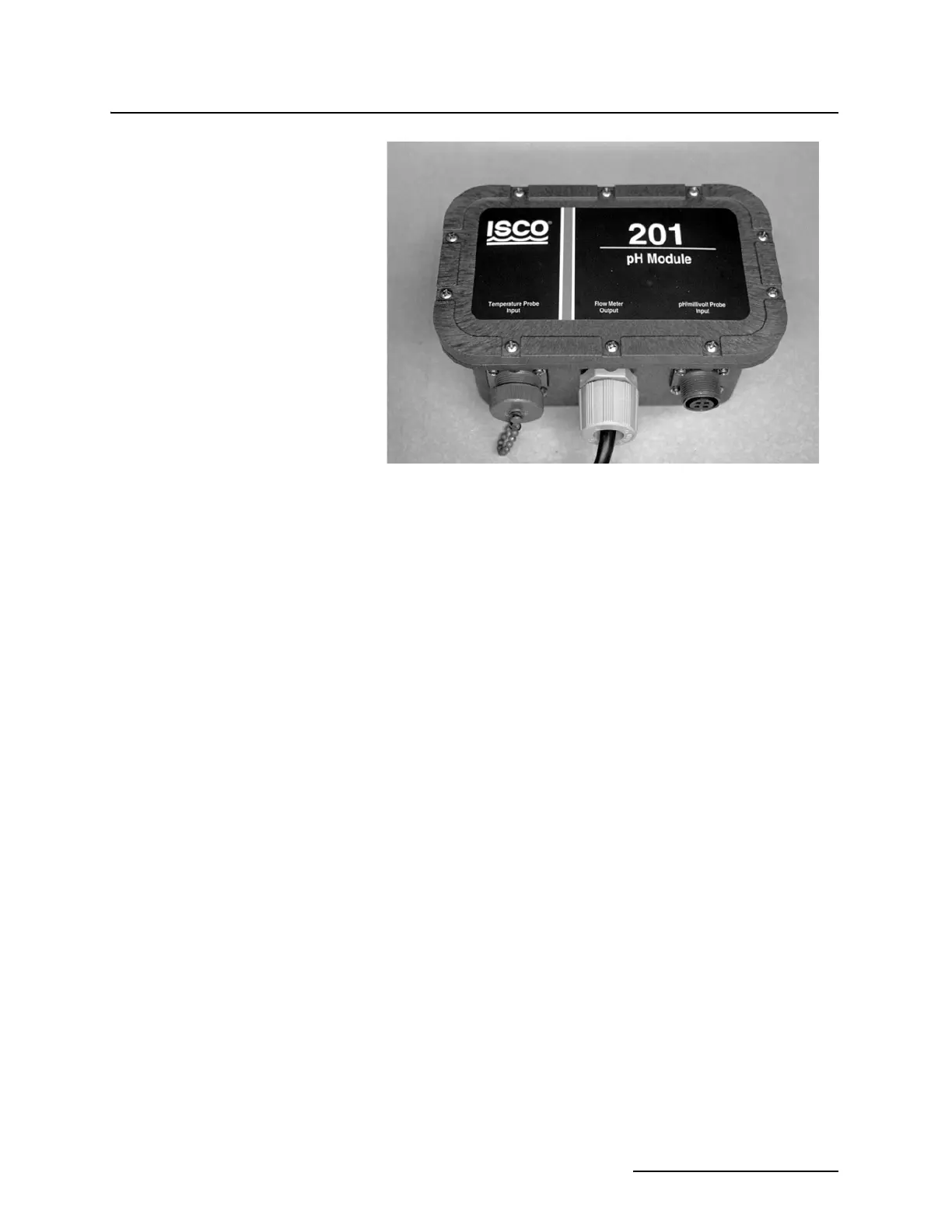
Figure 4-5 pH Parameter Module
4.10.5 Storage and
Maintenance of pH
Probes
If you remove the pH probe from operation, be careful to keep the
glass sensor bulb wet. Always store the probe with the rubber
cover screwed completely over the threaded end of the sensor.
Exposure to air causes the glass membrane on the sensor bulb to
dry out. This makes it very slow to respond in solution. Pro-
longed or repeated dehydration of the bulb will ruin the probe.
The pH-sensitive glass can also become “conditioned” to its envi-
ronment, especially when it is continuously exposed to high pH
(10 and above) solutions. The glass does have a memory and will
respond slowly when exposed to a lower pH solution after having
been in a high pH solution for any significant period of time.
Storage of a pH probe in a 4.0 buffer solution is recommended as
this has a regenerative effect on the glass and does not put a
memory on it. Tap water will work if 4.0 buffer solution is not
available. Deionized water is good for quick rinses to clean the
element, but not for prolonged storage of an electrode. Con-
tinuous exposure of the ion-sensitive membrane to a wetted, but
non-ionic solution will improperly condition the membrane.
The reference electrode is also adversely affected when allowed
to dry out. Salt crystals from the electrolyte or precipitates of the
solution measured will form salt bridges either within or on the
surfaces of the liquid junction, causing the reference to be less
conductive and resulting in a higher reference impedance. This
condition will typically worsen until the unit no longer functions.
Soaking the reference electrode in a 4.0 pH solution, or tap water
if the buffer is not readily available, may bring the reference
back to life. Boiling the electrode in 4.0 buffer solution or tap
water could revive the electrode in more severe situations. If
none of these solutions work, it may be necessary to replace the
probe.


 To Next Page