4210 Flow Meter
Section 4 Optional Equipment
4-18
4.11 The Dissolved Oxygen
(D.O.) Probe
This probe measures the amount of oxygen dissolved in a stream
or waterway. Oxygen dissolved in water is necessary for many
forms of life that dwell in lakes and streams. Inadequate supplies
of dissolved oxygen will cause fish and other aquatic life that
depend on them as a food source to die off or be sharply dimin-
ished in numbers. The measurement of dissolved oxygen content
is of interest to those monitoring the condition of lakes and
streams. Fish must have a certain minimum concentration of dis-
solved oxygen to thrive, typically 4 to 6 mg/l.
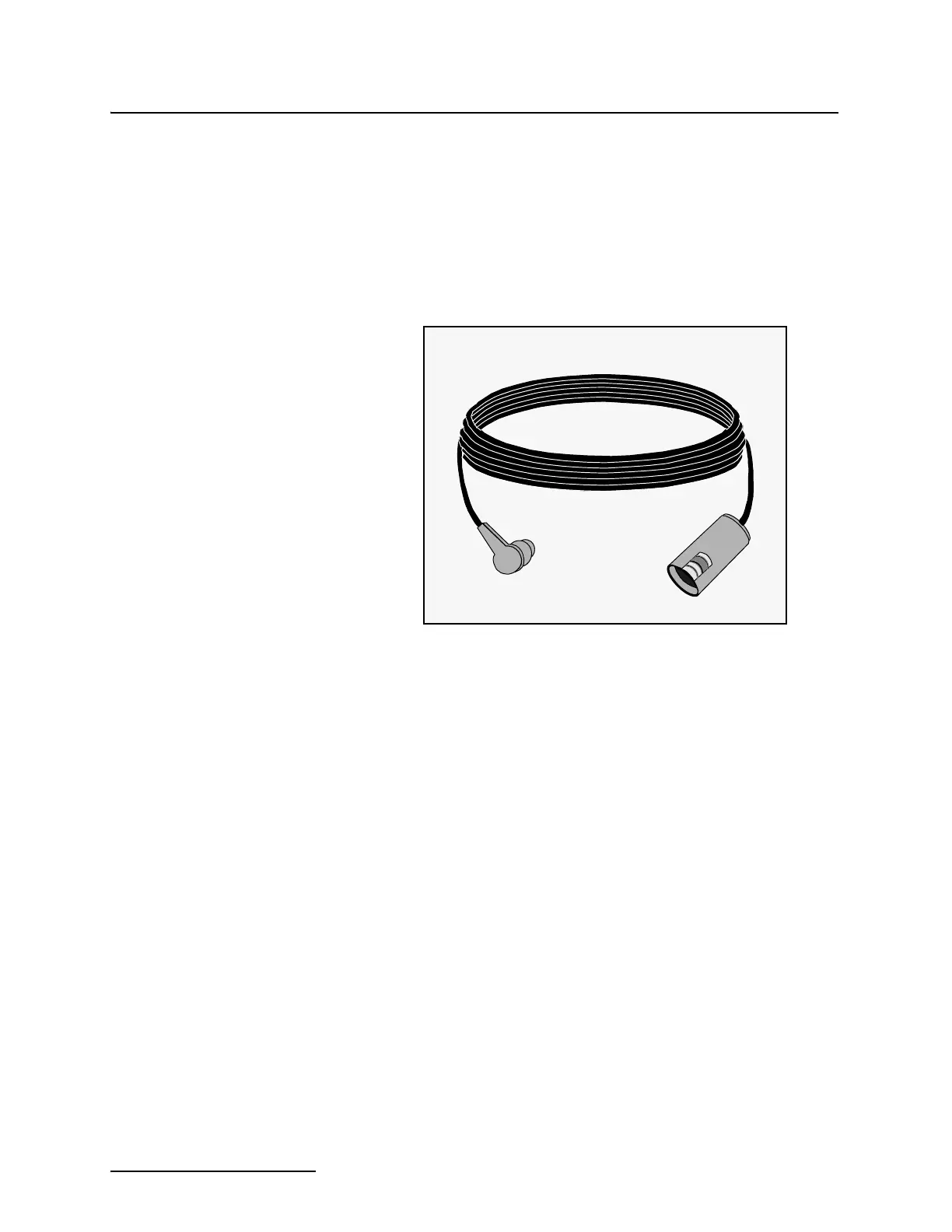
Figure 4-6 The D.O. Probe
Various types of pollution can cause the amount of oxygen dis-
solved in water to drop sharply, placing the aquatic life forms at
serious risk. The D.O. Probe measures the amount of oxygen dis-
solved in water in a range from 0 to 20 mg/l. The flow meter can
display D.O. in either mg/l (milligrams per liter) or ppm (parts
per million) depending on your choice in programming.
For effective use of the D.O. Probe, please read and con-
sider the following before making the installation:
• The D.O. Probe requires constantly moving water.
The probe consumes oxygen during operation; this will
deplete the oxygen available from stagnant or stratified
waters, resulting in an inaccurate reading. Do not
install it in a stilling well or in any location where water
movement is intermittent or very low. As a guideline, a
minimum velocity of one foot per second is suggested.
• Frequent maintenance is necessary when the probe is
installed in flows with grease or solids content.
Tests conducted by Isco with probes installed in various
waste streams indicate that grease and solids quickly
coat the probe's membrane, making it impossible for
oxygen to enter the reaction chamber. This will result in
an abnormally low reading, or no reading at all.
Cleaning the membrane is generally not effective, as it


 To Next Page