dV-DOSC dV-SUB Manual V3.0 June 2005 120
Trim and Angle Adjustments
At this point there are only two adjustments left - trim height of the array and tilt angle of the entire
flown system. If two motors are used for rigging the system, the front motor is used to set the proper
height of the whole array. Controlling the tilt angle is then performed by the relative action of the two
chain-motors, i.e., once the proper height has been set the front motor is fixed and activating the rear
motor only varies the tilt angle.
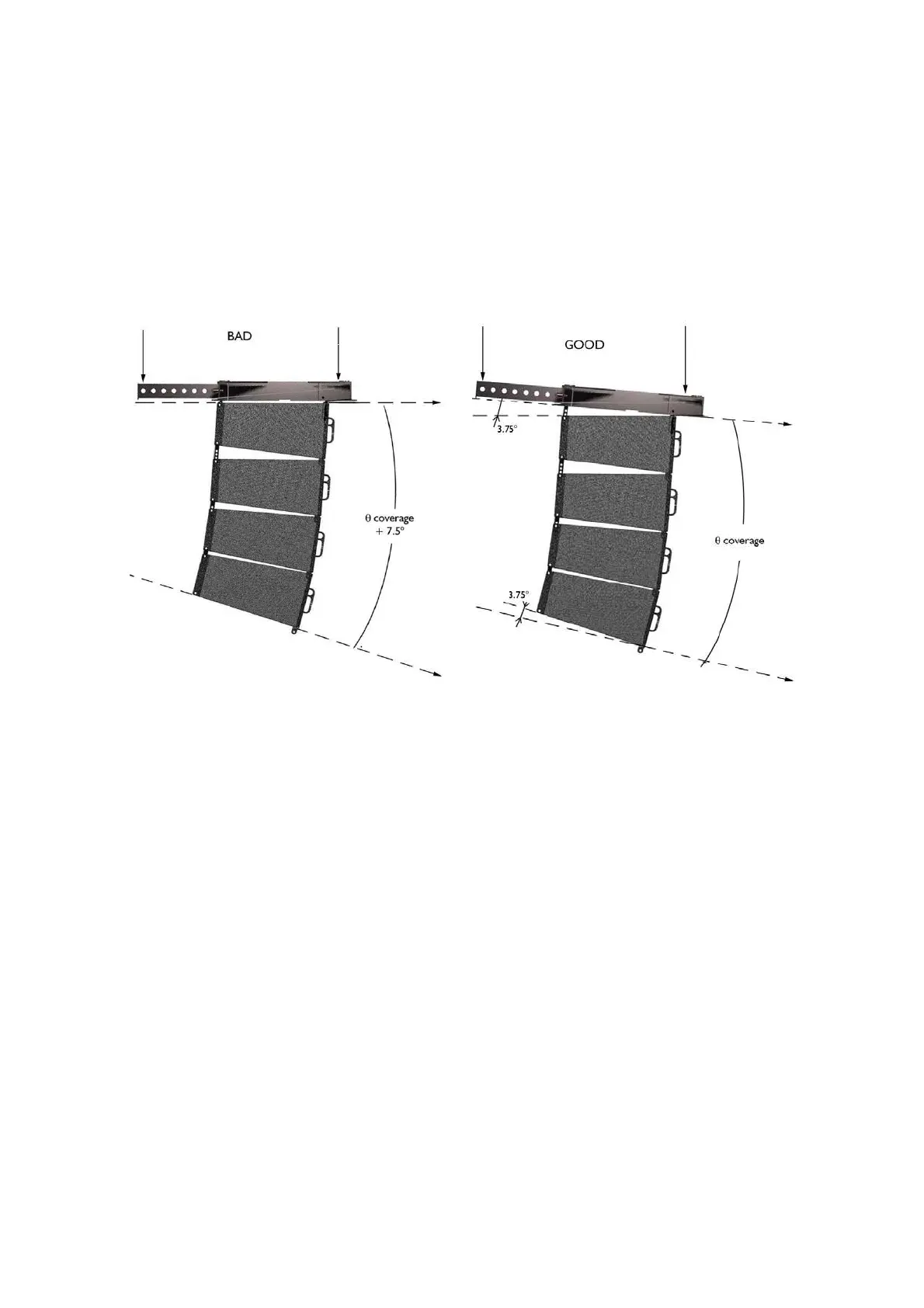
Note: For dV-DOSC, do not use the top and bottom of the cabinet as a visual reference (as for V-DOSC).
The radiated wavefront is parallel to the front of the cabinet and is not defined by the trapezoidal enclosure
walls. Adding a 3.75 degree angle at the rear of the top enclosure allows dV-BUMP to be used as a site
angle reference for the top enclosure.
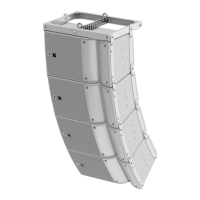
Figure 83: Flown dV-DOSC array trim and site angle adjustment
Depending on the tools available, there are a number of possible techniques for trimming and angling
the array. For trim height measurement, one end of a tape measure can be fixed to the lower wall of
the bottom dV-DOSC enclosure at the front of the enclosure (by using some duct tape). The tape
measure is then used to raise the array to the proper height (referenced to the floor) based on the
bottom enclosure elevation which was pre-calculated using ARRAY2004 or SOUNDVISION. Once
the array is at trim and focussed, the tape measure can be pulled free.
Under dark conditions (indoors), a small flashlight can be attached at the junction between the top and
the second enclosures. The final trim angle adjustment can then be checked from the rearmost seats
of the audience: when the light can be seen through the small gap separating the first and the second
enclosures, the angle of the array is correct.
A more precise focusing technique is to use a laser attached to dV-BUMP (provided that a 3.75 degree
angle is used at the rear of the top dV-DOSC). Trim angle adjustments are then directly given by the
focus of the laser on the audience (no walking to the back of the venue is required although a set of
binoculars or laser sunglasses can be useful in locating the laser beam). Obviously, array focus using
lasers is difficult to perform outdoors under daylight conditions.
For both alternatives, two pieces of light rope can be run from the floor, one over dV-BUMP and the
other routed through a hole in dV-BUMP. Both lines attach to the Maglite or laser device in order to
pull the instrument free then lower it after measurements have been performed (one string is a pull
line, the other is used to lower the instrument). As a final check, mute mid and low channels and run
pink noise through the system and listen to the high section coverage throughout the venue to verify
that installation is correct.



 To Next Page