Chapter 8 User Management
http://www.level1.com Page 67
8.3 PPPoE Server
This section describes the device's PPPoE function, including: PPPoE introduction, PPPoE global
configuration of device, configuration of PPPoE accounts and viewing of PPPoE connection
status.
8.3.1 PPPoE introduction
PPPoE (Point-to-Point Protocol over Ethernet). It allows a host on the Ethernet to connect to the
Internet through a simple access device. PPPoE protocol uses Client/Server, which encapsulates
PPP packets in an Ethernet frame, and provides the point-to-point connection over Ethernet.
PPPoE dial-up connections include two stages, Discovery (discovery) and Session (PPP session).
The following will introduce these two stages.
1. Discovery stage
This stage is used to establish a connection. When a user host wants to start a PPPoE session, it
must first implement the discovery stage to identify the Ethernet MAC address of PPPoE Server,
and establish a PPPoE session ID (Session ID).
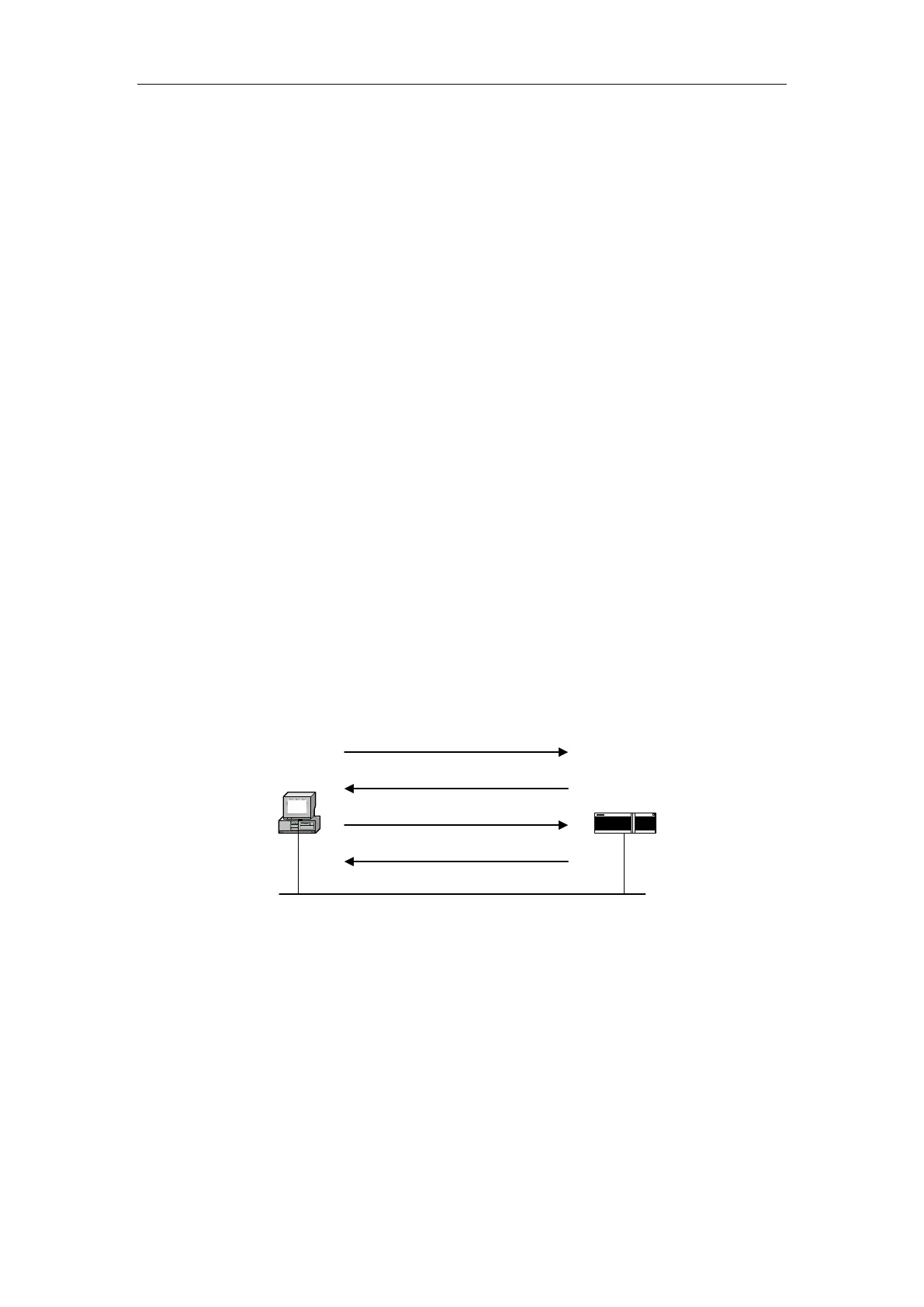
PPPoE Client
PPPoE Server
PADI
PADO
PADR
PADS
Figure 8_9 Basic workflow of Discovery stage
As shown in the figure above, Discovery stage consists of four steps. The following describes the
basic workflow.
PADI: If you want to set up a PPPoE connection, PPPoE client should first send a PADI
(PPPoE Active Discovery Initiation) packet as a broadcast. The PADI packet includes the
services the client requests.
PADO: When the PPPoE server receives a PADI packet, it will determine if it is able to
provide services, and if so, it will send to the client a PADO (PPPoE Active Discovery Offer)
packet to respond. PADO packets include the PPPoE server name and the service name


 To Next Page