Milestone Srl MA213-003 – DMA-80 EVO – User Manual
149
It is also possible to pre-wash them using a ultrasonic water bath with deionized water.
In case the DMA-80 is working with the Milestone Air Compressor flow, it is possible to clean the boats
overnight in order to be completely ready and Hg free tomorrow.
8.5.3 How to work at ultratrace levels
The purpose of this SOP is calibration from 0 to 1 ng, to work at 0.1 ppb. In order to achieve such low
level, the instrument and the operator need to use some additional care. The SOP report some specific
tips to achieve the desired results.
1. INITIAL INSTRUMENT SETUP:
Prior to start any test, the system must be stable and clean. At these levels it’s important to use only
quartz boats, both for the calibration and samples. While for standard applications, the blanks absorbance
is below 0.0030 in Cell 1, this is not enough for ultra-trace analysis.
- The ABS value of instrumental blanks must be lower than 0.0015 in Cell 0. The instrumental Blank
means run empty boat with our standard method without any sample or standard.
- The first level for ultra-trace calibration is done using the sample boat with 0.5 mL of water and 4% of
HCl.
2. HOW DO WE GET A GOOD BLANK FOR ULTRA-TRACE ANALYSIS?
Below are reported the main parameters that can impact the blanks value
- Dedicated quartz boats. Old boats or boats used for higher Hg range are not suitable for these analyses
and its calibration.
- Good carrier gas. The gas could also impact the blanks.
- Check the parts. Replacement of one or more components or old components could impact blank
values. Fork, catalyst, amalgamator, etc… must be conditioned, if new or replaced, whenever the
required Instrumental blank value (0.0015) is not achieved.
Before starting the calibration or the analysis, we advise you to perform at least 3 tests with clean boats
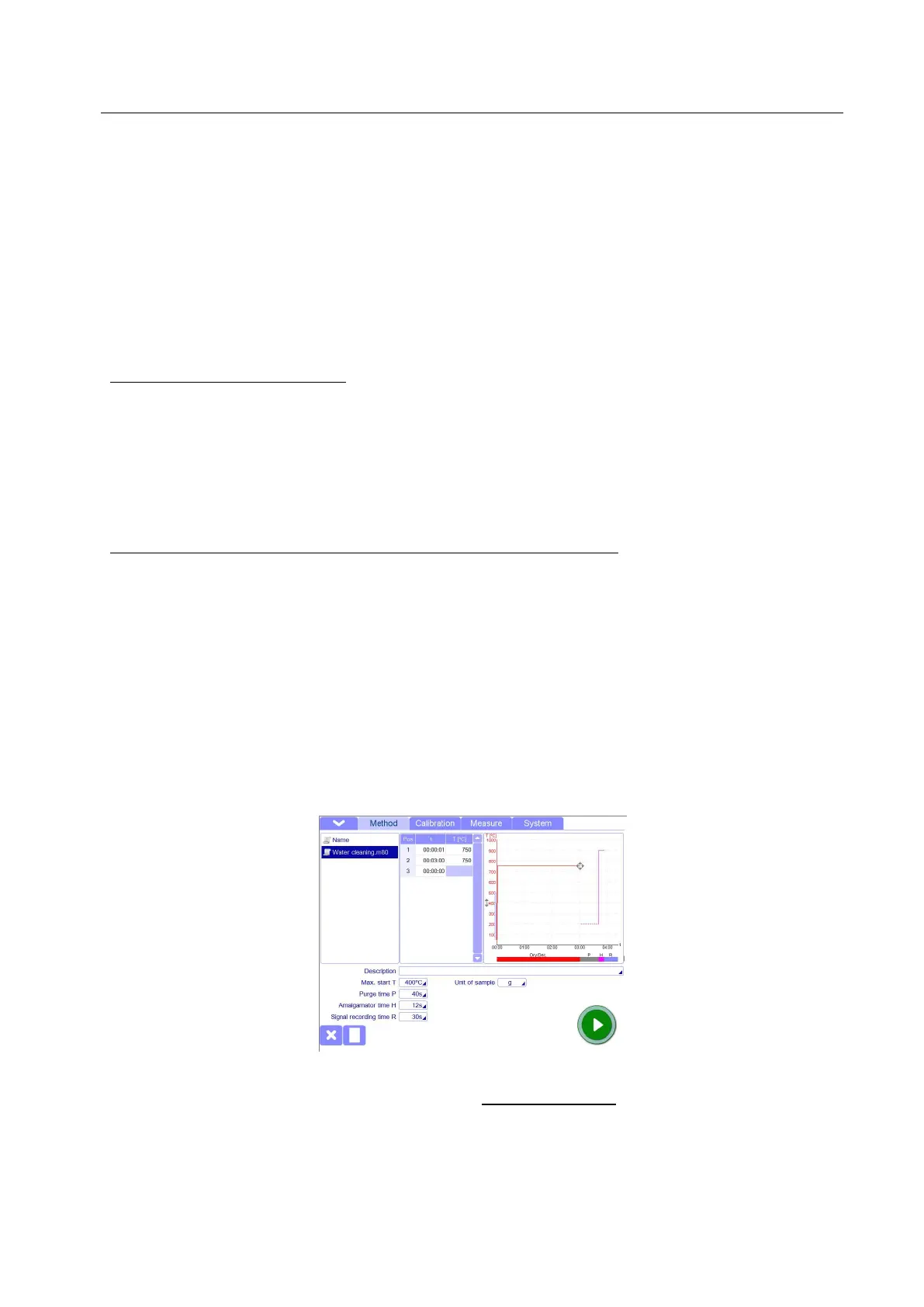
plus 0.3 ml of water. The method you need to use for these runs is the "Water Cleaning Method" (750°C
for 3 minutes).
The system is clean, when you’ll have a value of ABS with boat and water lower than 0,0040. It’s
important to have this value to calibrate but also to analyze samples with low mercury content (0,1 ppb).


 To Next Page