MicroSD Card Recording3.5
Introduction3.5.1
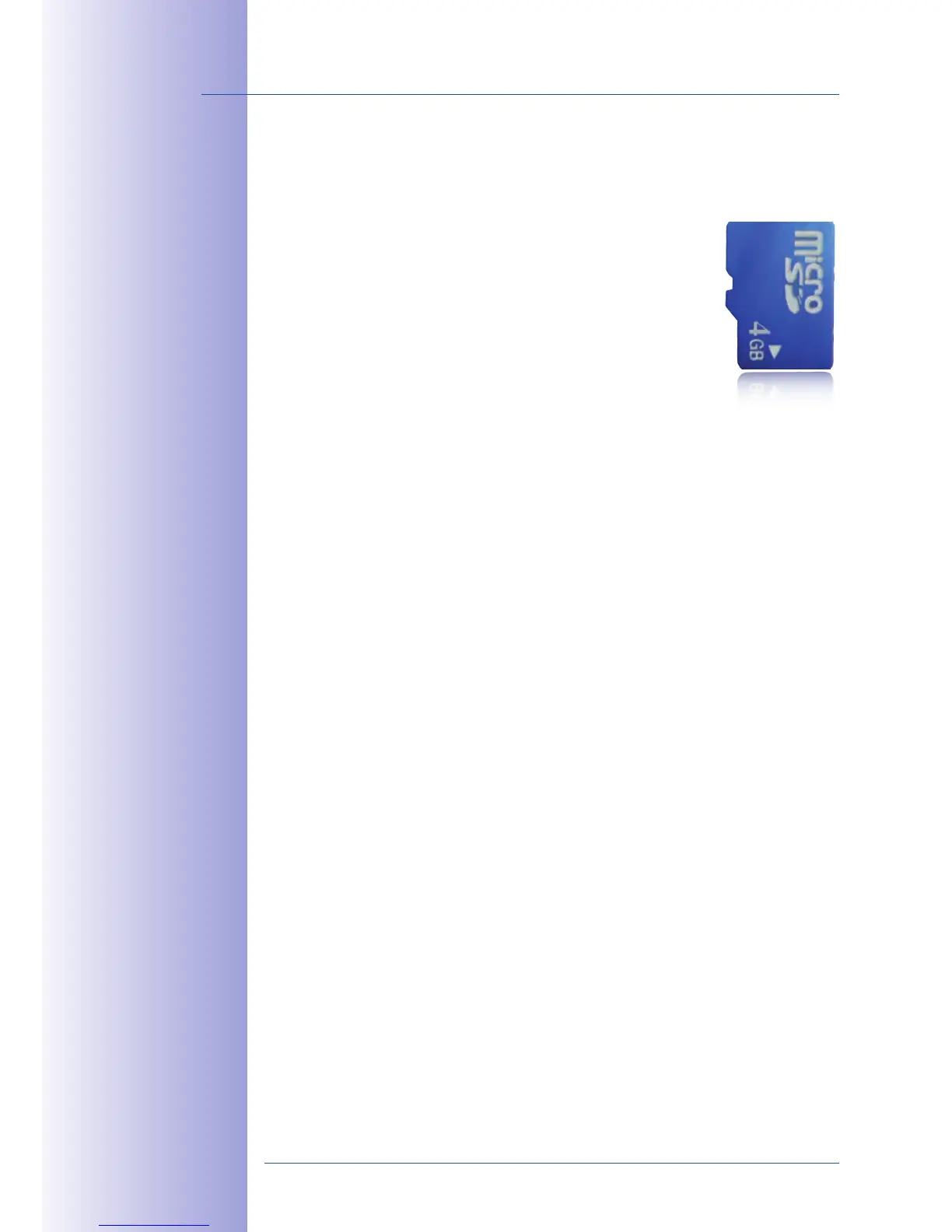
Flash-based storage devices (MicroSD cards, USB sticks and solid-
state drives) do not contain any moving parts as compared to the
commonly used hard drives. Flash-based storage devices are compact
and highly resistant to moisture and vibrations. They feature low
energy consumption and they do not lose any data in the event of
a power failure, meaning that they are ideal for use with MOBOTIX
cameras.
The number of write/delete cycles of every storage cell of a Flash
device is limited (e.g. 10,000, 100,000 or more, depending on the quality). The controller of
the flash device automatically detects individual flash cells that are no longer functioning.
The contents of the faulty cell will then be rebuilt using a checksum and will be moved to
a properly working spare cell. The faulty storage cell will be marked as “bad” and will not
be used any more. Note that no data is lost in this process.
In addition, MOBOTIX cameras constantly monitor activated flash storage devices. MOBOTIX
has developed a technology to test the wear of the flash device by logging the number of
write/delete cycles (patent pending). The flash memory wear is automatically displayed in
the status bar in the live camera image but it can also be viewed at any time in the Admin
Menu > Camera Status dialog box.
MxFFS formatting of the MicroSD card means that the MOBOTIX camera software will use
the flash device as evenly as possible, thus allowing for the maximum possible number of
write/delete cycles. This also means that all storage cells of the flash device will be written
and deleted with the same frequency, if possible. The MOBOTIX technology increases the
life of the flash device considerably and also improves the security and the reliability of
the storage process.
The life expectancy of a MicroSD card increases proportionally to the storage capacity,
since the camera software executes fewer write/delete cycles on each storage cell. The
first delete operation starts once the SD card has been filled to capacity (first full cycle).
The theoretical life expectancy of a good quality 16 GB MicroSD card is between 10 and
35 years, depending on the degree of use.
More reliable than
hard drives: ash
memory devices


 To Next Page