8
Safety information
2. Safety information
2.1 General safety information
To maintain a maximum level of device safety for patients and specialized professional operators, it is essential
that:
the operators and maintenance technicians have read and understood the instructions for installation and use
of the device
the periodic maintenance operations described in the chapter 7 “Maintenance” are carried out
the following safety instructions are observed:
• Ensure that the device is connected to a power socket with a protective earth connection.
• Keep the plug in the socket until the sterilization is finished and do not use the socket for other devices at the
same time.
• Use only original NSK Dental Italy power cables, as other cables can cause electric shock, fires or damage to
the device.
• Do not turn the power on or off unless strictly necessary, as this may trip the fuse.
• Do not touch the power cord with wet hands as this may cause electric shock.
• Install the product with sufficient space to allow immediate removal of the electrical plug.
• Turn off the power switch and disconnect the power cord before performing any maintenance.
• Do not connect non-original NSK Dental Italy accessories or equipment to the device.
• Keep explosive substances and flammable materials far from the device.
• If the device overheats or emits a bad smell, turn off the power switch immediately, remove the plug from the
electrical socket and contact technical support.
• Do not allow water or disinfectant liquid to enter the inside of the device as it may cause a short circuit and
electrical shock.
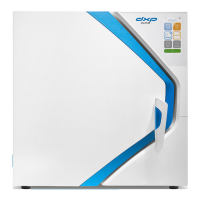
• Avoid inadvertently touching the door or the area around the chamber while the device is in operation or
immediately after stopping the product, as these reach high temperatures and can cause burns.
• Do not obstruct or cover the steam outlet on the product with other objects. In addition, avoid inadvertently
placing your face or hands near the steam outlet, as this can cause burns.
• Only use NSK Dental Italy original components and spare parts.
• Use tape indicators to verify whether an item was successfully sterilised.
• The device must only be installed in enclosed environments.
• Install the machine on a flat surface.
• Do not sterilize liquids or objects other than medical instruments reported in the intended use.
• Avoid any impact on the device. Do not drop the device.
• Wash and dry objects before sterilization. Chemical detergent residues in the chamber can cause corrosion
or leave bad odours on sterilized objects.
• Insert the objects to be sterilized using the racks. Directly inserting objects into the chamber may cause
sterilization problems, discolouration or even damage to the objects.
• Ensure that any water has been drained before moving the device.
• Use a container or case for sterilizing fine-pointed objects, as these may protrude from the bottom of the
rack.
• Sterilize the instruments in accordance with the parameters recommended by the manufacturer or retailer.
• If any irregularities are noticed during use, stop the sterilization cycle and contact technical support.
• Conduct periodic diagnostic checks and routine maintenance operations.
• If the device has not been used for a long time, check that it is working properly before use.
• Portable and mobile RF communication devices can interfere with the device.
• The device must not be used near or above another device. If this is not possible, ensure that all devices work
properly.
• The device may malfunction if used near electromagnetic interference. Do not install the device near other
equipment that emits magnetic waves. Turn off the power if an ultrasonic oscillation or electrosurgery device
is located near the site of use.
• It is the responsability of the user to fill the autoclave with clean demineralised water in compliance with the
EN 13060 standard, free from contaminants and other pathogens.


 To Next Page