Other Features 5-27
PA-1628Operator's ManualH3-45 COACH
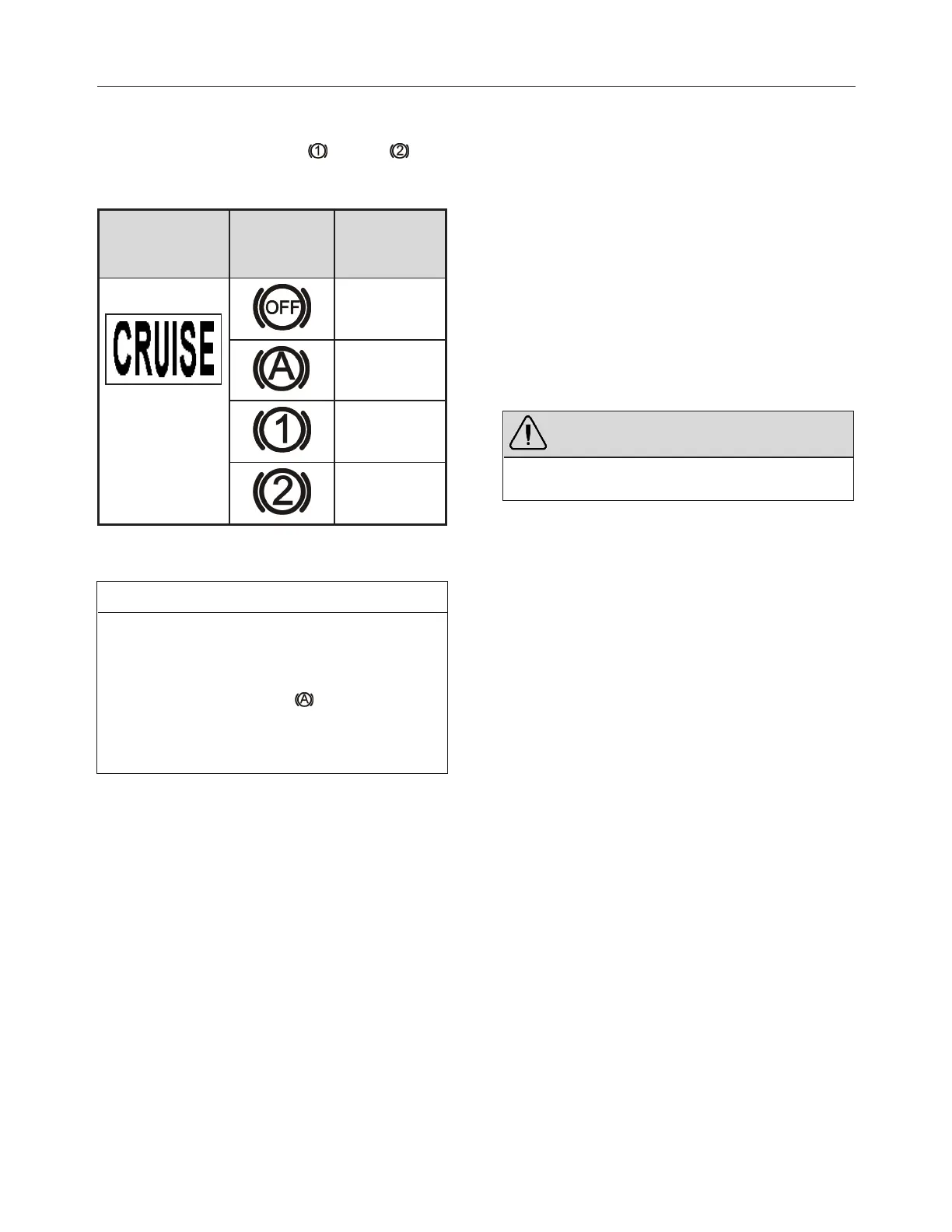
100% if the selected cruise speed is exceeded by
approximately 2 km/h (1.25 mph). Manually
switching to engine brake LOW or HIGH using
the steering wheel switches will deactivate the
cruise control.
CRUISE
CONTROL &
SPEED
ENGINE
BRAKE
MODE
ENGINE
BRAKE
FORCE
+
CRUISE SPEED
SET
+ 2 Km/h
0%
UP TO 100%
N/A
N/A
ENGINE BRAKE FORCE APPLIED WITH CRUISE
CONTROL
NOTE
On vehicles equipped with the Allison
transmission, if cruise control is enabled, the
current engine brake mode is saved in the vehicle
computer (MCM) memory and the engine brake
mode is set to Auto mode . When the cruise
control is disabled, the engine brake mode
changes back to the mode saved in the MCM
memory.
ABS, TRACTION CONTROL SYSTEM
(TCS) & ELECTRONIC STABILITY
CONTROL (ESC)
ANTILOCK BRAKING SYSTEM (ABS)
The purpose of the Antilock Braking System (ABS)
is to maintain vehicle stability and control during
braking and to minimize the stopping distance in any
road condition.
On slippery roads and more generally in emergency
situations, over- braking frequently induces wheel
locking. Wheel locking greatly increases breaking
distance on any road surface. Locked wheels also
impede directional control and cause severe tire
abrasion. An antilock braking system provides
maximum braking performance while maintaining
adequate control on slippery roads.
The basis of ABS is constant monitoring of wheel
parameters during braking. Sensors on each wheel
of the front, drive and tag axles constantly measure
wheel speed during braking. This information is
transmitted to a six- channel electronic processor
which senses when any wheel is about to lock.
Modulating valves quickly adjust brake pressure (up
to 5 times every second) to prevent wheel lock.
Each wheel is therefore controlled according to the
available grip.
In this way, the vehicle is brought to a stop in the
shortest possible time while remaining stable and
under the driver's control.
WARNING
Vehicles following ABS-equipped vehicles may not
be able to brake as fast on slippery roads.
TRACTION CONTROL SYSTEM (TCS)
TCS controls wheel spin during vehicle acceleration
to improve traction.
l The TCS system will intervene automatically
and apply braking pressure to a spinning
wheel transferring engine power to the other
drive wheel that have better traction. This
feature is active only at speeds below 25 mph
(40 km/h).
l If all of the drive wheels begin to spin, the
TCS system will reduce engine throttle to
improve traction at all of the drive wheels.
If drive wheels begin to lose traction during
acceleration, TCS will engage automatically to
assist the driver in accelerating the vehicle. The TCS
icon in the DID will flash rapidly to let you know
whenever TCS is actively functioning.
ELECTRONIC STABILITY CONTROL (ESC)
The ESC stability system is an optional feature for
ABS- equipped vehicles that reduces the risk of
rollovers and loss of control. The ESC system
features include the RSP Roll Stability Program and
Yaw Control.
The RSP system counteracts the tendency of a
vehicle to tip over while changing direction (typically,
while turning).








 To Next Page