09/2016 Page 31 5IN2371 C
Describing Auto-Setting Results
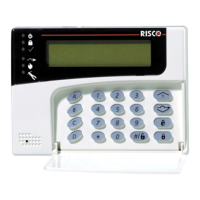
At the keypad, the results of an Auto-Setting scan first show the connected
communication modules. The next results displayed are for connected
keypads, expansion/voice modules and bus detectors. Results display as per
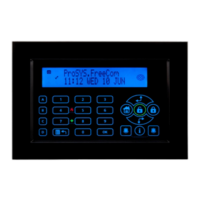
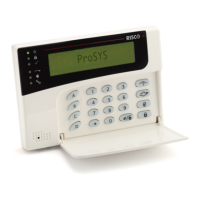
this example: (3:02:01) T=LCD
EXPLANATION:
NOTE: Dashes (—) appear instead of digits when a parameter is not relevant,
for example, for communication modules (since they are “on-board” on the
PCB, and not on a bus line).
3 is the bus line it is connected to
02 is the expander ID
01 is its sequential, installer-set physical ID number for bus devices (see
Describing Installer-Set ID Numbers for Bus Devices, page 18). Note that
communication modules will always appear as 01.
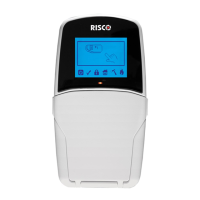
T is the type, which, in this example is LCD keypad
Performing a Bus Test
A Bus Test checks each installed bus device and communication module to ensure
adequate connectivity quality.
A result of 97% or less than may mean that there are bus connection problems.
To perform a Bus Test:
1. From the installer Programming menu, go to: 7 > 1 > 3 > 1 (Install >
Bus Device > Testing > Bus Test); BUS TEST displays for a few seconds until
the BUS COM QUALITY results display.
2. Scroll to view the results for each bus device/module on the tested bus. If a
result is not adequate, check physical connections and DIP switch positions, and
then repeat the test. Results display as per this example: GSM :001 =100%
EXPLANATION:
GSM is the communication module/bus device description
001 is the communication module/bus device index number
100% is the result



 To Next Page