1.10
SEL-2701 Ethernet Processor Instruction Manual Date Code 20020501
Introduction
Ethernet Networks
Ethernet Networks
This section introduces Ethernet networks and some general concepts and
terms useful in understanding SEL-2701 application and operation. If you are
experienced with Ethernet networks, you may want to proceed to Section 3:
Settings and Commands for details on the SEL-2701
.
OSI Seven-
Layer Model
No discussion of networking technology would be complete without an
introduction to the ISO (International Standards Organization) OSI (Open
Systems Interconnect) seven-layer model. The model represents networking
(both software and hardware) in an individual network node by dividing tasks
into layers that perform specific functions. The OSI model for networking
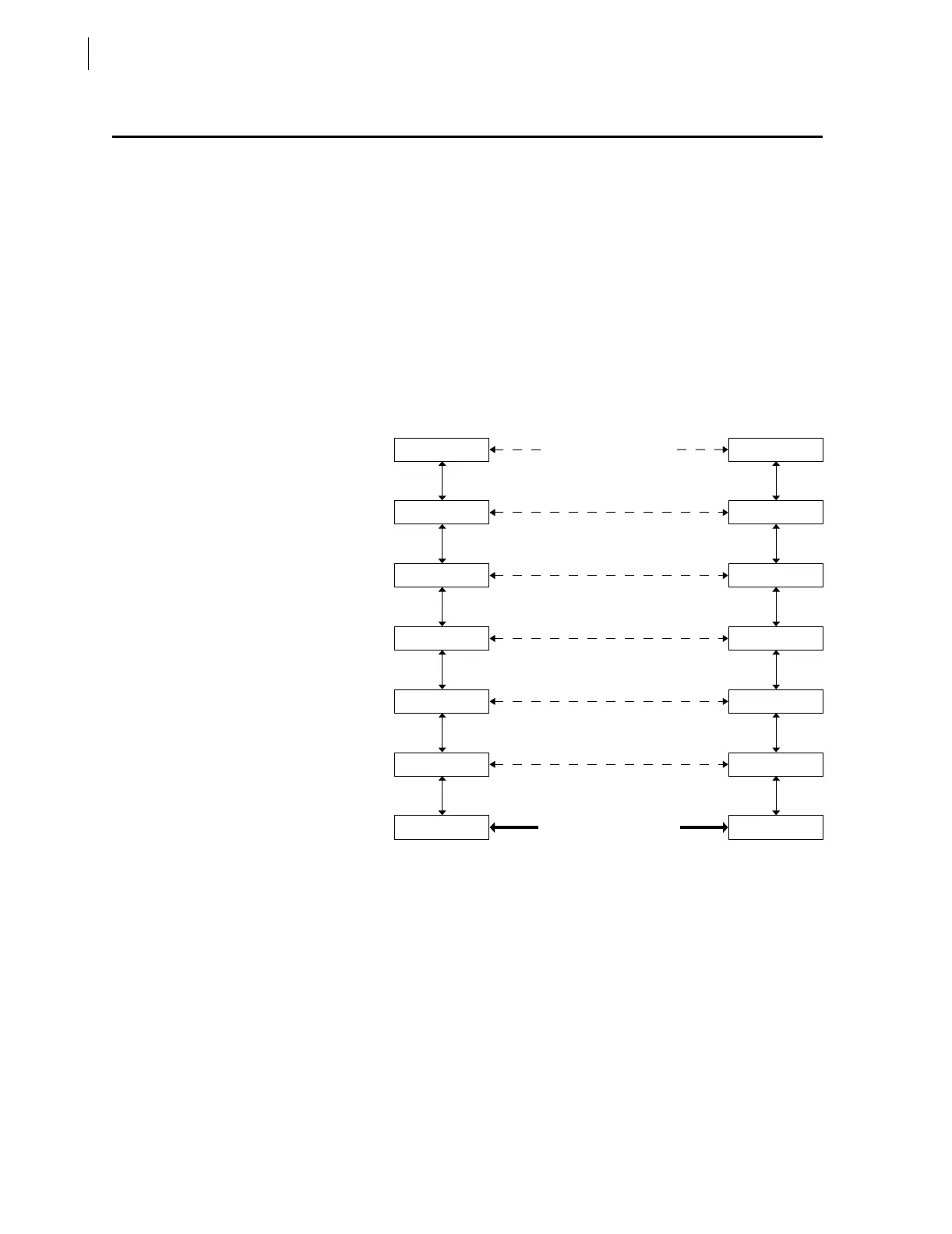
operation on two separate network nodes is shown in Figure 1.5.
Figure 1.5 OSI Seven-Layer Model.
In the OSI model, each layer (for example the data link layer) communicates
via a logical connection directly with the same layer in the other device.
Actual communication is more complex. Application data, such as characters
in a Telnet terminal session or UCA2 GOMSFE models, pass down through
the layers and then across the physical medium. Each layer adds some
information to the message and forwards it down to the next layer.
Ultimately, the message reaches the lowest layer, the physical layer, and is
sent across the physical connection to the second network node. Here the
process operates in reverse. Each layer strips off and uses the layer-specific
information and passes the remaining information up the chain until the
original data become available to the application user.
Layer
Number
Network
Node 1
Network
Node 2
Application ApplicationLogical Connection7
6
5
4
3
2
Presentation Presentation
Session Session
Transport Transport
Network Network
Data Link Data Link
Physical PhysicalPhysical Connection1



 To Next Page