5.7
Date Code 20020501 SEL-2701 Ethernet Processor Instruction Manual
SEL-400 Series Host
Data Access
GOOSE
The SEL-2701 can generate and receive GOOSE messages. Acting as a single
source and recipient of GOOSE messages, the SEL-2701 listens for and
utilizes data in GOOSE messages from as many as eight GOOSE senders. For
a description of SEL-2701 settings for outgoing GOOSE messages and to map
incoming messages to specific control bits, see Section 3. The SEL-2701
communicates data from incoming GOOSE messages to the relay as incoming
control points CCIN1–CCINn. The SEL-2701 automatically maps the
outgoing control points CCOUT1–CCOUTn to the first User ST outgoing
GOOSE message bits. The SEL-2701 does not send any data in the DNA
portion of the GOOSE message (first 32 outgoing GOOSE bit pairs).
GOOSE information is sent as bit pairs that can represent four values. The
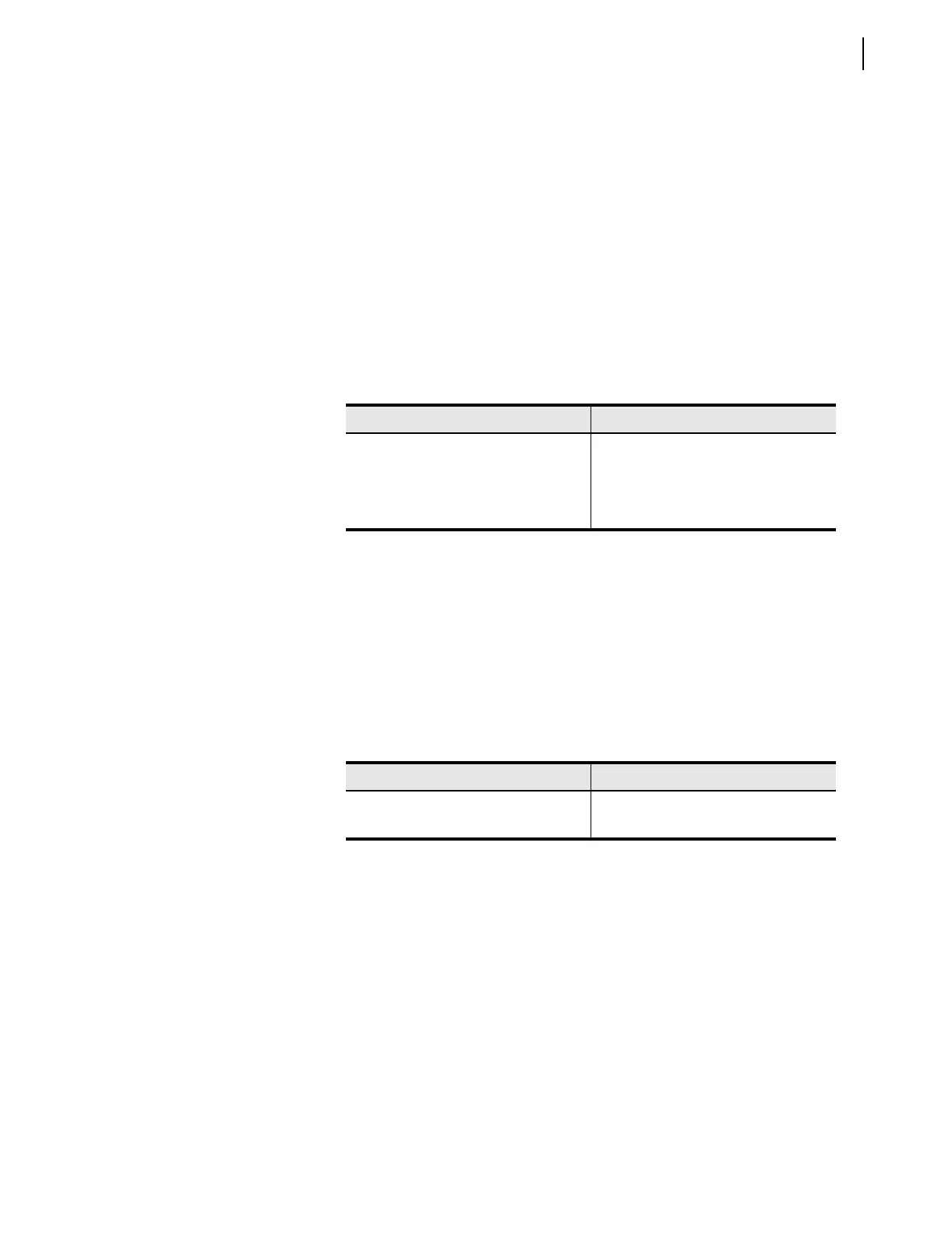
SEL-2701 maps single bits to bit pairs as shown in Table 5.6.
GOMSFE
Relay data is organized into GOMSFE bricks that reside within domains. The
domains, bricks, and data available through the UCA2 GOMSFE interface are
described in your relay instruction manual.
The GLOBE model contains special extensions that map target and analog
data from the SEL-400 series relays. In the MX functional component of
GLOBE, the SEL-2701 maps analog values from protection math variables
and automation math variables as shown in Table 5.7.
The SEL-2701 maps 256 Relay Word bits to the items DWORD01B01–
DWORD16B16 for complete details on mapping, see the relay instruction
manual.
Remote Bits
You can control the SEL-400 series relay remote bits using the UCA2 GCTL
brick. GCTL is a generic control brick that appears in each virtual device
domain. Each GCTL brick contains 32 ST (Status) and 32 CO (Control) bits
that are associated with RB1–RB32. You can control the remote bits by
writing the 2-bit set (10) or clear (01) code to the appropriate CO bit.
Table 5.6 GOOSE Bit Pair Value Mapping
GOOSE Bit Pair Value CCINn or CCOUTn Action
00 Do Nothing
01 Clear
10 Set
11 Invalid–Not Used
Tabl e 5.7 G LO BE M X D at a
Item Math Variables Mapped
ANALOG01–ANALOG32 PMV01–PMV32
ANALOG33–ANALOG64 AMV001–AMV032



 To Next Page