Date Code 20181001 SEL-3031 Instruction Manual
Settings and Commands
Settings
4.13
MODE sets the operating mode of the radio. The radio is set to REMOTE by default.
In P2P mode one radio must be set as MASTER and the other must be set to REMOTE.
In P2MP mode the master is located at the data collection point and all other radios in
the system set to REMOTE. In P2MP mode the master transmits to all the remote
radios, and only one remote can respond to the master.
NID sets the network address of the radio network. All radios in the same network
must be set to the same NID with the same SKIP zones to properly link and
communicate. If more than one radio network exists then each network must be set to a
different NID.
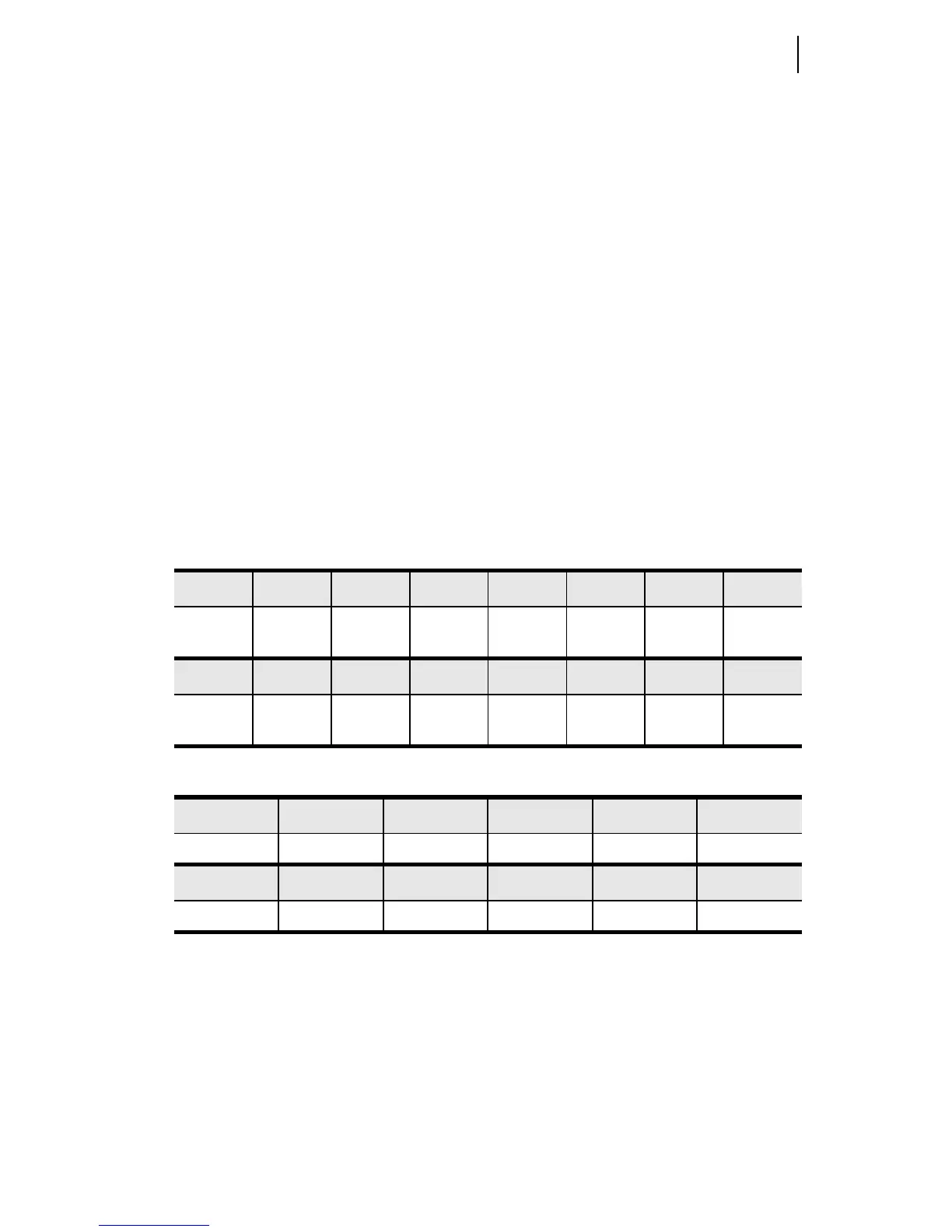
SKIP determines which of the 16 frequency zones to skip in the SEL-3031 hopping
sequence. The SEL-30310 will operate on any10 of the 16 zones. The default setting is
NONE. The SEL-30310 must use a minimum of 10 zones, a setting of NONE will
force the radio automatically SKIP zones 11–16. The SEL-30311 for Brazil will
operate on any 10 of the 11 Zones 1–3 and 9–16. A setting of NONE will force the
SEL-30311 to automatically SKIP zone 16. The SKIP setting can contain as many as
six comma-delimited zones from Table 4.5 or Table 4.6. Each zone entered in this
setting will set the SEL-3031 to skip that particular zone in the hopping table. This
setting can help increase the availability of the radio and avoid areas of interference.
The SEL-3031 has radio statistics to help set the SKIP setting if the availability of the
radio is less than desired. To determine which frequency zones to skip, issue a
RADio C command and let the radios run for a period of time. You will get better
availability results the longer you let the radio run linked. Issue the RADio command
to view the availability of each frequency zone. In the radio report identify the
frequency zones with the lowest availability and enter these zones via the SKIP setting.
If the radio zone availability is within 1 to 2 percent of each other, no SKIP setting
changes are needed. The SKIP setting is for avoiding noisy occupied zones not from
multipath effects that are seen by all zones. If the availability is below what is desired,
Table 4.5 SKIP Zone Frequencies (SEL-30310)
Zone 1 Zone 2 Zone 3 Zone 4 Zone 5 Zone 6 Zone 7 Zone 8
902.6–
903.8
904.1–
905.3
905.6–
906.8
907.1–
908.3
909.2–
910.4
910.7–
911.9
912.2–
913.4
913.7–
914.9
Zone 9 Zone 10 Zone 11 Zone 12 Zone 13 Zone 14 Zone 15 Zone 16
915.2–
916.4
916.7–
917.9
918.2–
919.4
919.7–
920.9
921.2–
923.0
923.3–
924.5
924.8–
926.0
926.3–
927.5
Table 4.6 SKIP Zone Frequencies (SEL-30311 Brazil)
Zone 1 Zone 2 Zone 3 Zone 9 Zone 10 Zone 11
902.6–903.8 904.1–905.3 905.6–906.8 915.2–916.4 916.7–917.9 918.2–919.4
Zone 12 Zone 13 Zone 14 Zone 15 Zone 16
919.7–920.9 921.2–923.0 923.3–924.5 924.8–926.0 926.3–927.5


 To Next Page