SEL-3031 Instruction Manual Date Code 20181001
Performance Monitoring, Testing, and Troubleshooting
Monitoring Radio Performance
5.4
The end of the previous section describes how to measure the availability of the radio
link. All SEL relays that have MIRRORED BITS give a full channel monitoring report
that will give the unavailability and a report on all of the data drops. The SEL-3031
displays the availability and SEL M
IRRORED BITS devices display the unavailability.
The relationship of the two is represented below.
Availability = 1 – Unavailability
The SEL-3031 will show a lower availability than shown by the SEL relays with
M
IRRORED BITS. The difference lies in how the radio monitors each packet of
M
IRRORED BITS. Upon detecting bad packets the SEL-3031 removes the packets
before they reach the relay. The relay will only declare a dropped channel if it receives
bad data or after a period of time expires without seeing a new data packet. This gives
the SEL-3031 a chance to ride through several bad hops, remove corrupted data, keep
the channel up and operating, and minimize the amount of total unavailability as seen
by the M
IRRORED BITS devices.
Before you use an SEL device’s M
IRRORED BITS communications report, make sure
you go through Monitoring and Improving Radio Link Performance to verify the radio
is optimized and the SKIP setting is set to avoid noisy zones.
Monitoring M
IRRORED BITS performance over a radio link is critical to ensure proper
operation when called upon to operate. The RBAD and CBAD bits provided in every
SEL device with M
IRRORED BITS can be used to alarm when the radio link is degraded
below levels needed for proper operation.
➤ RBADPU: Setting for the amount of time the channel is in a failed
state before setting the RBAD alarm Relay Word bit.
➤ CBADPU: Setting for the threshold of the CBAD channel availability
alarm.
When a M
IRRORED BITS channel is operating correctly, Relay Word bit ROK is set to 1.
When the channel is disturbed, ROK drops out. The ROK bit is not recommended for
use as an alarm point. ROK is a good indication of the channel’s health. If the ROK bit
is toggling, this is an indication of an intermittent channel problem.
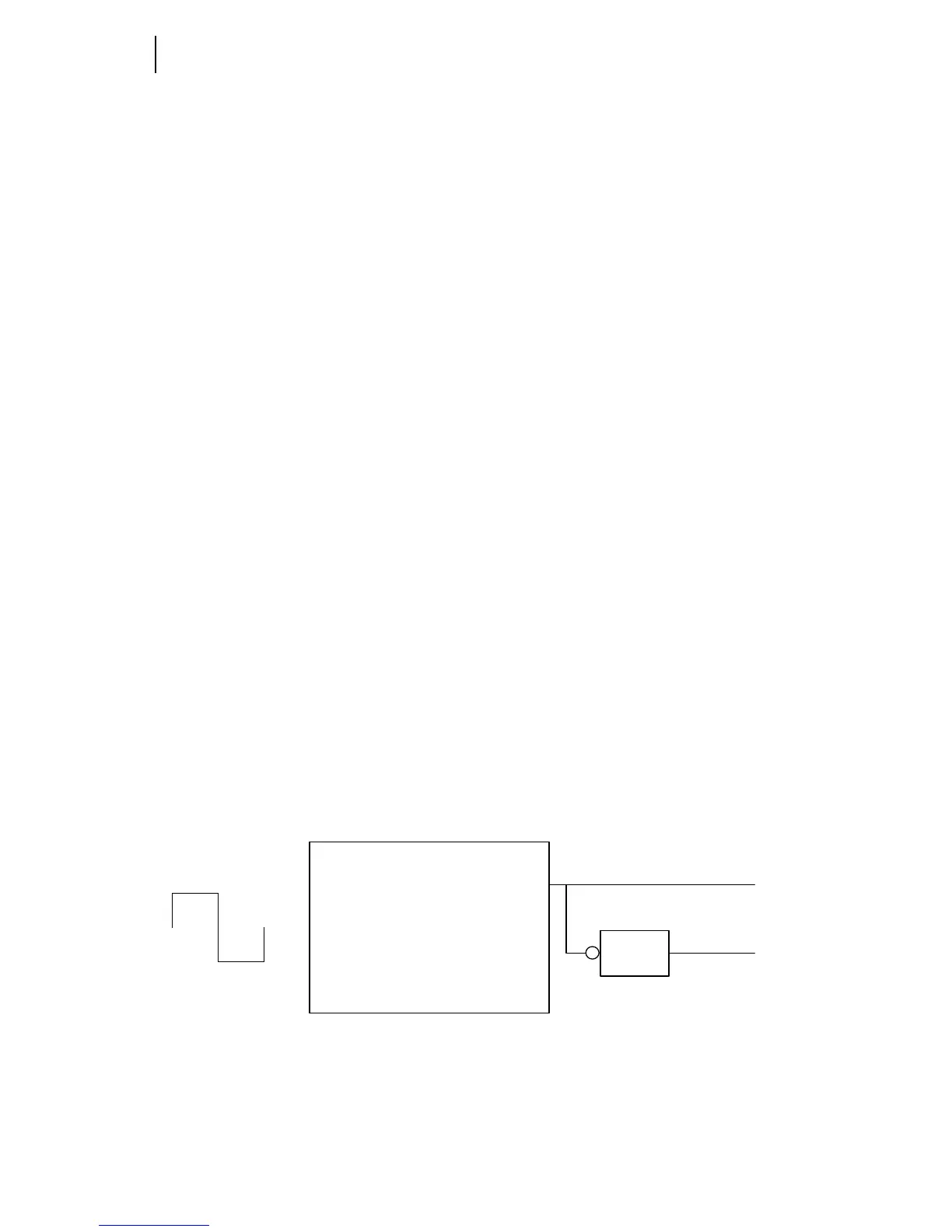
Figure 5.2 RBAD Generation


 To Next Page