Date Code 20181001 SEL-3031 Instruction Manual
Installation
Overview
2.9
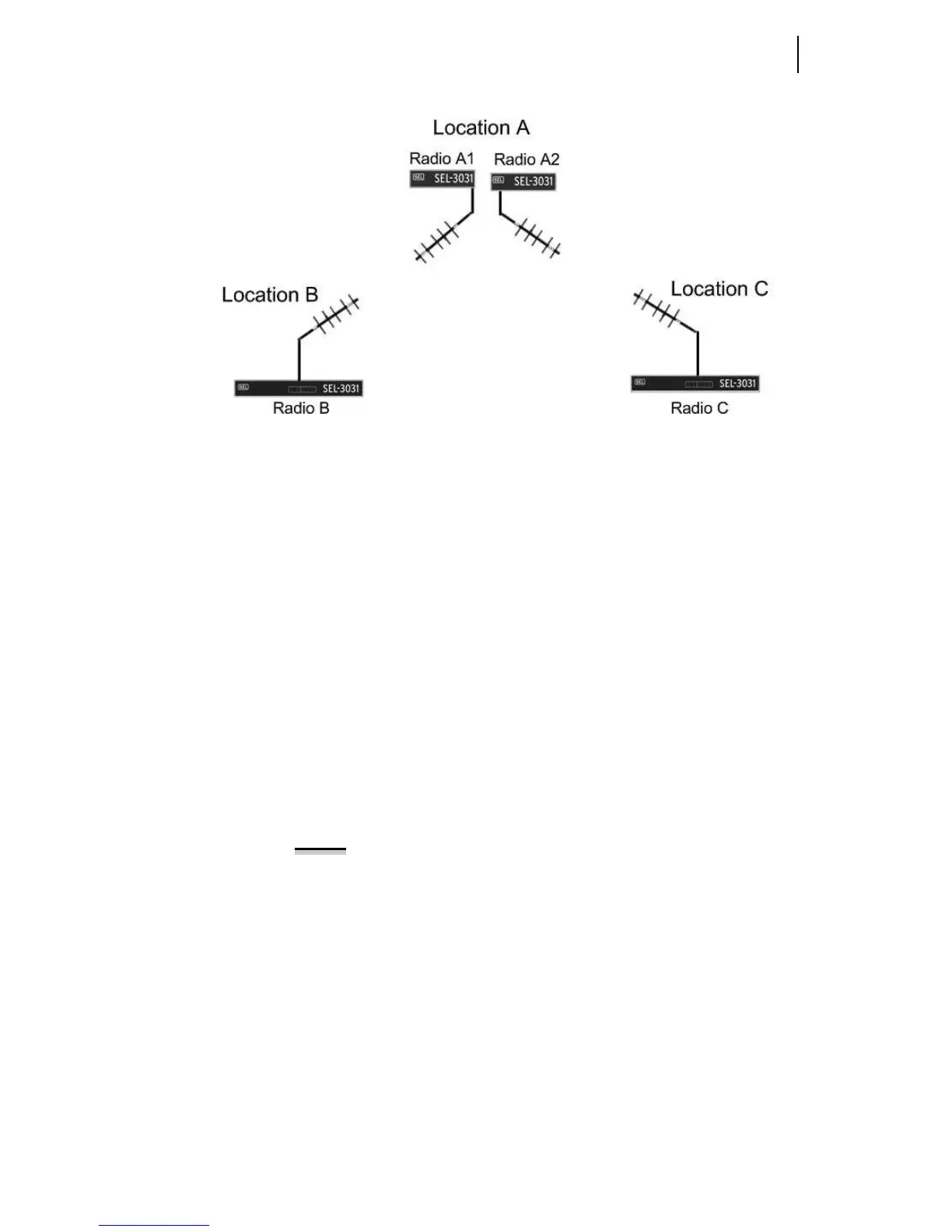
Figure 2.3 Collocated Antennas With Two Radio Links
In this example the radio links generally will work but at the cost of link availability
and dependability. Even though the radio links are using different hop sequences, there
can still be significant levels of adjacent channel interference because of the difference
between the transmitted power on one antenna and the receive power on the adjacent
antenna. For example, Figure 2.3 displays two radio links with collocated antennas at
Location A. If the antenna transmitting from Location A to C is transmitting at 36 dBm
and at the same time the adjacent antenna on Radio A1 is receiving the signal from
Location B at –70dBm, there is a 106 dBm signal difference between the two antennas.
In this situation one will completely overpower the signal or greatly reduce the
availability of the other. When radio transmit and receive timing cannot be coordinated
to remedy this situation you need to either increase the distance separating the
collocated antennas or use higher gain antennas that have narrower beams. The
SEL-3031 has a better way to solve this problem by allowing collocated radios to
synchronize their transmit and receive time slots and hop at exactly the same time. This
will prevent the large signal difference from occurring and the collocated antennas can
be placed within 2.4–3 m (8–10 ft) of each other. This technology is called SEL
Hop-Sync™.
NOTE: If you have two or more synchronized radios and
they lose synchronization the signal can be degraded to a
point of loss of link. For mission critical applications make
sure that the antennas are spaced far enough apart that
if they lose synchronization that they will still operate
with sufficient performance.
The radios are synchronized with one setting in each collocated radio and cabling
between the radios. The radios use Pins 7 and 8 on Port 3 for synchronization. In this
system you need to set each radio as a master. Set one radio to send the sync signal
(SYNC SEND) and set the other radios to receive the sync signal (SYNC RECEIVE).
If you have only two collocated radios you can use an SEL-C273A cable. This cable
will have pins 7 and 8 sent between the radios that are crossed over. If you need to have
more than 2 radios synchronized you will need to use cable SEL-C576. Figure 2.4


 To Next Page