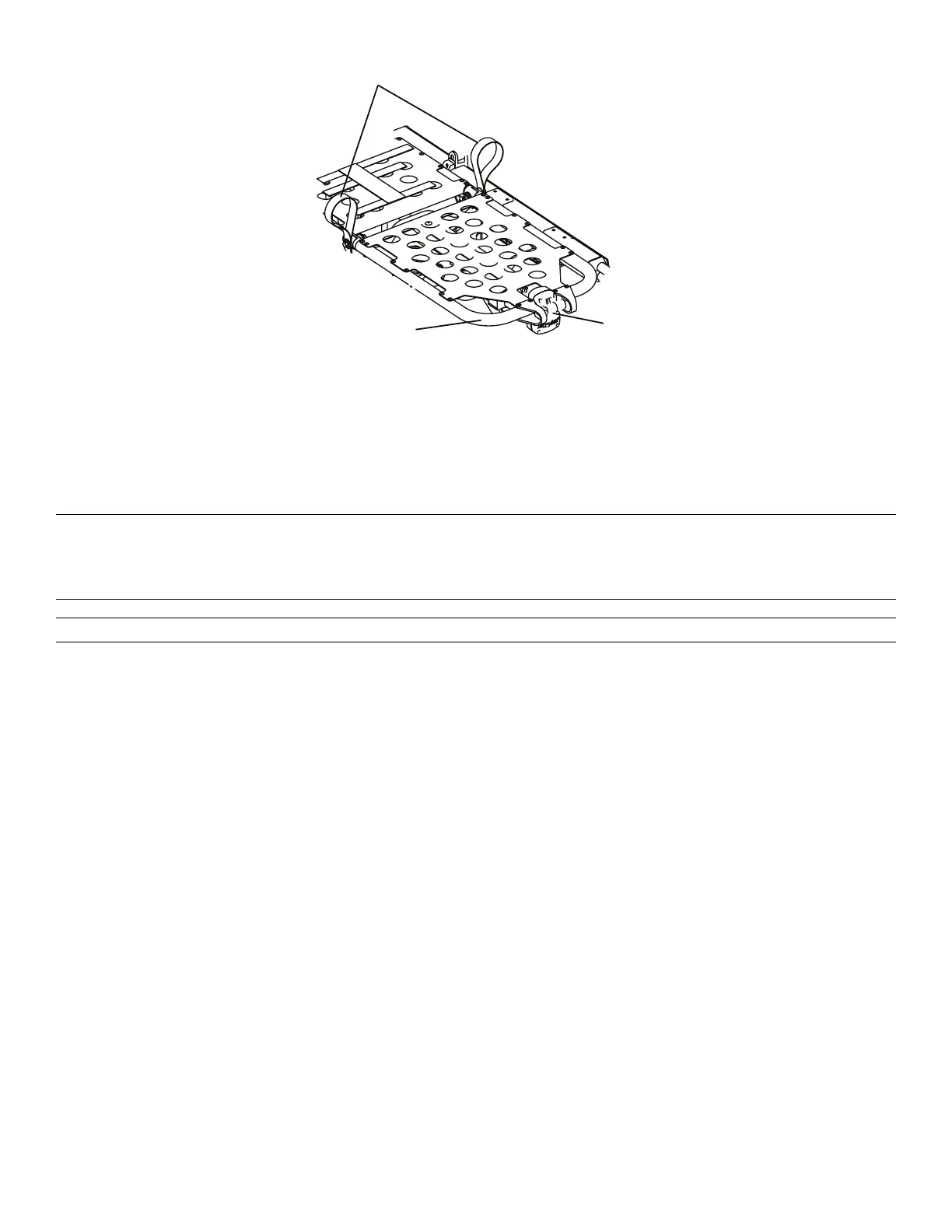
FFiigguurree 2200 –– GGaattcchh
SSeeccuurriinngg tthhee ppaattiieenntt wwiitthh tthhee rreessttrraaiinntt ssttrraappss
Secure restraint straps to the cot in the required attachment locations: shoulders, waist, thighs, and ankles. PPoowweerr--PPRROO 2
cots are compatible with the X-restraint strap system.
WWAARRNNIINNGG
• Always use all restraint straps to secure the patient on the product. An unrestrained patient may fall from the product and
be injured.
• Do not attach restraint straps to the base tubes, cross tubes, or litter skin.
CCAAUUTTIIOONN -- Do not entangle the restraint straps in the base frame when you raise or lower the cot.
NNoottee -- Restraint straps are a Type BF applied part.
Restraint strap attachment locations should provide strong anchorage and proper restraint position (Figure 21). If you do
not use the restraint strap attachment locations shown below, the cot is not crash-rated.
Do not allow restraint straps to interfere with equipment or accessories. Buckle the restraints across the shoulders, waist,
thighs, and ankles. Buckle all restraint straps when the cot is not in use.
1.
Attaching the shoulder restraints
(page 39)
2.
Attaching the waist restraints
(page 40)
3.
Attaching the thigh restraints
(page 40)
4.
Attaching the ankle restraints
(page 41)
EN 38 6507-009-001 Rev AB.3




 To Next Page