Refrigeration Service Operations
122
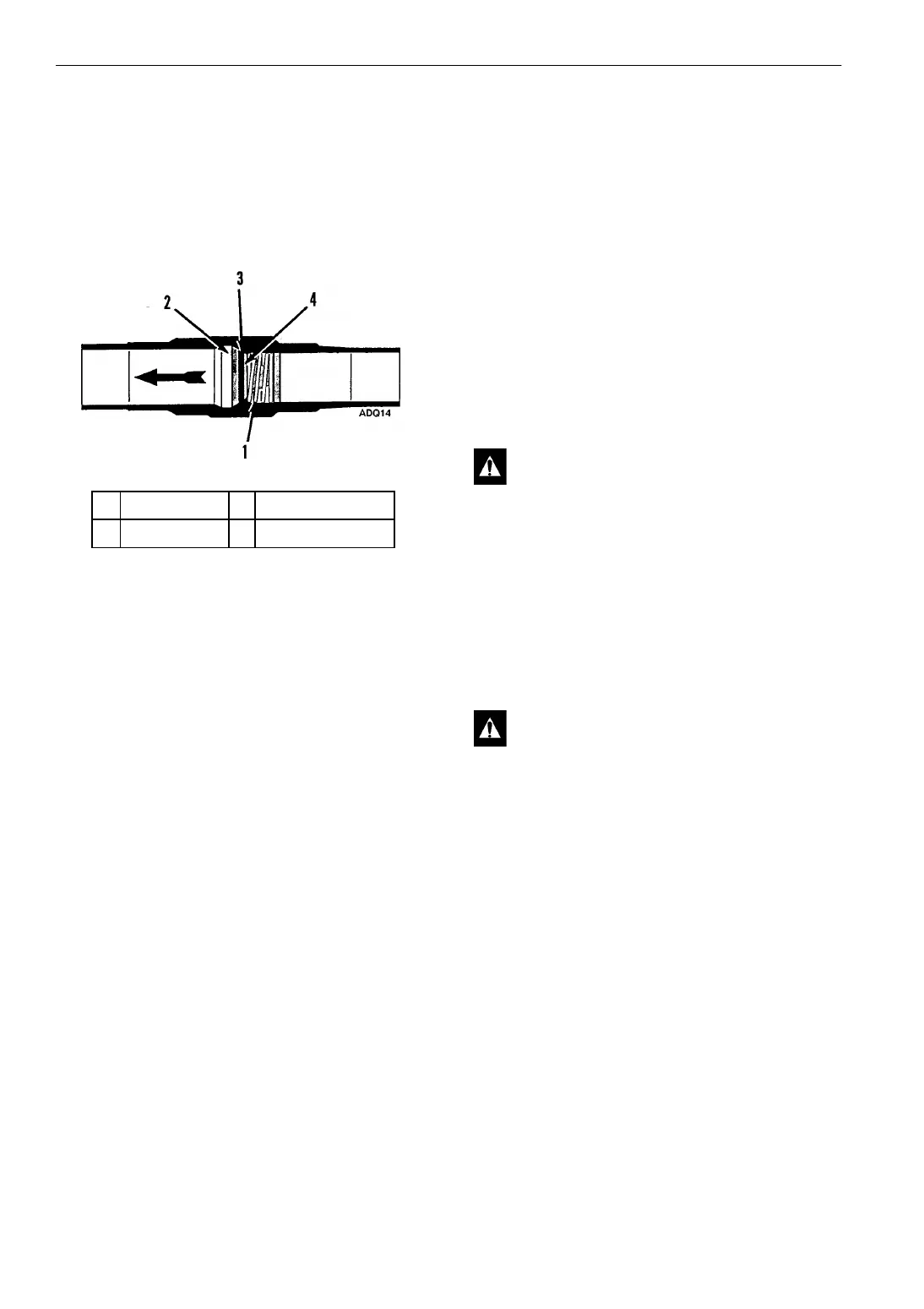
In-Line Check Valves
This unit uses some in-line check valves. An
in-line check valve is not repairable and must be
replaced if it fails. A heat sink must be used on the
in-line check valve when it is being soldered in
place to prevent damage to the neoprene seal.
Removal
1. Remove the refrigerant charge (for the liquid
return check valves the unit can be pumped
down instead).
2. Place the heat sink on the check valve.
3. Unsolder the lines and remove the check
valve.
Installation
NOTE: A heat sink must be used on the in-line
check valve when it is being soldered in place to
prevent damage to the neoprene seal.
1. Clean the tubes for soldering.
2. Place the check valve in position. The arrow
on the valve body indicates the direction of
refrigerant flow through the valve.
3. Place a heat sink on the check valve.
4. Solder the inlet and outlet connections.
5. Pressurize the refrigeration system and test for
leaks.
6. If no leaks are found, evacuate the system.
7. Recharge the unit with the proper refrigerant
and check the compressor oil (if pumped
down, open the refrigeration valves instead).
Receiver Tank Pressure
Solenoid Valve (RTPS)
Removal
1. Pump down the low side and equalize the
pressure in the high side to slightly positive.
2. Remove the coil from the valve.
3. Unsolder the hot gas lines from the valve, and
remove the valve from the unit.
Installation
1. Clean the tubes for soldering.
2. Remove the coil from the valve, and place the
valve in position.
3. Solder the inlet and outlet connections. After
the valve cools, install the coil on the valve.
4. Pressurize the refrigeration system and test for
leaks.
5. If no leaks are found, evacuate the system.
6. Open the refrigeration valves and run the unit.
Check the refrigerant charge and the
compressor oil.
1. Spring 3. Neoprene Seal
2. Valve 4. Valve Seat
Figure 65: Cross Section of In-Line Check Valve
CAUTION: Use a heat sink or wrap the
valve with wet rags to prevent damage.
CAUTION: Use a heat sink or wrap the
valve with wet rags to prevent damage.



 To Next Page