Start-up and Shut-down
90 CVHH-SVX001A-EN
If the carbon tank temperature exceeds 120 percent of the
regeneration temperature setpoint, the controller issues a
latching diagnostic, Purge Carbon Regeneration
Temperature Limit Exceeded. The purpose of this
diagnostic is to identify a failed heater relay or
temperature sensor. It disables the purge and opens the
exhaust solenoid valve.
If the carbon tank temperature does not increase more
than 13.3°C (56°F) in the fi rst two hours, the controller
generates a non-latching diagnostic, Carbon Regeneration
Temperature Too Low. The purpose of this diagnostic is to
identify a failed heater or temperature sensor. It prevents
automatic regeneration from occurring, but a service
technician can initiate a manual regeneration for testing
purposes. All other purge algorithms continue to function.
If the carbon tank temperature does not reach the
minimum regeneration temperature setpoint within 4
hours, the controller generates a non-latching diagnostic,
Purge Carbon Regen Temperature Not Satisfied. The
purpose of this diagnostic is to identify a failing insulation
system.
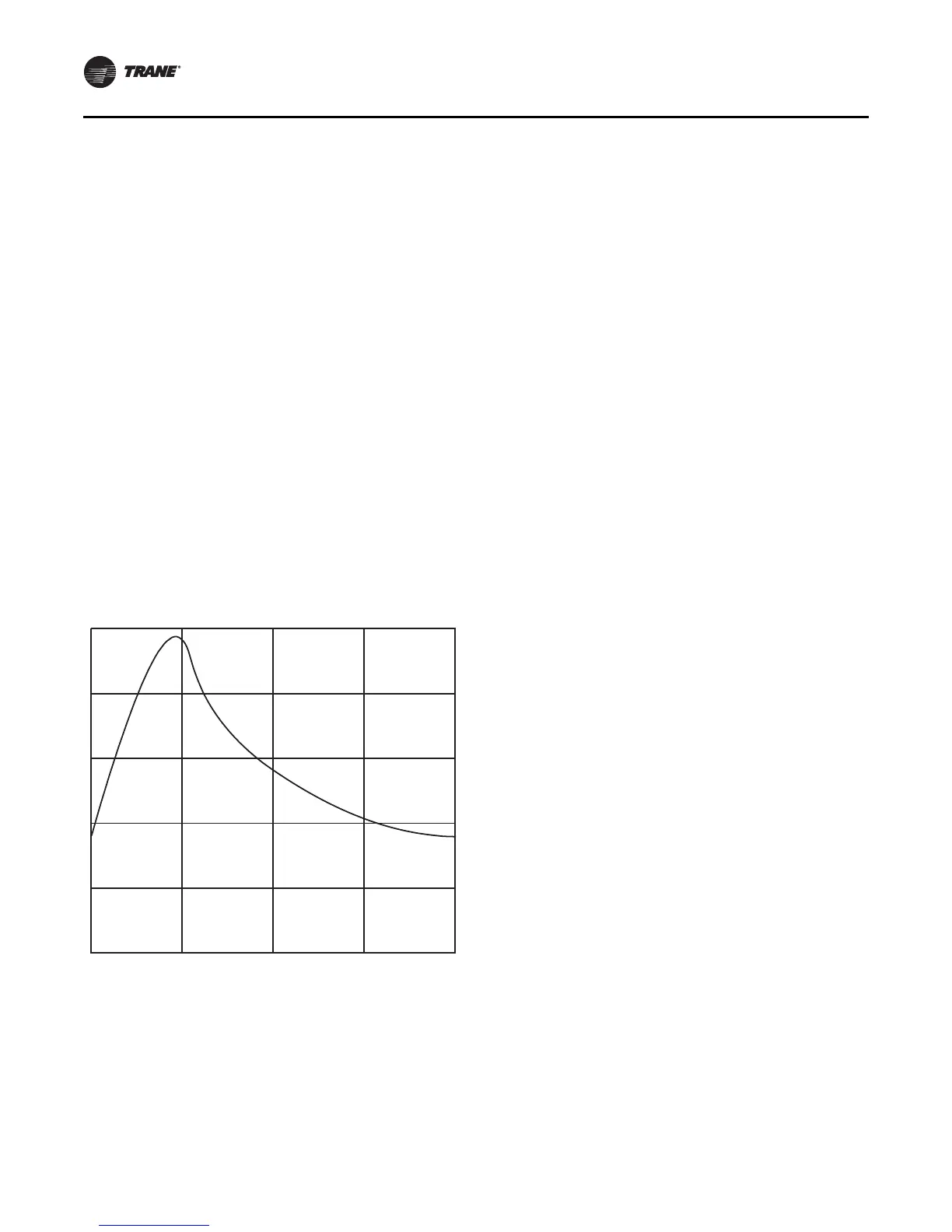
The complete regeneration cycle can take as long as seven
hours to accomplish, but an average chiller does not have
to regenerate very often. A typical regeneration cycle is
depicted in
Figure 51.
Purge Status Points
The status points appear on the purge component screen
of the Tracer AdaptiView display. The purge component
screen is accessible from the purge touch target on the
home screen of the display.
Time Until Next Purge Run. Displayed if the purge is
in Adaptive mode and is idle. It indicates the amount of
time left on the adaptive cycle timer.
Daily Pumpout—24 Hours. Indicates the daily
pumpout time for the last 24 hours (a moving 24-hour
window). It indicates how the hermetic integrity of the
chiller compares to historic pump-out times for the same
chiller. It also allow s a check against factory-recommended
values.
Average Daily Pumpout—7 Days. Indicates the
average daily pump-out time for the last 168 hours (a
moving 168-hour window). Enables a comparison of
present pump-out times to past averages, and can be
another indication of the hermetic integrity of the chiller.
Daily Pumpout Limit/ Alarm. Indicates the limit value
that an operator has set in the Settings menu. When the
daily pumpout rate exceeds this value, purge operation
stops and a diagnostic is generated.
Chiller On—7 Days. Indicates the percentage of time
during the past 7 days (floating 168-hour window) that the
chiller was operating. You can use it to help determine if a
leak is present on the high side or the low side of the chiller.
Pumpout Chiller On—7 Days. Indicates the
percentage of the total purge pump-out time during the
past 7 days that occurred while the chiller was operating.
You can use it to help determine if a leak is present on the
high side or the low side of the chiller.
Pumpout Chiller Off—7 Days. Indicates the
percentage of the total purge pump-out time during the
past 7 days that occurred when the chiller was not
operating. You can use it to help determine if a leak is
present on the high side or the low side of the chiller.
Pumpout—Life. Indicates the total purge pump-out
time that has accumulated over the life of the purge.
Purge Rfgt Cprsr Suction Temp. Indicates the purge
refrigerant compressor suction temperature. It is useful
for diagnosing purge system problems.
Purge Liquid Temp. Indicates the temperature sensed
by the controller and used to inhibit purge operation. The
purge liquid temperature sensor, when the chiller is
operating, is the chiller saturated condenser temperature
sensor; when the chiller is Off, it is the chiller saturated
evaporator temperature sensor. If this temperature is
below the Pumpout Inhibit Temperature that is defined in
the Settings menu, pump out is not allowed. This value is
used to prevent inefficient operation of the purge under
certain conditions.
Carbon Tank Tem p. Indicates the carbon bed
tem perature and is useful for monitoring regeneration and
for diagnosing regeneration system problems.
Figure 51. Typical carbon regeneration cycle


 To Next Page