VR Technology Limited
VRX Dive Computer and Variable Gradient Model
VGM Decompression Algorithm
Release version features 8
th
October 2008
Following the huge success of the VR3 dive computer VR Technology launched the
VRX dive computer at DEMA this month.
The Variable Gradient Model (VGM) algorithm is available from January 09
exclusively in the new VRx dive computer. Free download software to
complement the product is also available at www.technologyindepth.com/vrx.html
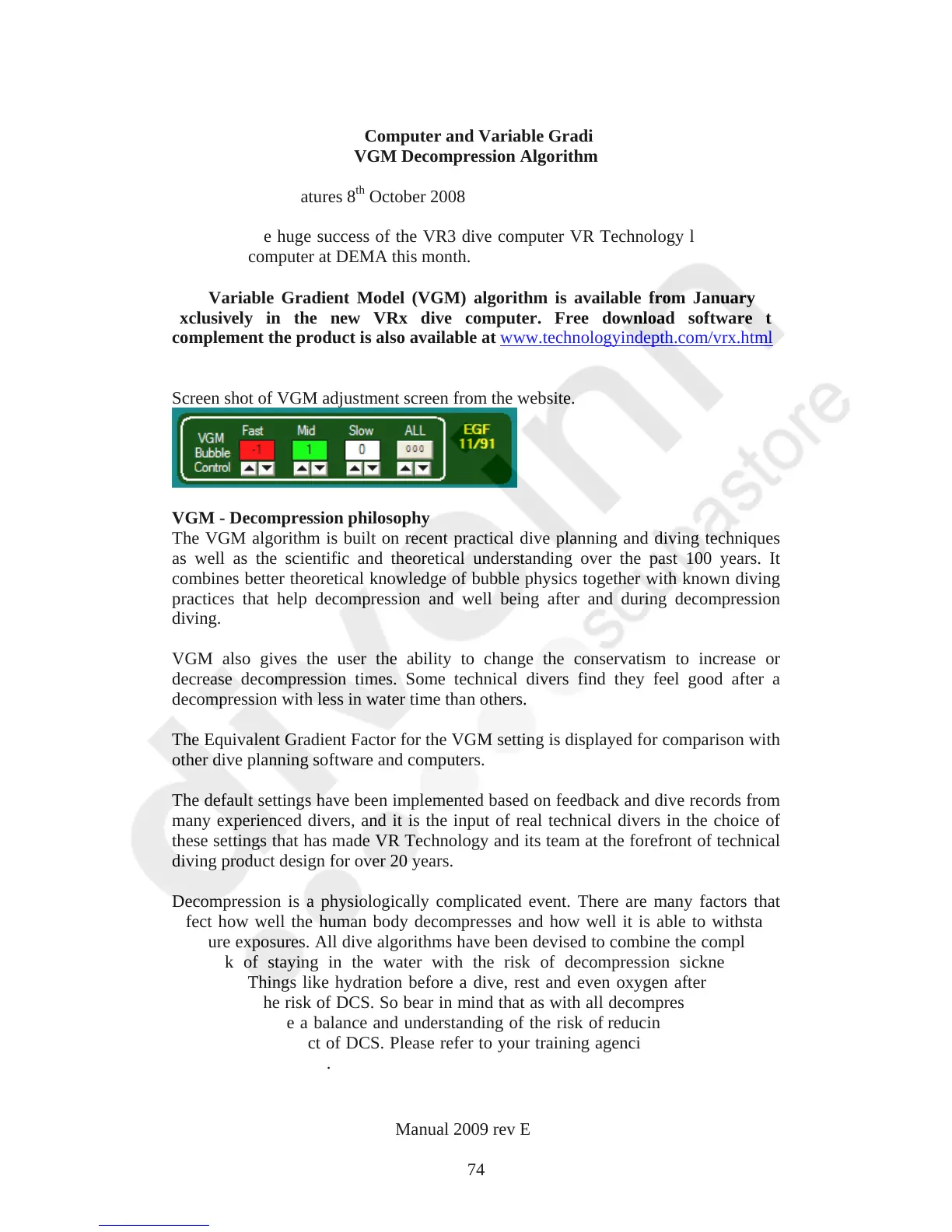
Screen shot of VGM adjustment screen from the website.
VGM - Decompression philosophy
The VGM algorithm is built on recent practical dive planning and diving techniques
as well as the scientific and theoretical understanding over the past 100 years. It
combines better theoretical knowledge of bubble physics together with known diving
practices that help decompression and well being after and during decompression
diving.
VGM also gives the user the ability to change the conservatism to increase or
decrease decompression times. Some technical divers find they feel good after a
decompression with less in water time than others.
The Equivalent Gradient Factor for the VGM setting is displayed for comparison with
other dive planning software and computers.
The default settings have been implemented based on feedback and dive records from
many experienced divers, and it is the input of real technical divers in the choice of
these settings that has made VR Technology and its team at the forefront of technical
diving product design for over 20 years.
Decompression is a physiologically complicated event. There are many factors that
affect how well the human body decompresses and how well it is able to withstand
pressure exposures. All dive algorithms have been devised to combine the complexity
and risk of staying in the water with the risk of decompression sickness after
surfacing. Things like hydration before a dive, rest and even oxygen after a dive all
help reduce the risk of DCS. So bear in mind that as with all decompression planning
there needs to be a balance and understanding of the risk of reducing decompression
times and the impact of DCS. Please refer to your training agencies’ information and
advice on these issues.
VR Dive Computer Operations Manual 2009 rev E 28/01/2009
74



 To Next Page