CHAPTER 1 WELCOME
EFD1000 PRO MAX PFD Pilot’s Guide
Page 1-6
091-00005-002 () EFD1000 PRO MAX PFD Pilot’s Guide
Page 1-7
091-00005-002 ()
1.1.2 Configuration Module (CM)
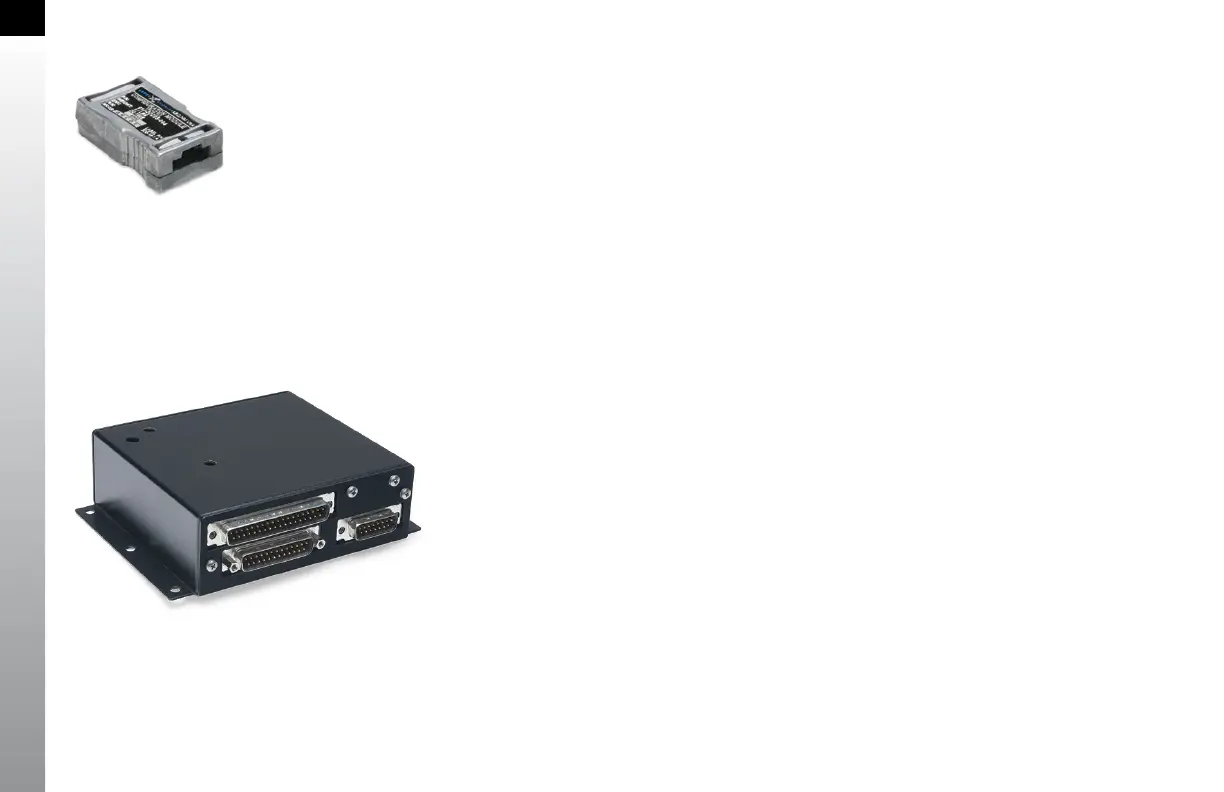
The Configuration Module (Figure 1-7), contains an EEPROM device that retains system
configuration and calibration data and provides two primary functions:
• Retains aircraft-specific configuration information, calibration data, and user
settings, allowing the PFD to be swapped for service purposes without re-entering
or re-calibrating the installation
• Contains a license key that configures the PFD software features
The CM is typically attached to the wire bundle coming out of the D-sub connector on
the display unit.
1.1.3 Analog Converter Unit (ACU)
1
The Analog Converter Unit (ACU) (Figure 1-8), included with most Pro PFD systems,
enables the all-digital, EFD1000 System to interface with analog avionics when required.
The ACU converts multiple analog interfaces to the digital ARINC 429 buses supported
by the PFD. Control parameters, such as desired heading, are also sent from the Pro PFD
to the ACU for conversion to analog format for autopilot support. The ACU is required
when any of the following capabilities are required in a Pro PFD installation:
• Interface to supported autopilots
• Interface to conventional VHF navigation radios
• Interface to legacy (non-ARINC 429) GPS navigators
• Interface to supported radar altimeter decision height annunciations
If ARINC 429-based digital radios are installed in the aircraft and no other aircraft
interfaces are desired, the ACU is not required.
Figure 1-7
Configuration Module (CM)
Figure 1-8
Analog Converter Unit (ACU)


 To Next Page