CHAPTER 4 REFERENCE GUIDE
EFD1000 PRO MAX PFD Pilot’s Guide
Page 4-58
091-00005-002 ()
4.8. Autopilot Integration
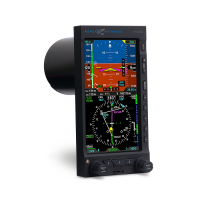
The Pro PFD can connect with many different legacy autopilot systems that are typically
found in general aviation aircraft. Generally, the PFD can display the Flight Director (FD)
bars on the Attitude Indicator, providing pitch and roll guidance commands to the
pilot. For certain autopilots, the PFD can display the Autopilot Mode Annunciations,
and provide selected Altitude, Selected Airspeed and Selected Vertical Speed inputs
to the autopilot.
When connected to an autopilot system that includes Nav or Approach couplers, the
PFD also acts as the navigation source selector switch to the autopilot. This assures that
the navigation information selected for the PFD is the same as that being provided
to the autopilot. This arrangement also eliminates the need for external autopilot
navigation source selector switches and relays that were previously used to select
which navigation radio would be connected to the autopilot. Selection of autopilot
modes and mode control is unaffected by the installation of the PFD.
4.8.1 GPS Steering (GPSS)
GPS Steering represents a modern approach to flying between flight plan waypoints,
and offers many advantages of over traditional methods of flying direct course lines
between waypoints.
With traditional point-to-point navigation, the autopilot is provided with desired course
and cross-track deviation information associated with the current flight leg. From there,
it will maneuver the aircraft to center the needle and track the desired course. The
autopilot does not anticipate upcoming course changes, nor can it fly curved flight
paths without pilot assistance, and it has to recompute wind corrections following each


 To Next Page