OPERATION
50 EMX4i User Manual 710-14888-00C
Start Ramp
Time
(seconds)
Pump - submersible
Adaptive Control
(Early accel.)
5 n/a 500
Adaptive Control
(Late decel.)
5
Saw - bandsaw Constant Current
1 200 450 Coast To Stop n/a
Saw - circular Constant Current
1 200 350 Coast To Stop n/a
Shredder Constant Current
1 200 450 Coast To Stop n/a
8.8 Soft Start Methods
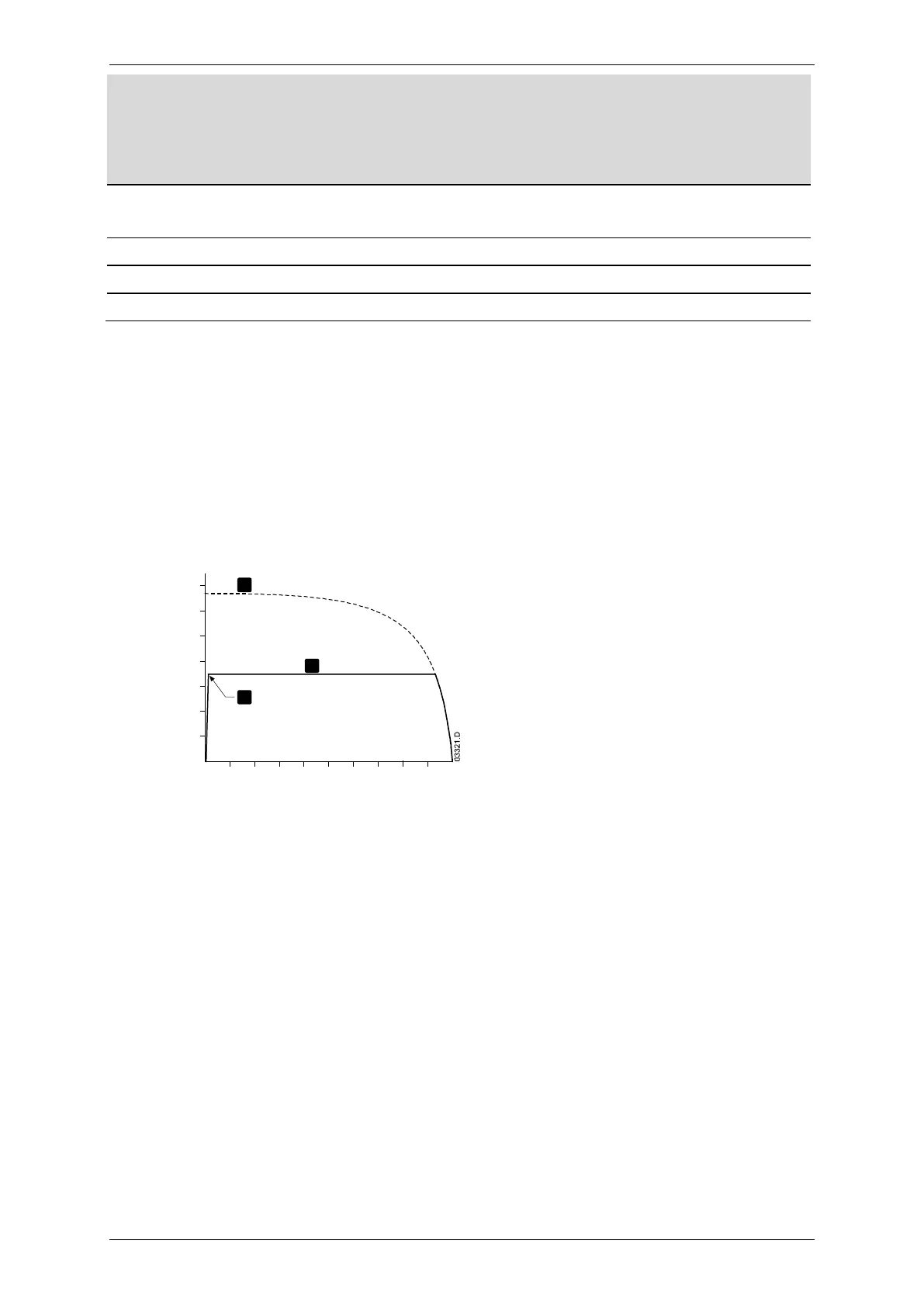
Constant Current
Constant current is the traditional form of soft starting, which raises the current
from zero to a specified level and keeps the current stable at that level until the
motor has accelerated.
Constant current starting is ideal for applications where the start current must be
kept below a particular level.
Current
(%motor full load current)
700%
600%
500%
300%
100%
400%
200%
10% 20% 30% 40% 50% 60% 70% 80% 90% 100%
1
3
2
1:
Initial Current
(parameter 2C)
2:
Current Limit
(parameter 2D)
3: Full voltage current
Rotor speed (% full speed)
Constant Current with Current Ramp
Current ramp soft starting raises the current from a specified starting level (1) to a
maximum limit (3), over an extended period of time (2).
Current ramp starting can be useful for applications where:
• the load can vary between starts (for example a conveyor which may start
loaded or unloaded). Set the initial current (parameter 2C) to a level that
will start the motor with a light load, and the current limit (parameter 2D)
to a level that will start the motor with a heavy load.
• the load breaks away easily, but starting time needs to be extended (for
example a centrifugal pump where pipeline pressure needs to build up
slowly).
• the electricity supply is limited (for example a generator set), and a slower
application of load will allow greater time for the supply to respond.


 To Next Page