LR2000 Programming Manual V1.2
[Reference] DLE EOT, GS a
GS v 0 m xL xH yL yH d1....dk
[Name] Print raster bit image
[Format] ASCII GS v 0 m xL xH yL yH d1...dk
Hex 1D 76 30 m Xl xH yL yH d1...dk
Decimal 29 118 48 m xL xH yL yH d1...dk
[Range] 0 m 3, 48 m 51
0 xL 255
0 xH 255 where 1 (xL + xH×256) 128
0 yL 255
0 yH 8 where 1 (yL + yH×256) 4095
0 d 255
k = (xL + xH×256) ×(yL + yH×256) (k ≠0)
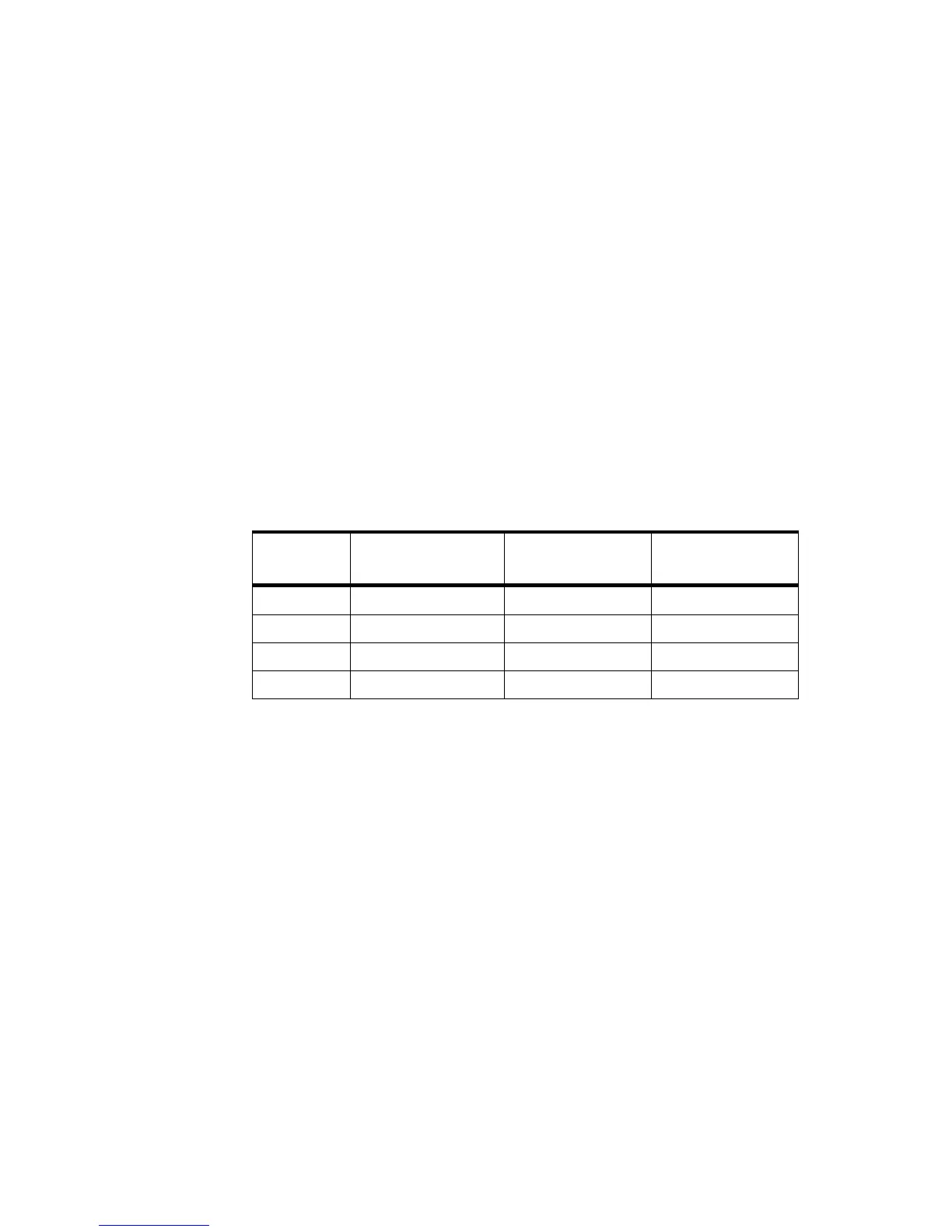
[Description] Selects raster bit-image mode. The value of m selects the mode, as follows:
xL, xH, select the number of data bytes (xL+xH×256) in the horizontal direction for
the bit image.
yL, yH, select the number of data bits (yL+yH×256) in the vertical direction for the
bit image.
[Notes] In standard mode, this command is effective only when there is no data in the print
buffer.
This command is not affected by print modes (character size, emphasized, double-
strike, upside-down, underline, white/black reverse printing, etc.) for raster bit
image.
If the printing area width set by GS L and GS W is less than the minimum width,
the printing area is extended to the minimum width only on the line in question. The
minimum width means 1 dot in normal (m=0, 48) and double-height (m=2, 50), 2
dots in double-width (m=1, 49) and quadruple (m=3, 51) modes.
Data outside the printing area is read in and discarded on a dot-by-dot basis.
The position at which subsequent characters are to be printed for raster bit image
is specified by HT (Horizontal Tab), ESC $ (Set absolute print position), ESC \ ( Set
relative print position), and GS L (Set left margin ). If the position at which
subsequent characters are to be printed is a multiple of 8.


 To Next Page