EasyManua.ls Logo

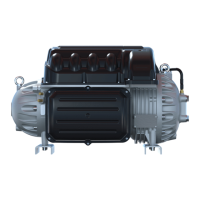
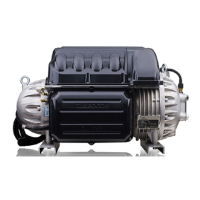
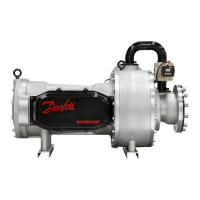
Danfoss TTS300 - User Manual

Danfoss TTS300
294 pages
Print Icon
To Next Page IconTo Next Page
Loading...
®
Service Manual - Revision H
Danfoss Turbocor® Twin-Turbine
Centrifugal Series Compressors
TT Series Compressors
http://turbocor.danfoss.com |

Table of Contents

Other manuals for Danfoss TTS300

Questions and Answers

  • J
    John CarrilloAug 15, 2025
    What to do if there is a High Discharge Temperature Fault in my Danfoss Air Compressor?
    • N
      navarrojosephAug 15, 2025
      A high discharge temperature fault in the Danfoss Air Compressor often suggests insufficient charge (low gas), increased condenser temperature, a check valve that hasn't opened, or the compressor running in surge condition for too long. To address this, check the chiller gas charge, the conditions of the air/water entering the condenser, and the operational settings. Also, make sure the discharge pressure/temperature sensor is working correctly and that the check valve opens during compressor operation.
  • K
    Katie LeonardAug 18, 2025
    What to do if there is a Low Suction Pressure Fault in my Danfoss TTS300?
    • C
      Christina LeeAug 18, 2025
      A Low Suction Pressure Fault in your Danfoss Air Compressor suggests there may be insufficient charge, insufficient system load, or a sudden drop in evaporator entering air/water temperature or flow. You should check the charge, system load, and entering air/water conditions to resolve this issue.
  • N
    nicolescottAug 21, 2025
    What to do if I see a High Inverter Temperature Fault on my Danfoss Air Compressor?
    • C
      Charles RichardsonAug 21, 2025
      A High Inverter Temperature Fault in your Danfoss Air Compressor indicates that the inverter cooling is not sufficient. Ensure that the liquid motor-cooling line has enough liquid supply and is not blocked. To prevent Inverter failure, avoid running the compressor for long periods at a pressure ratio less than 1.5. If the fault occurs three times in 30 minutes, a Lock-Out Fault will occur. In this case, allow the measured Inverter temperature to drop below the Maximum Drive Startup Temperature before attempting a restart.
  • A
    Ashley CrawfordAug 25, 2025
    What causes a High Discharge Pressure Fault in a Danfoss TTS300 Air Compressor?
    • R
      Richard HernandezAug 25, 2025
      A High Discharge Pressure Fault in your Danfoss Air Compressor suggests that the condenser may be faulty or there's insufficient air/water flow. You should check the condenser and air/water flow. Also review the fault log for the actual discharge pressure and other conditions recorded at the time of the fault.
  • T
    Tracey MoralesAug 27, 2025
    What causes a 3-Phase Over-Current Fault in a Danfoss TTS300?
    • A
      Ariel HillAug 27, 2025
      A 3-Phase Over-Current Fault in your Danfoss Air Compressor means the compressor is drawing more current than the 3-Phase Current Fault Limit. Review the fault log for the recorded 3-Phase Current level, demand, entering air/water temperature (if available), and other conditions recorded at the time of the fault. This fault can also be related to a start speed or minimum pressure ratio that is set too high at start-up, a power control integral gain that is too high, or a sudden increase in load/demand or system changes.
  • B
    Bernard MccormickAug 30, 2025
    What causes a High Cavity Temperature Fault in my Danfoss TTS300?
    • L
      Lisa SkinnerAug 30, 2025
      A High Cavity Temperature Fault in your Danfoss Air Compressor indicates that the motor cooling is insufficient. Ensure the liquid motor-cooling line has sufficient liquid supply and is not blocked. To prevent shaft demagnetization or Back EMF is low faults, avoid running the compressor for long periods at a pressure ratio less than 1.5.
  • B
    brooke25Sep 2, 2025
    What causes a High Pressure Ratio Fault in my Danfoss TTS300?
    • C
      Carol ButlerSep 2, 2025
      A High Pressure Ratio Fault in your Danfoss Air Compressor suggests the condenser pressure is high, there is not enough load on the evaporator, or there is insufficient water/air flow in either the condenser or evaporator. Check the electronic expansion valve (EXV) operation, condenser and evaporator loads, and water/air flow.
  • K
    Kelsey CortezSep 5, 2025
    What does a Low Leaving Fluid Temperature Fault mean on my Danfoss TTS300?
    • A
      Amy LuceroSep 5, 2025
      A Low Leaving Fluid Temperature Fault in your Danfoss Air Compressor suggests there is insufficient evaporator fluid flow or insufficient system load. Check the evaporator fluid flow and system load. Also, verify the leaving fluid temperature sensor.
  • R
    ronald86Sep 8, 2025
    What causes a High SCR Temperature Fault in my Danfoss TTS300 Air Compressor?
    • G
      Greg MoralesSep 8, 2025
      A High SCR Temperature Fault in your Danfoss Air Compressor indicates that the SCR cooling is insufficient. Ensure the liquid motor-cooling line has sufficient liquid supply and is not blocked.
  • P
    patricksheltonSep 12, 2025
    What does a Sensor Fault mean on my Danfoss TTS300?
    • P
      Patrick BurtonSep 12, 2025
      A Sensor Fault in your Danfoss Air Compressor may be caused by values out of the specified ranges. Review the fault log for any such indications recorded at the time of the fault. Verify the questionable sensor and related connections to check for failure. Also, verify the suction pressure/temperature sensor.

Summary

Danfoss Turbocor Twin-Turbine Centrifugal Series Compressors

Chapter 1.0 Introduction

1.2 Purpose

Outlines the manual's intent to provide service procedures for Danfoss Turbocor compressors.

1.5 Safety Summary

Emphasizes safety precautions and identifies DANGER and CAUTION notifications.

1.8 Electrical Isolation

Details the procedure for isolating compressor power before servicing, including safety warnings.

1.9 Handling Static Sensitive Devices

Provides precautions and procedures for handling static-sensitive electronic components.

1.10 DC Bus Test Harness Installation and Removal

Explains how to install and remove the DC bus test harness for power electronics testing.

Chapter 2.0 Compressor Fundamentals

2.2 Motor and Power Electronics Cooling

Explains the liquid refrigerant cooling system for motor and power electronics.

Chapter 3.0 Compressor Removal and Installation

3.1 Refrigerant Containment

Covers procedures for isolating and recovering refrigerant safely according to standards.

3.2 Compressor Removal

Provides steps for isolating power, disconnecting cables, and removing the compressor.

3.3 Compressor Installation

Details the process for installing a new compressor, including torque specifications and safety notes.

Chapter 4.0 Component Identification

4.3 Compressor Interface Module

Details the CIM's function for user control, communication, and status feedback.

4.14 Soft Start

Discusses the two variants of compressor Soft Starts and their function in limiting in-rush current.

4.18 Silicone-Controlled Rectifier

Explains the SCRs' function in converting AC voltage to DC voltage and maintaining the DC bus.

4.22 Inverter

Explains the Inverter's function to generate AC output voltage for the compressor motor.

4.29 Magnetic Bearings

Describes the magnetic bearings that levitate the compressor shaft during operation.

Chapter 5.0 lTroubleshooting

5.1 Alarm and Fault Indications

Explains how alarms and fault logs provide information for troubleshooting.

5.2 Troubleshooting with the Service Monitoring Tools Software

Guides users on utilizing SMT software for viewing compressor information and troubleshooting.

5.3 Bearing Calibration

Covers procedures for performing, saving, and analyzing bearing calibration.

5.5 System and Compressor Level Troubleshooting

Addresses troubleshooting at both system and compressor levels.

Chapter 6.0 Maintenance

Appendix C Compressor Test Sheet

Danfoss TTS300 Specifications

General IconGeneral
BrandDanfoss
ModelTTS300
CategoryAir Compressor
LanguageEnglish

Related product manuals