Enertech Global, LLC 17
AV : MD/ME - Rev. A Models
Installaon and Operaons Manual
Secon 3: Introducon & Operaonal Consideraons
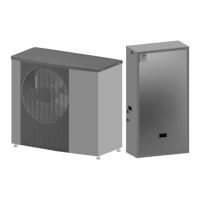
Outdoor Unit
Use original accessories and the stated components for the
installaon. Install the unit in a locaon with good support.
Unsuitable installaon locaons can cause the unit to fall
and cause material damage and personal injury. Installaon
without sucient support can also cause vibraons and
noise. Ensure that the unit can withstand strong winds and/or
earthquakes.
The electrical installaon must be carried out by a qualied
electrician and the system must be connected as a separate
circuit.
Power supply with insucient capacity and incorrect funcon
can cause electrical shocks and re. Use the wire size sucient
for the MCA (Minimum Circuit Ampacity) per the electrical
data tables for the electrical connecon, ghten the cables
securely in the terminal blocks and support the wiring
correctly to prevent overloading the terminal blocks. Loose
connecons or cable mounngs can cause abnormal heat
producon or re.
In heang, the minimum outdoor air temperature at which
the unit will operate is -13 deg. F. In cooling, the minimum
temperature is 38-41 deg. F.
Balance Point Temperature
The balance temperature is the outdoor temperature when
the heat pump’s stated output is equal to the building’s input
requirement. This means that the heat pump covers the whole
building’s output requirement down to this temperature.
Compressor Heater
The unit is equipped with two heaters that heat the
compressor before start-up and when the compressor is
cold. When starng the unit in low ambient condions, the
compressor heater may need to be acve for up to 3 hours
before starng unit.
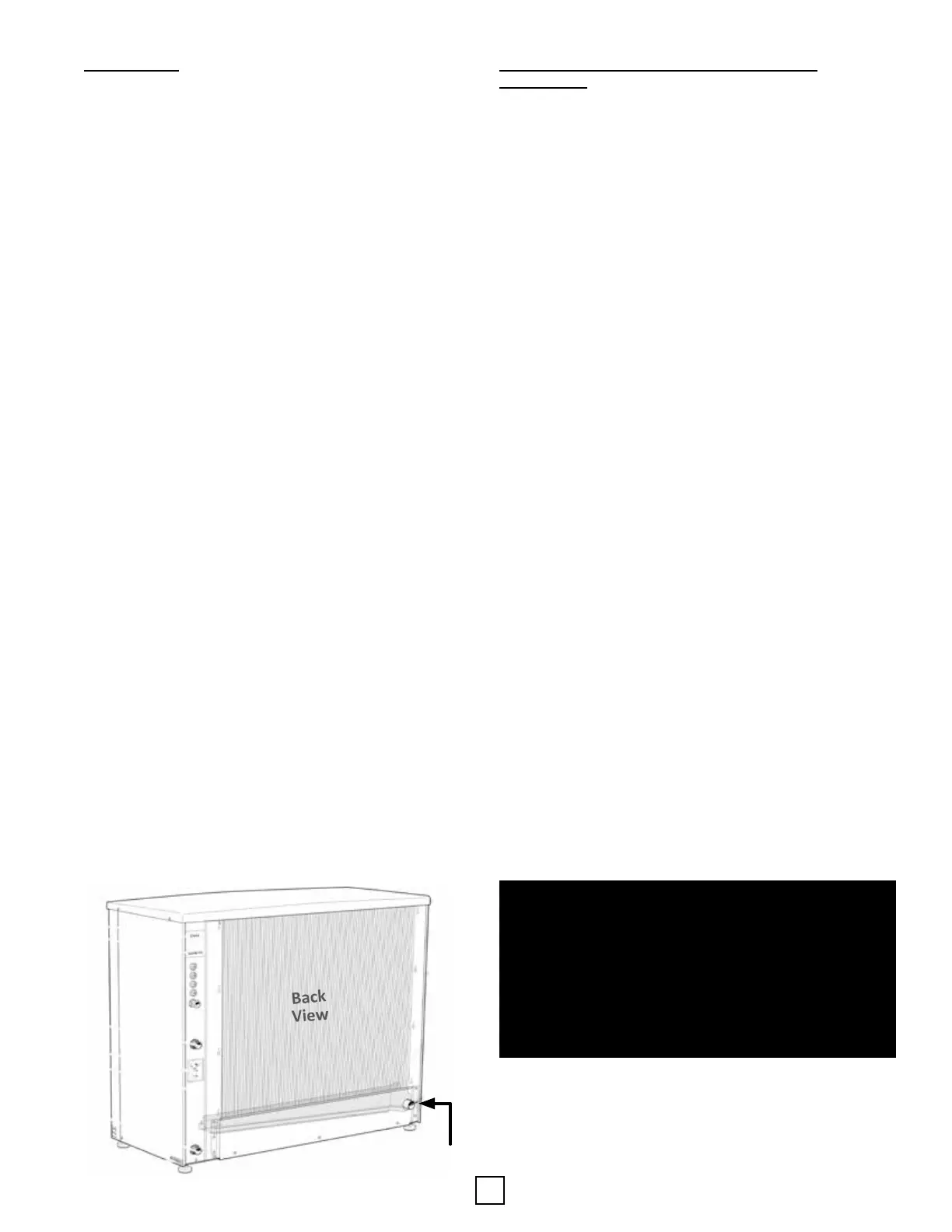
The condensate drain pan collects and drains away most of
the condensate from the heat pump.
It is important to the heat pump funcon that the condensate
run-o is not posioned so that it can cause damage to
the house. The condensate that collects in the trough can
be substanal and should be routed away by pipe to an
appropriate area, it is recommended that the shortest
outdoor stretch possible is used. Run-o should be checked
regularly, especially during autumn, for obstrucons by leaves
and branches. Clean if necessary.
Condensate Drain
Zone Piping:
All zone piping should be “Home Run” style
(Page #25) to assist with purging air and to maintain lower
pressure drop.
Hydronic Components: System should include a boiler trim
kit that includes an expansion tank, air separator/automac
air vent, and glycol feeder. In addion, an automac air vent
should be located at the highest point in the piping system.
Note that a factory-installed expansion tank is included with
the Indoor Module.
All systems must include anfreeze in the
hydronic piping and Fernox F1 inhibitor or approved alternate
(this is a warranty requirement). Heang only systems do not
require anfreeze in the hydronic piping (except those that
have exposed piping) but must include Fernox F1 inhibitor or
approved alternate (this is a warranty requirement).
Flush Valves: System should include ush valves to facilitate
purging of air.
System Pump: System should include a variable speed
(Delta-T or Delta-P control) or constant speed pump to
provide ow from the Indoor Module to the hydronic zones.
A pressure dierenal bypass valve must be installed to avoid
dead heading the pump if zone valves are not fully open.
Strainer: System should include a strainer. It must be checked
and cleaned as necessary to ensure proper ow rate and long-
term unit reliability.
All necessary unions,
adapters and ngs should be installed to allow ease of
service and to meet any local code requirements.
⚠ CAUTION ⚠
IF THE CONDENSATE DRAIN WILL BE CONNECTED
TO PIPING, DO NOT USE A TRAP. IF PIPED, HEAT
TAPE MUST BE INSTALLED TO AVOID FREEZING
AND BURSTING OF THE PIPING. PIPING FROM
THE CONDENSATE DRAIN IS NOT REQUIRED BUT
OFF WILL CAUSE DAMAGE TO THE FOUNDATION,
LANDSCAPING, OR OTHER STRUCTURES THAT MAY


 To Next Page