51
!
When adding weight, adhere to the maximum tire
capacity loading stated in the tables towards the end of
Chapter -5 of this manual. If further information or
assistance is required on tractor weighing consult your
Dealer.
When adding ballast, the total weight of the tractor
including liquid, cast iron weights and mounted
equipment (where specified) should not exceed the
maximum shown in the following text entitled 'Weighing
Limitations.
WARNING : If proper stability cannot be achieved
within the following weighing limitations, reduce the
load on the tractor until stability is restored
5.20 Weighing Limitations
For Agri applications –
Front Reaction – 1200 kgs Max.
Rear Reaction- 1500 kgs Max.
Total Tractor Reaction – 2500 kgs Max.
For Transportation purpose (includes Attachments and
Implements mounted on Tractor) Front Reaction- 1200
kgs Max.
Rear Reaction – 2000 kgs Max.
Total Tractor Reaction – 2900 kgs Max.
Front and Rear area can be independently ballasted to
max. recommended values ensuring total reaction is
within the recommended values.
Front loader refer below data.
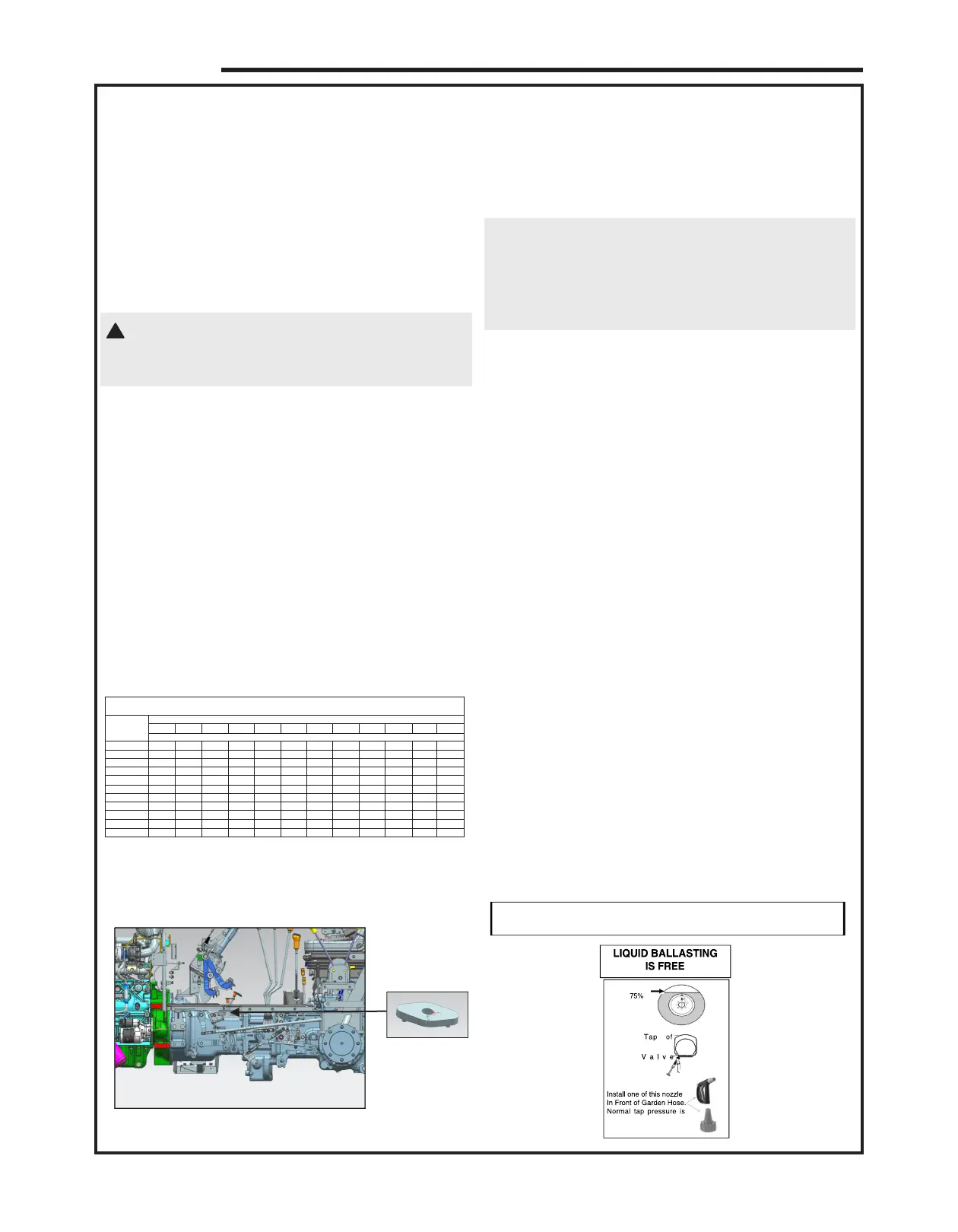
5.21 Dampers
Damper is provided under the plat form for better
shock absorption.
Figure-63
1. Damper
Liquid Ballast
Filling the front and rear tires with liquid ballast is a
convenient method of adding weight. A solution of
water is recommended. This gives a low freezing point
and provides a higher density than plain water.
NOTE : When filling tires with water solution the valve
should be at the highest point on the wheel. If the tire
contains liquid ballast, the valve should be at the
lowest point when checking or adjusting air pressure.
Special equipment is required to water ballast tires.
See your Tractor Dealer or Tire Supplier for details.
Removal Procedure:
• Jack up the tractor & turn wheel to bring the valve
at bottom position.
• Remove the valve core housing and make
connections with pump.
• Completely evacuate the tire.
• Re-inate the tire with recommended air pressure.
5.22 How to do Wheel Ballasting
Ÿ Jack-up both rear wheels, remove valve body &
allow air to flow out completely.
Ÿ Position wheel nozzle @12'o clock location,
Ÿ Direct water jet into the tube & intermittently allow
internal air to flow out.
Ÿ Allow excess water to drain-out, that is above 11'o
clock location.
Ÿ Now rotate wheel & position nozzle at 12'o clock
location. Replace value body.
Ÿ Fill balance air pocket with 7-8 psi air pressure. DO
NOT fill higher pressure.
Ÿ Always position valve at 12'o clock to re-check air
pressure.
Do not fill 100% or over fill water, this will result in
SOLID wheel & will lead to rough ride & extra
slippage. Half filled wheel will not brake easily.
Ÿ For freezing cold regions add slat solution with
water to avoid freezing.
Do Not Fill more than 75% volume of tyre air space (upto Valve level)
Recommended AIR Pressure not to exceed 8 psi on near wheel
Figure-64
OPERATION
Permissible Loads vs Wheel Tracks and Vehicle Speed
Trak
[mm]
1011
1050
1090
1130
1170
1210
1250
1290
1330
1370
1420
2710
2901
3103
3311
3525
3744
3542
3347
3168
3003
2816
2385
2553
2730
2913
3102
3296
3117
2945
2788
2643
2478
2059
2205
2358
2516
2679
2846
2692
2544
2408
2282
2140
1734
1886
1986
2119
2256
2396
2267
2142
2027
1922
1802
1409
1508
1613
1722
1833
1947
1842
1740
1647
1562
1464
1084
1160
1241
1324
1410
1498
1417
1339
1267
1201
1126
1084
1160
1241
1324
1410
1498
1417
1339
1267
1201
1126
1084
1160
1241
1324
1410
1498
1417
1339
1267
1201
1126
1084
1160
1241
1324
1410
1498
1417
1339
1267
1201
1126
1084
1160
1241
1324
1410
1498
1417
1339
1267
1201
1126
1084
1160
1241
1324
1410
1498
1417
1339
1267
1201
1126
1084
1160
1241
1324
1410
1498
1417
1339
1267
1201
1126
0 2 4 6 8 10 15 20 24 28 32 36
Speed (Km/h)
Dynemic Load (daN)



 To Next Page