Technical Manual
hD8625 8-
5
/
8
” 35K Tong
2.17
SHIFTING TONG WHILE ROTATING THE MOTOR AND CAGE PLATE MAY RESULT IN
CATASTROPHIC GEAR TRAIN FAILURE
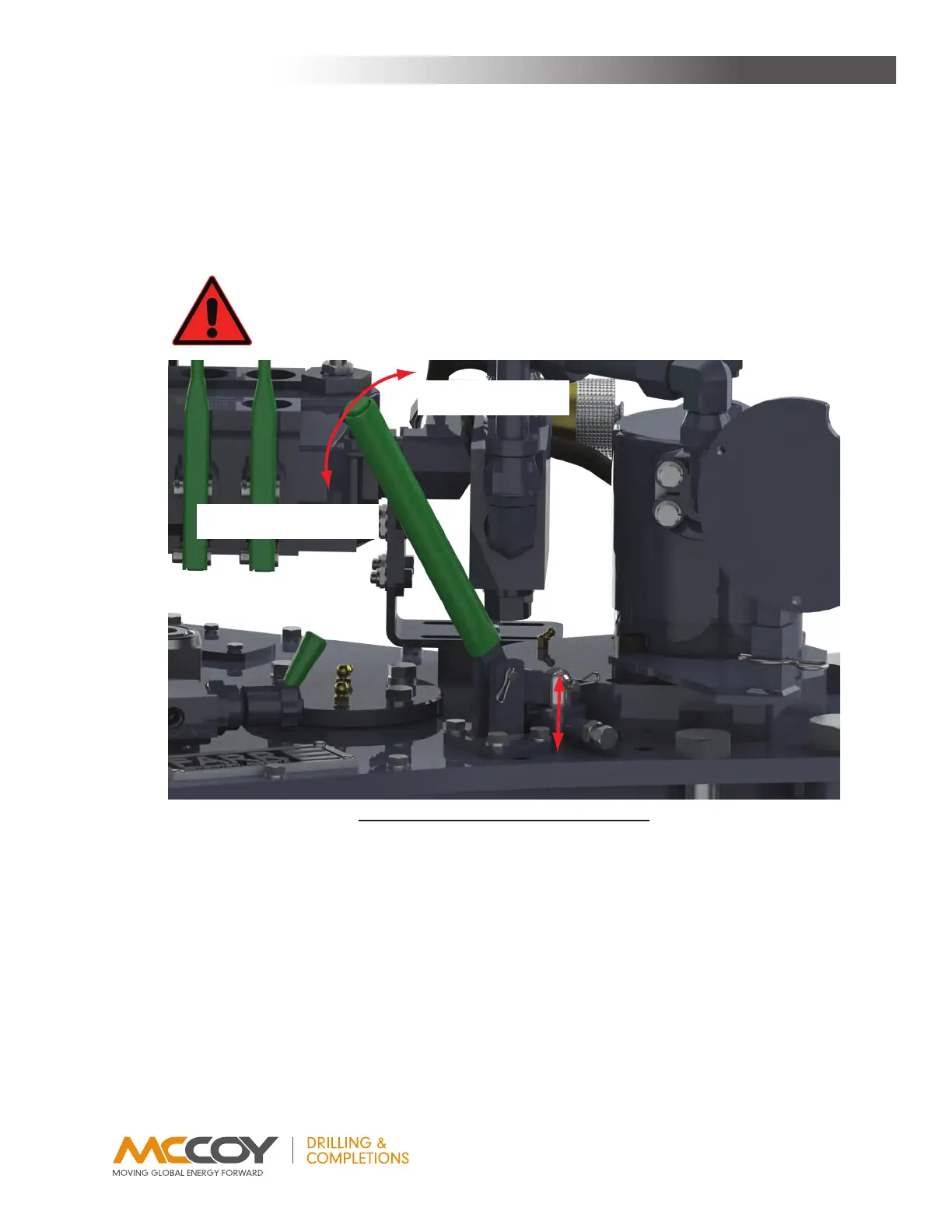
IllustratIon 2.g.4: tong manual sHIft Control
4. General Comments
a) Positionrotarygearincontactwithbothidlergearswhenbreakingoutjointsorcollarswherehightorquesarerequired.
b) Whenmaking-upintegral(shouldered)joints,itisessentialtomakeupthelastturnofthethreadsinlowgear.Thisreducesthe
tendencyofaninstantstoporasuddenincreaseintorque,whichinducesextremelyhighstressesonthegeartrain.
c) DONOTemploythe“snapbreak”methodofbreaking-outjointswhenpullingastring.Bydefinition,the“snapbreak”methodis
aprocedureusedbysomeoperatorstobreakoutconnections,accomplishedbyleavingslackinthe“jaw-pipe”engagement,
andthenquicklypullingthethrottlevalvecontrolleverallowingthetongtosnapintoitsloadedorhightorquecondition.Although
thismethodisveryeffectiveinbreakingoutjoints,theextremelyhighstressplacedonthegeartrainfrequentlycausesgear
breakage.
seTup & operaTion
3. SHIFTING GEARS
Theshiftingshafthasthree“detent”positionsidentifyingthelowspeed/hightorqueposition,the“neutral”orfree-spinningposition,
andthehighspeed/lowtorqueposition.Thedetentstrengthmaybeadjustedbyreleasingthelocknutonthedetenttubeandincreas-
ingorrelaxingpressureonthedetentspring.Ensurethelocknutistightenedoncethedesireddetentpressurehasbeenset.
Toshifttothehigh-speedgear,movetheshiftinghandledownwardfromneutralposition.Toshifttothelow-speedgear,movethe
shiftinghandle upthroughtheneutraldetenttoitshighestposition.Notethat thehighclutchgearorthelowclutchgearmaynot
beexactlyalignedwhenshifting,sotheoperatormayneedto“bump”themotorcontrolhandleslightlytoturnthemainclutchgear
shaftandshiftingcollarintoalignment.Thisismosteffectivewhenapplyingasmallamountofpressureonthegearshiftleverinthe
directionyouwanttoshiftthetong,ensuringtheshiftingcollarwill“catch”whenthemainclutchgearalignswitheitherthehighor
lowclutchgear(seeIllustration2.G.4).
LIFT HANDLE TO
SHIFT TO LOW GEAR
PUSH HANDLE DOWN
TO SHIFT TO HIGH GEAR


 To Next Page