X20/X20S and Ethos v1.0.11 User Manual
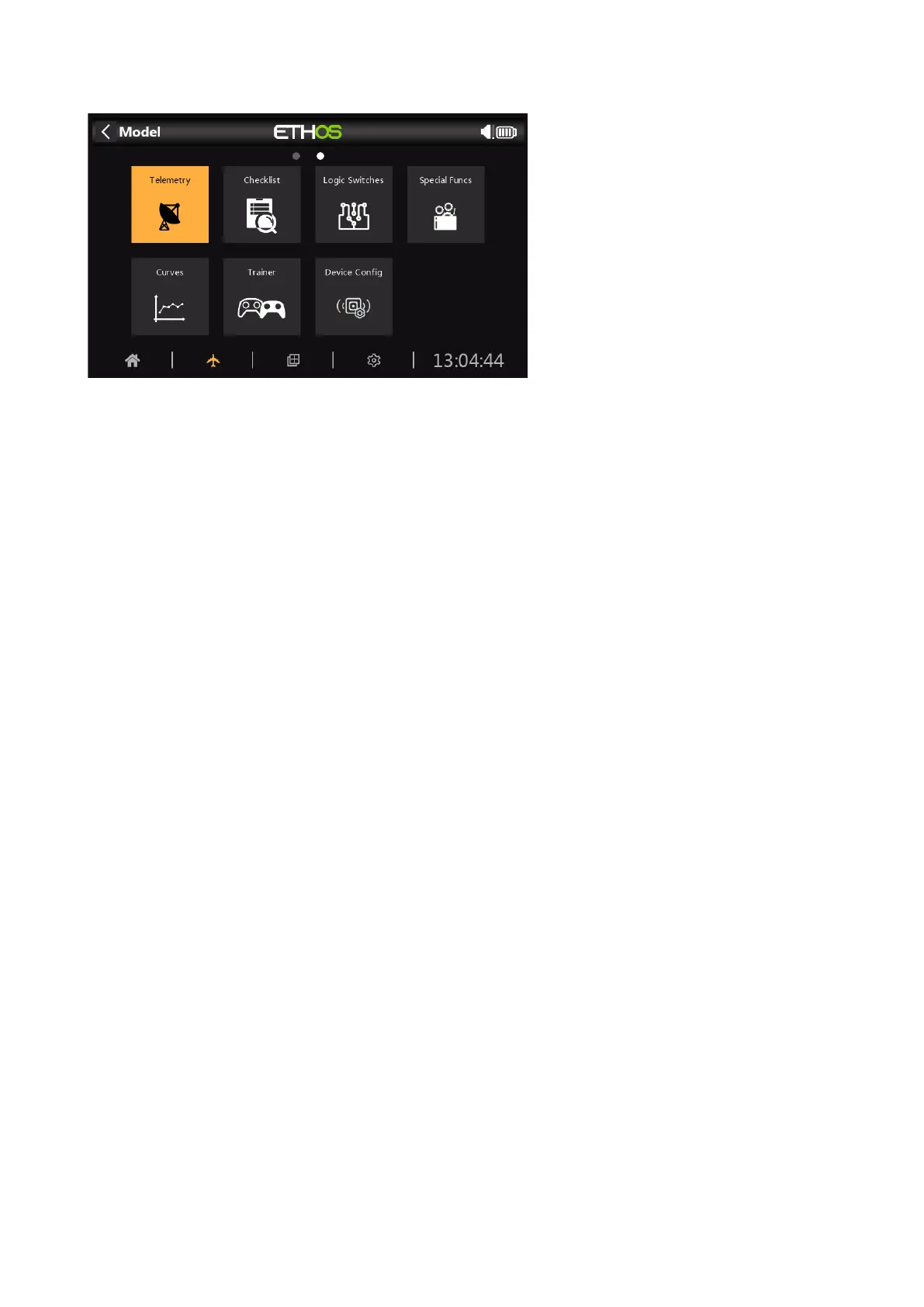
Telemetry
FrSky offers a very comprehensive telemetry system. The power of telemetry has lifted the RC
hobby to a whole new level, and allows much more sophistication and a much richer modeling
experience.
Smart Port telemetry
FrSky's series of sensors are a hub-less design. Smart Port (S.Port) telemetry devices are
daisy chained together in any sequence and plugged into the Smart Port connection on
compatible X and S and later series receivers. The receiver can achieve full duplex (2-way)
high speed communication with many compatible devices through this connection with little
or no manual set up. This results in less clutter and gives you the freedom to design the
system you need, not what a hub will allow.
Key features:
Each value received via telemetry is treated as a separate sensor, that has its own
properties such as
the sensor value
the S.Port Data ID and Physical ID number
the name of the sensor (editable)
the unit of measurement
the decimal precision
option to log to the SD card
The sensor also keeps track of its min/max value.
More than one of the same sensor type can be connected, but the Physical ID must be
changed (using the FrSky Airlink App or SBUS servo changer SCC) to ensure that each
sensor in the smart port chain has a unique ID. Examples are a sensor for each cell in
a 2 x 6S Lipo, or monitoring individual motor currents in a multi-motor model.
The same sensor can be duplicated, for example with different units, or for use in
calculations such as absolute altitude, altitude above starting point, distance, etc.
Each sensor can be individually reset with a special function, so for example you can
reset your altitude offset to your starting point without losing all the other min/max
values.
With FrSky sensors, once set up, they are auto-discovered whenever the complete
system is powered up. However, when initially installed, they must be manually
'discovered' in order for the system to recognize them.



 To Next Page