106 34410A/11A/L4411A User’s Guide
4 Measurement Tutorial
Resistance Measurement Considerations
The multimeter offers two methods for measuring resistance: 2–wire and 4–wire ohms.
For both methods, the test current flows from the input HI terminal and then through the
resistor being measured. For 2–wire ohms, the voltage drop across the resistor being
measured is sensed internal to the multimeter. Therefore, test lead resistance is also
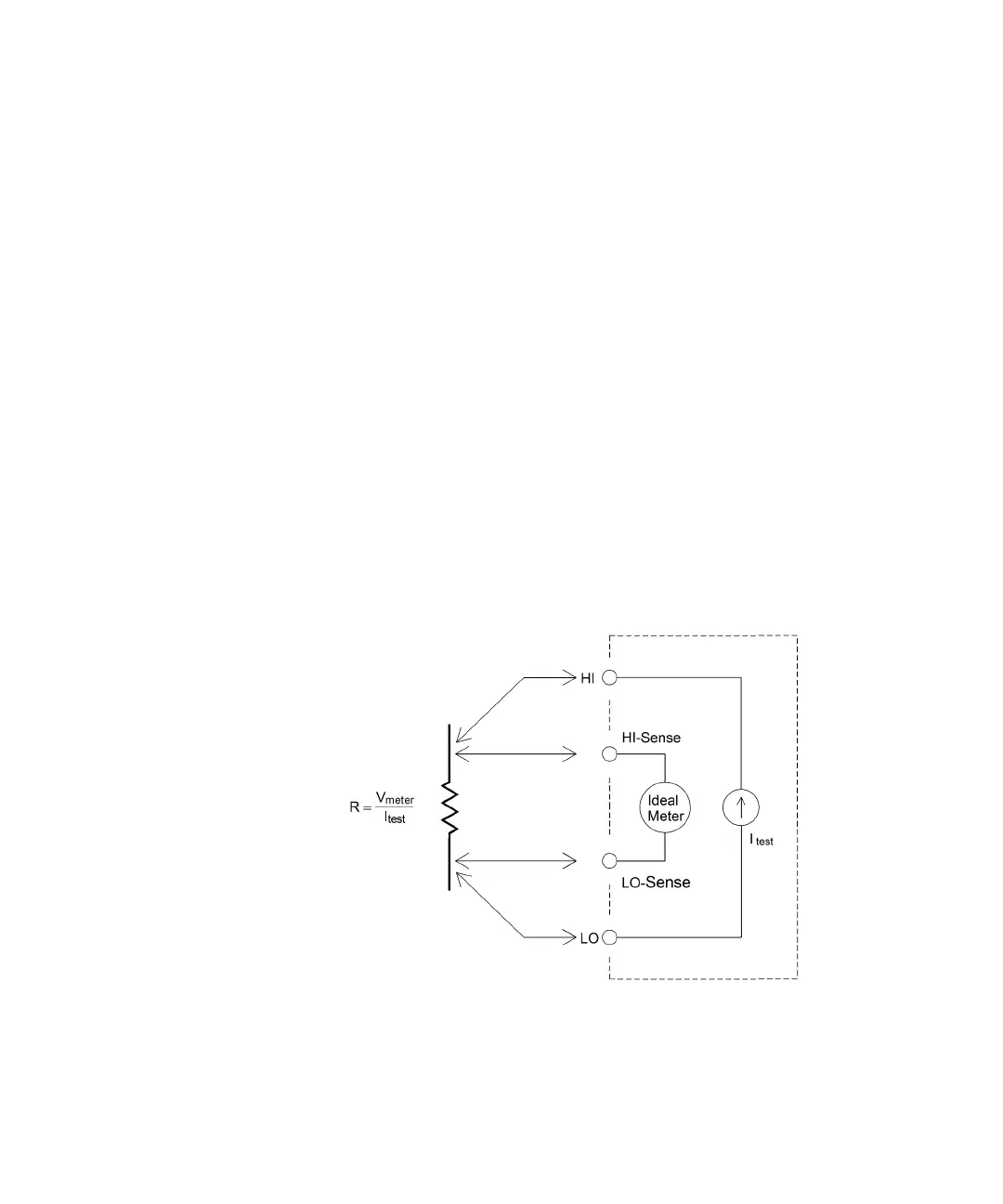
measured. For 4–wire ohms, separate "sense" connections are required. Since no current
flows in the sense leads, the resistance in these leads does not give a measurement error.
The errors mentioned earlier in this chapter for dc voltage measurements also apply to
resistance measurements. Additional error sources unique to resistance measurements
are discussed on the following pages.
4–Wire Ohms Measurements
The 4–wire ohms method provides the most accurate way to measure small resistances.
Test lead resistances and contact resistances are automatically reduced using this
method. Four–wire ohms is often used in automated test applications where resistive
and/or long cable lengths, numerous connections, or switches exist between the
multimeter and the device–under–test. The recommended connections for 4–wire ohms
measurements are shown below. See also “To Make a 4-wire Resistance
Measurement” on page 19.


 To Next Page