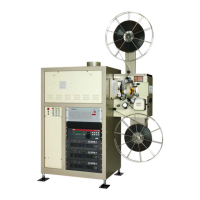
Components
Issue: 08/2012
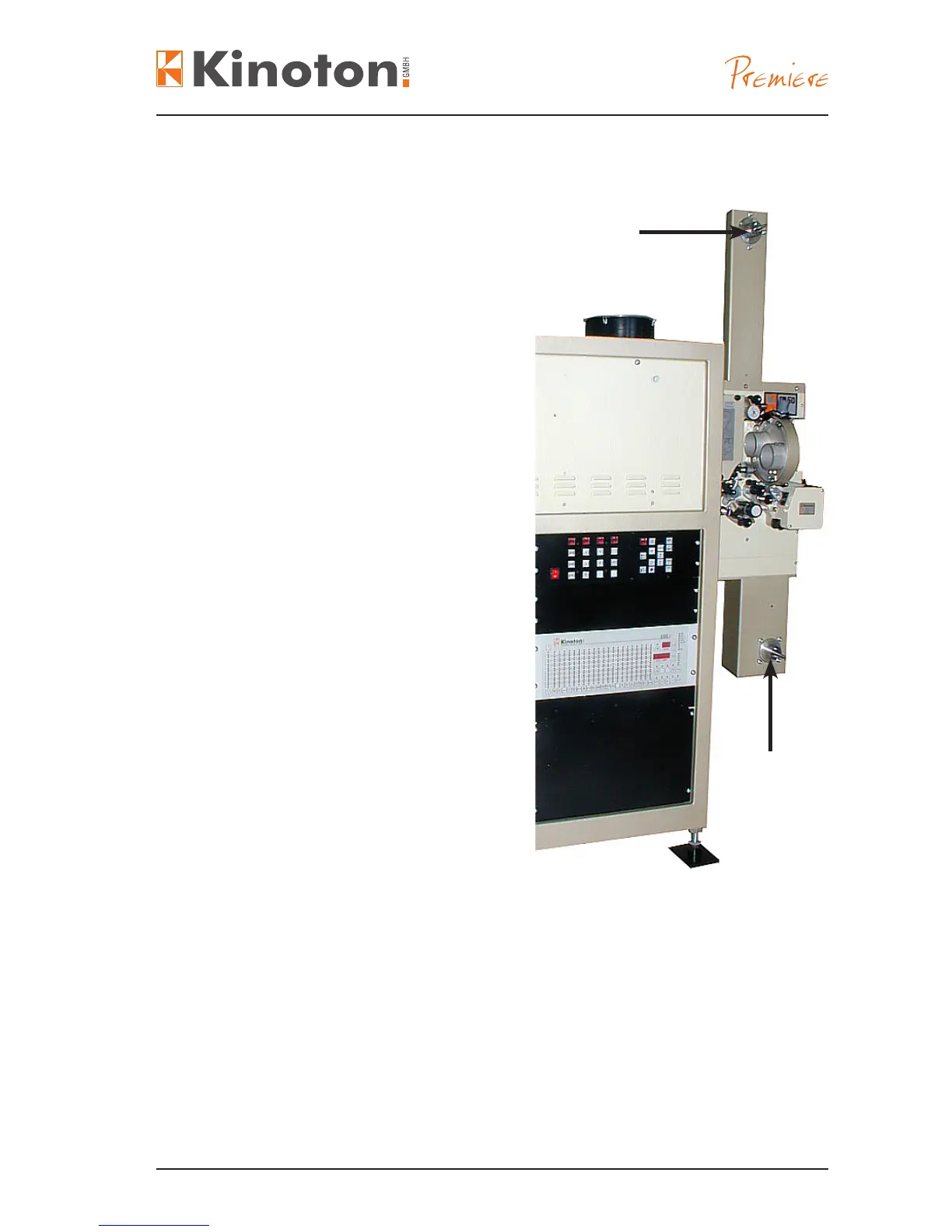
A friction is a shaft, which is driven with
a constant turning moment.
This “take-off clutch” provokes that a
certain traction force is necessary to wind
off the lm.
This friction prevents spinning of the lm
spool in case the projector suddenly stops
which would cause lm clutter – in the
worst case the lm material could be dam-
aged or even break.
As it is with the take-off friction where the
braking force is regulated the lm tension
can be controlled by the take-up friction.
The take-up shaft is driven via a toothed
belt by the main drive motor.
- Is it too strong, it brings too much tension
to the sprocket which can lead to
perforation damages.
- Is it too weak the lm will be wound too
loose. This can lead to lm damages
during rewinding (scratches, etc.).
- Furthermore the take-up friction must
work quietly as it also would lead to
periodically occurring damages at
perforation (at the sprocket) or even lead
to yowling with optical sound.
- 9 mm (DIN)
- 7.92 mm (5/16“)
- 12.7 mm (1/2“)
X
Z Depending on the frictions (from 600 up to 2000 meters) the lm tension has to be
adapted.
Z The lm tension is inversely proportional to the reel diameter:
The lm tension is less, when the reel diameter is large.
Z Adjusting the friction, see chapter 6.4.10.
Z Changing the felt disk of the friction is described in chapter 6.4.11.
Z Tension the toothed belt is described in chapter 6.4.12.



 To Next Page