EasyManua.ls Logo

Manitowoc Grove GRT9165 - User Manual

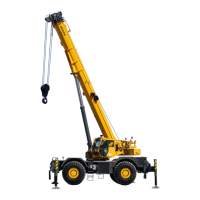
Manitowoc Grove GRT9165
476 pages
Print Icon
To Next Page IconTo Next Page
Loading...
Operator Manual
Grove GRT9165

Table of Contents

Other manuals for Manitowoc Grove GRT9165

Questions and Answers

  • J
    James BeckerAug 6, 2025
    What to do if there is no hydraulic oil flow in Manitowoc Grove GRT9165?
    • S
      Sandra KellerAug 6, 2025
      If no hydraulic oil flows in your Manitowoc Construction Equipment, first check the hydraulic oil level, looking for leaks and repairing them as needed, then refill the reservoir. Also, inspect the reservoir-to-pump suction lines for damage or restrictions, ensuring they are secure and properly attached. If the pump shaft is damaged, repair or replace it. Finally, check for internal contamination; if found, drain and flush the system with the recommended oil mixture before refilling with the recommended hydraulic oil.
  • C
    Christine SullivanAug 12, 2025
    Why is my Manitowoc Grove GRT9165 responding slowly?
    • G
      Gary RiveraAug 12, 2025
      A slow response in your Manitowoc Construction Equipment could be due to several factors. First, check the hydraulic oil level for leaks and refill the reservoir if needed. Also, the hydraulic oil temperature may be too high (making the oil too thin) or too low (making the oil too thick). If the temperature is too low, warm up the system; if too high, troubleshoot the cooler circuit, paying attention to the in-line check valve and related hydraulic circuits. Lastly, a faulty pump could be the cause, so consider repairing or replacing it.
  • V
    vortizAug 18, 2025
    What to do if my Manitowoc Construction Equipment pump is noisy and the hydraulic oil is foaming?
    • S
      Sean GreeneAug 18, 2025
      If the pump in your Manitowoc Construction Equipment is noisy and the hydraulic oil is foaming, start by checking the hydraulic oil level for leaks and refill the reservoir if necessary. Excessive engine speed can also cause this issue, so regulate the engine speed. Additionally, check all suction lines for security and proper repair, tightening, repairing, or replacing parts as needed to prevent air from entering.
  • T
    Timothy MorganAug 25, 2025
    What causes excessive pressure buildup in Manitowoc Construction Equipment?
    • C
      crystal66Aug 25, 2025
      Excessive pressure buildup in your Manitowoc Construction Equipment can be caused by a system relief valve set too high; adjust it using an adequate pressure gauge as necessary. Alternatively, there might be a restricted pump-to-control valve supply line; clean, repair, or replace the line as needed.
  • S
    sfoxAug 30, 2025
    What to do if a specific hydraulic system (lift, hoist, telescope, swing) is not working on my Manitowoc Grove GRT9165 Construction Equipment?
    • R
      Robert MendezAug 30, 2025
      If a specific hydraulic system isn't working on your Manitowoc Construction Equipment, begin by checking the system for leaks, making repairs as needed, and refilling the reservoir. The issue might also stem from a faulty hydraulic remote control valve (adjust or replace it), a faulty directional control valve (replace it), a poorly adjusted control in the circuit (troubleshoot the circuit with a schematic and adjust the hydraulic component per the schematic), or a faulty hydraulic cylinder, motor, or valve (replace the faulty component).

Summary

SECTION 1 INTRODUCTION

General Crane Information

General information about the crane's orientation, reference points, and basic configurations.

List Of Specifications

Details technical specifications of the crane, including dimensions, capacities, engine, and components.

Noise;Vibration Test Results

Provides guaranteed sound and vibration levels at the operator's station.

Serial Number Location

Identifies where to find the crane's serial number for distributor and service inquiries.

GRT9165 Crane Components

Illustrates and lists the major components of the GRT9165 crane.

SECTION 2 SAFETY INFORMATION

Safety Messages

Explains the importance of safety messages, symbols, and signal words used throughout the manual to alert personnel.

Operator Information and Qualifications

Emphasizes operator responsibilities, manual understanding, and essential qualifications for safe crane operations.

Operational Aids

Describes accessories that provide information or control functions to facilitate crane operation and enhance safety.

Crane Stability and Safety Precautions

Highlights critical factors for avoiding death or injury related to crane stability, structural integrity, and hazards.

Load Charts and Wind Forces

Explains the importance of load charts for capabilities and safe lifting, and principles for operating in windy conditions.

Electrocution Hazard

Details hazards and precautions related to operating near energized electrical power lines.

SECTION 3 OPERATING CONTROLS AND FEATURES

Operator Cab Overview

Provides an overview of the controls and indicators located inside the operator cab for monitoring crane functions.

Steering Wheel and Column

Describes the pedestal-style tilt and telescoping steering column and its integrated controls.

Right Overhead Control Panel

Details controls for heating, air conditioning, wipers, engine, and craning functions.

Left Overhead and Side Panel Controls

Identifies items on the left panel: coat hook, USB ports, auxiliary light, phone holder, and vents.

Right Lower Control Panel

Details the turntable swing lock pin control, 12-volt outlet, and diagnostic connector.

Display Modules and Navigation Controls

Describes RDM and ODM modules for programming RCL and monitoring crane systems with navigation controls.

Operator Seat and Armrest Controls (Dual Axis)

Details the controls located on the operator seat and armrests for performing craning operations.

SECTION 4 OPERATING PROCEDURES

Pre-Starting Checks

Lists essential checks for the crane to ensure it is prepared for safe operation at the start of the day.

Engine Operation and Warm-up

Covers start-up, shutdown, and warm-up procedures for the engine, including cold weather considerations.

Driving the Crane

Outlines procedures and precautions for safely driving the crane, including seat belt usage and travel conditions.

Craning Functions

Describes controller operation, crane leveling, and outrigger use for stable operation.

Telescoping the Boom

Explains theory of operation and modes for extending and retracting boom sections.

Semi-automatic Telescope Mode

Details the preferred method for telescoping the pinned boom, including basic operating procedures.

Working Range Limiter Menu Group

Covers setting boundaries for crane operation to identify obstacles and provide alerts.

Boom Height and Angle Limitations

Explains how to set and disable limits for boom height and angle operation.

Radius Limitation

Explains how to define inner and outer working radius limits for crane operation.

Swing Angle Limitation

Describes how to set limits for the crane's swing angles.

Virtual Walls Limitation

Allows operators to define up to five virtual walls or barriers for crane operation.

Emergency Program Menu Group

Includes icons for manual, emergency, and tele recovery modes for boom telescoping.

Telescoping Cylinder Lock;Release

Explains status indications for telescoping cylinder locking pins and the procedure to lock/unlock.

Extending;Retracting the Telescoping Cylinder

Covers procedures for extending and retracting telescoping cylinders, including error determination.

Using the Remote Control Unit

Provides information on controls, features, and operation of the remote control unit for crane setup.

Preparing for Remote Control Operation

Outlines steps to prepare the crane and remote control unit for operation.

Operating Remote Control

Details operations of the remote control unit, including horn and emergency stop functions.

Engine Start;Stop;Throttle

Explains how to start, stop, and control engine speed using the remote control unit.

Outrigger Operations via Remote Control

Details the function screens for operating outrigger beams and jacks via the remote control unit.

Hoist Operations via Remote Control

Explains indicators and operation for main and auxiliary hoist functions on the remote control.

Boom Lift Operation via Remote Control

Details controls and indicators for boom lift operations via the remote control unit.

Swing Operation and 360° Swing Lock

Describes how to operate swing and the 360° swing lock using the remote control.

OPT (options)

Covers optional functions like Luffing Boom Extension Offset and Boom Extension Stowage Actuators.

NAVIGATING THE OPERATOR DISPLAY MODULE AND RATED CAPACITY LIMITER DISPLAY MODULE

Explains navigation of ODM and RDM using control pads and jog dial.

Alerts Area

Explains caution and warning alerts that appear on the ODM main screen.

Crane Status Area Indicators

Describes indicators representing the crane's current operating status.

SECTION 5 SET-UP AND INSTALLATION

Setup of Crane Before and After Transporting

Details components placement for transport and their working positions afterward.

Hoist Camera and Platform

Describes lowering/raising hoist camera and platform railings for transport and operation.

Beacon Lights and Cab Mirrors

Details installation and positioning of optional beacon lights and cab mirrors.

RCL Light Tower (Optional)

Details the procedure for retracting and extending the RCL light tower.

Access Ladders and Auxiliary Ladder

Describes raising/lowering access ladders and stowage/installation of auxiliary ladder.

Outrigger Floats and Hydraulic Hose Drum (Optional)

Explains stowing outrigger floats and securing hydraulic hose drums.

Counterweight Removal and Installation

Covers general warnings, lifting points, and procedures for assembling and disassembling counterweight.

Installing the Counterweight on the Carrier Platform

Explains how to install the assembled counterweight onto the carrier platform.

Removing the Counterweight from the Carrier Platform

Details the procedure to remove the counterweight from the carrier platform.

Outrigger Removal and Installation

Covers bleed valve operation, outrigger box removal, and installation.

Anti-Two Block (A2 B) Switch Installation

Explains the installation and function of the two anti-block switches for crane operation.

Hoist Rope Reeving

Provides information on reeving hoist rope and possible multi-part line reeving combinations.

Boom Extension

Covers general warnings, configurations, pin interlock mechanisms, mounting brackets, and sensors.

Installing the Boom Extension

Provides procedures for installing the boom extension base and fly sections.

Removing the Boom Extension from the Lattice Insert

Details the procedure for removing the boom extension from the lattice insert.

AUXILIARY SINGLE SHEAVE BOOM NOSE

Describes installation, removal, and rigging of the auxiliary single sheave boom nose.

ANEMOMETER;BOOM POSITION LIGHT (OPTIONAL)

Describes procedures for installing and removing the anemometer and boom position light.

SECTION 6 MAINTENANCE AND LUBRICATION

General Lubrication Information

Emphasizes the importance of lubrication for crane lifetime and utilization.

Lubricants and Lubrication Intervals

Lists types of lubricants, their locations, frequency, and other information for maintenance.

Standard Lubricants

Lists standard lubricants effective in ambient temperatures down to -9°C (+15°F).

Arctic Lubricants and Conditions

Recommends specific lubricants for arctic conditions below -9°C and -40°C.

Cylinder Rod Surface Protection

Details methods for protecting steel cylinder rods from corrosion.

Wire Rope Lubrication

Explains the importance of lubricating wire rope and provides information on its inspection.

Lubrication Points

Provides information on establishing a regular lubrication frequency based on operating time.

Drive Train Lubrication

Covers pre-starting checks and service intervals for drive train components.

Axle Lubrication

Provides procedures for checking and filling differential and planetary hub/wheel bearing lubrication.

Superstructure Lubrication

Details lubrication points for the swing drive gearbox, brake assembly, drive pinion, and boom pivot pins.

Boom Lubrication

Provides detailed procedures for lubricating telescope sections, including wear pads and lock pins.

Hoist Lubrication

Outlines procedures for checking and filling oil levels for hoist drums and lubricating hoist rope rollers and bearings.

Hydraulics Lubrication

Covers operating limits and warm-up procedures for the hydraulic system and tank.

Rust Protection

Discusses protecting cranes from rust using factory treatments and owner maintenance.

Cleaning Procedures

Provides guidelines for cleaning the crane to minimize corrosion.

Inspection and Repair

Details procedures for inspecting and repairing damage to minimize corrosion.

APPENDIX 1 DECALS

FIGURE A-1 Decal Locations

Illustrates the locations of various decals on the GRT9165 crane.

FIGURE A-1 continued Decal Locations

Continues illustration of decal locations on the GRT9165 crane.

WORD INDEX

Manitowoc Grove GRT9165 Specifications

General IconGeneral
Maximum Tip Height240.7 ft
Drive Configuration4x4x4
Maximum Boom Length62.5 m
TransmissionPowershift
Engine ModelCummins QSB6.7

Related product manuals